Semi-Analytical Balance, 200 g, with Milligram Weights
Product Code : SCL-CL-11557
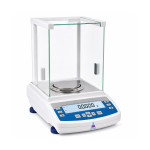
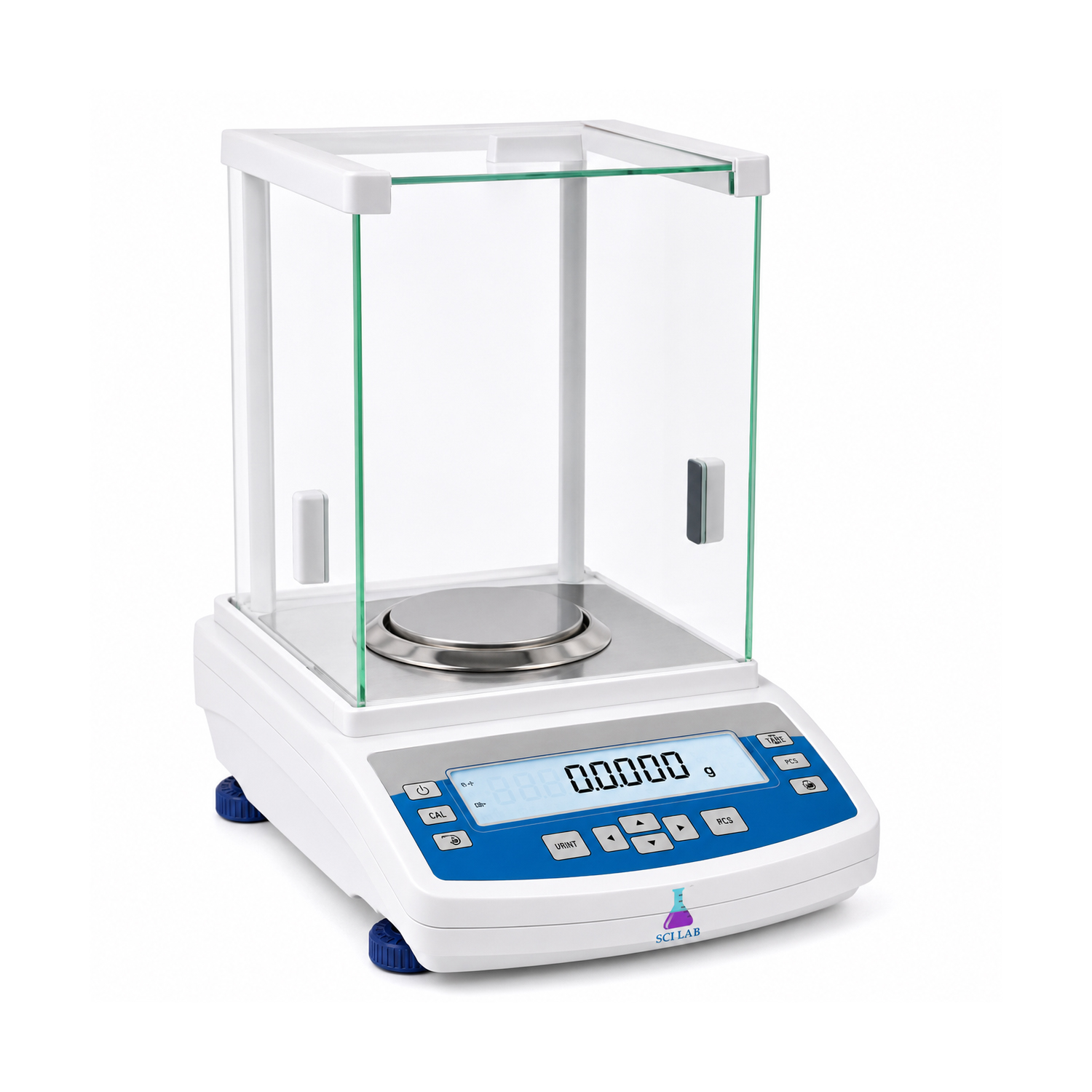
The Semi-Analytical Balance has a 200 g capacity and 100 mg sensitivity. It comes with a set of fractional weights from 10 mg to 500 mg for fine adjustment when weighing reagents and samples.
Specifications of the Semi-Analytical Balance
| Specification | Value |
|---|---|
| Capacity | 200 g |
| Sensitivity | 100 mg (0.1 g) |
| Weights supplied | 10 mg x 1, 20 mg x 2, 50 mg x 1, 100 mg x 1, 200 mg x 2, 500 mg x 1 |
| Supplied by | Science Lab Supplies, Ambala, India |
Weighing Work with the Semi-Analytical Balance
The sample sits on the pan in a container and is balanced with weights, and the small weights trim the last fraction of a gram. Fractional weights are thin and easily lost, so lift them with forceps.
- Weighing by difference: weigh a stoppered Weighing Bottle with solid, tip some out, and weigh again; the loss is the mass used.
- Residue after heating: heat a sample in a Porcelain Evaporating Dish and weigh the cooled residue.
- Checking the balance: weigh a known weight at the start of a session to see that the reading is right.
Common errors: weighing objects that are still warm, leaning over or breathing on the pan, and leaving weights out of the box where dust collects on them.
Frequently Asked Questions
Why are the weights lifted with forceps?
Skin leaves grease and moisture, which add mass and cause corrosion over time. Milligram weights are also easy to bend or drop. Lift each one with forceps and return it to its place in the box.
What are the milligram weights for?
They trim the final fraction of a gram when a load is balanced on the pan. Add them in order, heaviest first, to find the balance point in the fewest steps.
Why must hot objects cool before weighing?
A warm object heats the air around it, and the rising air pushes up on the pan, so the reading is too low. Let crucibles cool, ideally in a desiccator, before weighing.
How often should the balance be checked?
Check it against a known weight before each session and whenever it is moved. Keep it level and away from draughts and vibration so results stay repeatable.
How should the weights be stored?
In their box, closed, in a dry and dust-free place. Damp air and dust change the mass of small weights over time and make results drift.
Related Weighing Equipment
- Technical Scale, 100 g x 0.1 g, with Weight Set: 100 g capacity, 0.1 g sensitivity, with a weights box.
- Electronic Balance, 200 g Capacity, 0.1 g Readability: 200 g capacity with piece-counting and percent weighing.
- Analytical Balance, 0.1 mg: analytical balance with more than 16 weighing units.
- Triple Beam Balance with Tare, 2.6 kg: three notched beams, weighs up to 2.6 kg with extra masses.
- Electronic Balance with RS232: runs on a 9 V battery or AC, with auto calibration.
Find more weighing equipment under Balances and Scales; the Chemistry Lab range lists bench apparatus.
Export orders can be shipped from India to buyers in Saudi Arabia, Oman, the Philippines, Nepal, Bangladesh and Zambia. To request a quote, reach us via the contact page or the enquiry cart.
Last updated: 14 November 2026