Metal Strips (Aluminium, Copper, Lead, Zinc)
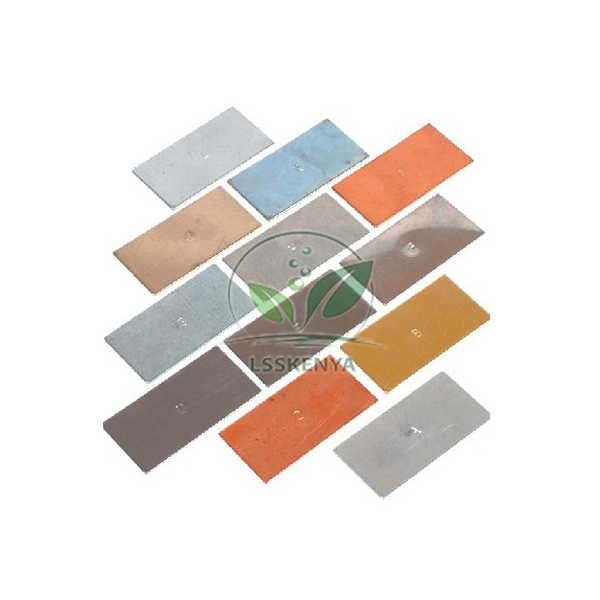
Product Code : LSK-CL-10089
Metal Strips in aluminium, copper, lead and zinc are used as electrodes in electrochemistry to build simple cells, and as samples in thermal conductivity experiments. Pairing two different metals in an electrolyte lets students link cell voltage to the reactivity series.
Specifications of the Metal Strips
| Specification | Value |
|---|---|
| Metals | Aluminium, copper, lead and zinc |
| Uses | Electrodes for simple cells; thermal conductivity experiments |
| Supplied by | Science Lab Supplies, Ambala, India |
Simple Cell and Conductivity Experiments with Metal Strips
Rub each strip with fine sandpaper before use. For a cell, stand two different strips apart in a beaker of dilute electrolyte and connect them with leads and crocodile clips to a meter.
- Simple cells: test each pair of metals on a Digital Voltmeter and rank the voltages against the reactivity series.
- Two-beaker cell: put zinc and copper strips in their own sulfate solutions and join the beakers with a Salt Bridge to compare with the single-beaker cell.
- Heat conduction: coat equal strips with wax, heat one end of each together and time how far the wax melts; then compare with the Conductometer, For Thermal Conductivity.
Precaution: the lead strip should be handled with care; wash hands after use and keep it out of the mouth.
Frequently Asked Questions
Which strip becomes the negative electrode?
The more reactive metal. It loses electrons more easily, so electrons flow from it through the wire to the less reactive metal. With zinc and copper, zinc is negative.
Why should the strips be sanded before use?
Oxide films and grease on the surface slow the reaction and give low or unsteady readings. Fresh, clean metal gives repeatable voltages.
Does a wider strip or deeper dipping give a higher voltage?
No. The voltage is set by the two metals and the electrolyte. A larger wetted area lets the cell drive more current, so the reading holds up better when a lamp or motor is connected.
Why does the voltage of a simple cell fall after a while?
Bubbles of hydrogen collect on the copper strip and the electrolyte near each strip changes. Both reduce the voltage, which is why the Daniell cell keeps its two electrolytes apart.
Can the strips give values that match standard electrode potentials?
Not in a single beaker of electrolyte: those readings show trends for ranking the metals, not standard values. For closer agreement, stand each metal in a 1 mol/dm3 solution of its own salt and join the two beakers with a salt bridge.
How should the strips be stored between practicals?
Rinse and dry them after use and keep each metal in its own labelled bag or box in a dry cupboard. This slows corrosion of the zinc and aluminium and keeps the lead strip from being handled by mistake. A light sanding before the next class removes any film.
Related Electrodes and Cells
- Electrode Plate: 100 x 45 mm plates in aluminium, carbon, copper, lead and zinc with socket terminals.
- Electrode Rod: 100 x 10 mm rods in aluminium, carbon, copper, iron and zinc with terminals.
- Cell Simple Copper With Zinc: jar with zinc and copper plate electrodes.
- Volta Battery (Glass Type): glasses with copper and zinc electrodes, wires and a panel-mounted LED.
- Metal Testing Strips: set of twelve lettered strips of magnetic and non-magnetic metals.
- Searle’s Thermal Conductivity Apparatus: copper rod with a steam jacket at one end, in a felt-lined wooden case.
Browse electrode plates, rods and simple cells in Chemistry Lab, or move up to School Lab Equipments for other subjects.
For Rwanda, South Africa, Qatar, Sri Lanka, Vietnam and Malaysia, the metal strip set is an export item that Science Lab Supplies can ship on its Importer-Exporter Code. Get a quotation by writing about the metal strips on the contact page, or by listing them in the enquiry cart.
Last updated: 15 November 2026