Deflagrating Spoon, 75 mm Cap

Product Code : LSK-CL-10053
The Deflagrating Spoon lowers a small amount of a chemical into a gas jar so it can burn in the gas inside. A 20 mm cup sits at the end of a rod, held by a stopper in a 75 mm dished cap that rests on the jar mouth. Overall length is 35 cm.
Specifications of the Deflagrating Spoon
| Specification | Value |
|---|---|
| Cup | 20 mm diameter |
| Cap | Dished cap, 75 mm diameter, with stopper holding the rod |
| Overall length | 35 cm |
| Use | Gas preparation and analysis: lowers chemicals into a gas jar |
| Supplied by | Science Lab Supplies, Ambala, India |
Burning Elements in Gas Jars
A pinch of the element is placed in the cup, lit in a burner flame and lowered into a jar of gas. The cap rests on the jar mouth and holds the cup at a fixed height while the reaction is watched.
- Properties of oxygen (Class 9 to 10): fill gas jars with oxygen from a Simple Gas Preparation Kit, then burn sulphur, carbon and magnesium in turn and compare with burning in air.
- Acidic and basic oxides: add a little water to the jar after burning, shake, and test with indicator. Many non-metal oxides give acidic solutions; soluble metal oxides give alkaline ones.
- Supports combustion or not: lower a burning sample into a jar of carbon dioxide made in a Kipp's Apparatus and watch the flame go out.
Precautions: burn sulphur only in a fume cupboard or well-aired room, use very small amounts, and view burning magnesium through a welding filter rather than directly.
Frequently Asked Questions
Why is the rod held by a stopper in the cap?
The stopper grips the rod firmly where it passes through the cap, so the cup hangs steady at one depth in the jar. It also closes the hole around the rod, so less gas and fewer fumes escape while the sample burns.
Why is the rod so long?
The 35 cm length lets the cup reach well down into a gas jar while the hand stays above the cap, clear of the burning sample, the hot jar mouth and the rising fumes. Hold the rod near its top end during the test.
How do I test whether the oxide formed is acidic or basic?
Shake the jar with a little water so the oxide dissolves, then add a few drops of litmus or universal indicator. Red shows an acidic oxide, blue shows a basic one.
What should a buyer check in the specification before ordering a deflagrating spoon?
Match the 75 mm dished cap to the mouth of the gas jars in use, so it covers the opening and rests on the rim; a cap narrower than the mouth would drop into the jar. Also check that the 20 mm cup holds the pinch of solid that the planned practical needs.
Does every oxide give an acidic or an alkaline solution?
No. Soluble metal oxides give alkaline solutions and many non-metal oxides, such as sulphur dioxide, give acidic ones. Some oxides are neutral or hardly dissolve, so the indicator colour barely changes.
Does burning sulphur wear out the cup?
Slowly, yes. Hot sulphur and its fumes attack the cup surface, so it darkens and roughens over many tests. Burning only small amounts keeps the attack slow, and a cup that is badly pitted or holed should be taken out of use.
Related Gas Preparation Items
- Deflagrating Spoon with Aluminium Cap, 90 mm: steel cup and rod held by cork in an aluminium cap, length 35 cm.
- Beehive Shelf, Porcelain: glazed shelves for gas collection in pneumatic troughs.
- Wood Splints: for lighting burners or testing for oxygen.
- Welding Filter Lens: shade 9 filters for viewing burning magnesium.
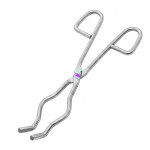
- Crucible Tongs: scissor-style metal tongs for moving hot items.
Gas jar accessories and combustion items are collected in the Chemistry Lab range; see School Lab Equipments for the other school ranges.
Science Lab Supplies can export deflagrating spoons to Iraq, Nigeria, Kenya, Ghana, Ethiopia and Tanzania as the holder of an Importer-Exporter Code. To have the spoon quoted, use the contact page or put it in the enquiry cart.
Last updated: 15 November 2026


.jpg)

.jpg)