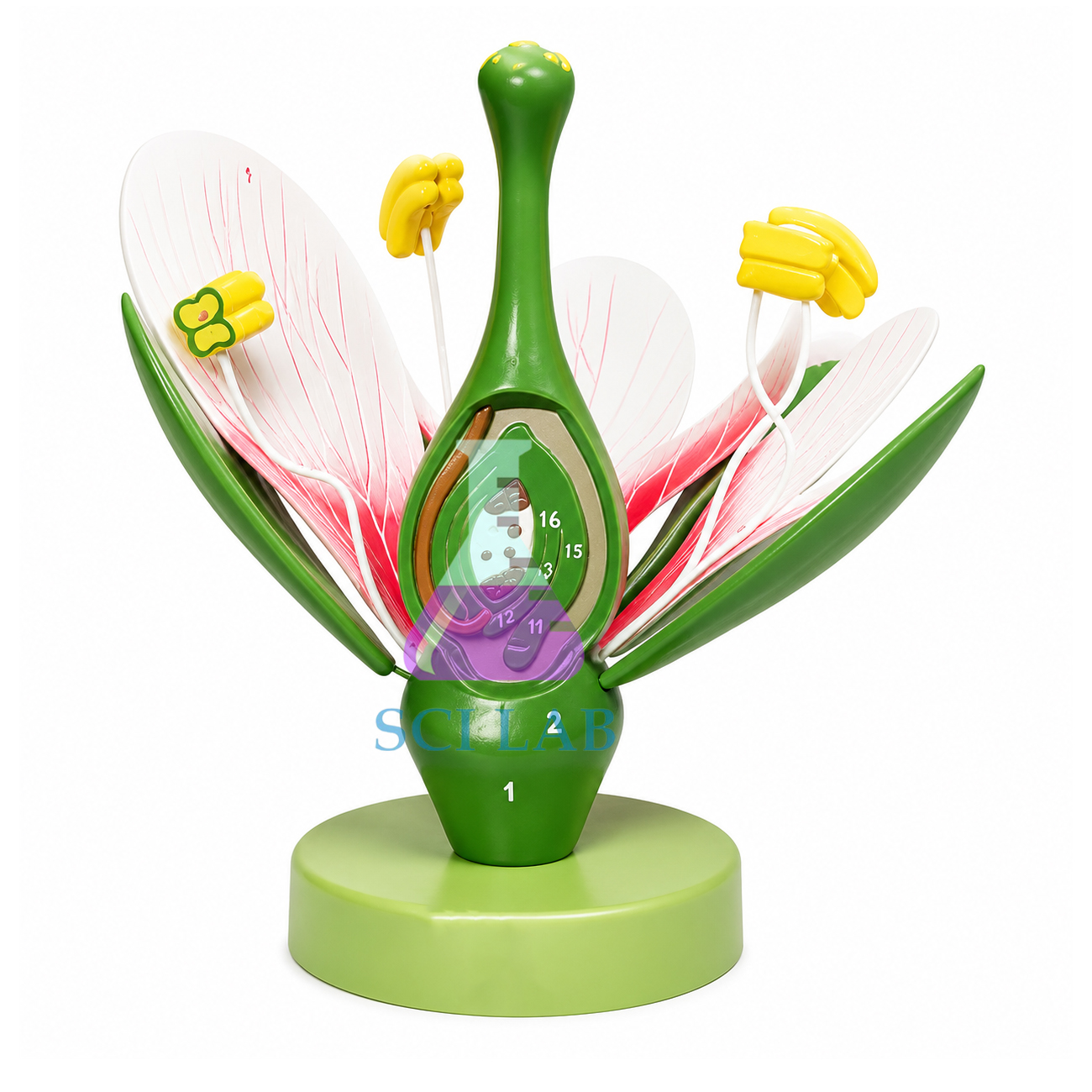
Dicotyledonous Flower Model, 250 x 350 mm
Product Code : SCL-BLE-11778
The Dicotyledonous Flower Model, 250 x 350 mm, is a three-dimensional model of a dicot flower, made of PVC and coloured with non-toxic dyes. It lets a class learn the parts of a flower and where each sits before students dissect a real flower and lay out its whorls.
Specifications of the Dicot Flower Model
| Specification | Value |
|---|---|
| Item | Three-dimensional flower model |
| Subject | Dicotyledonous flower |
| Material | PVC, coloured with non-toxic dyes |
| Size | 250 x 350 mm (25 x 35 cm) |
| Supplied by | Science Lab Supplies, Ambala, India |
Flower Dissection Lessons with the Dicot Model
Start with the model on the front bench and name the four whorls from the outside in. Students then dissect a fresh flower such as hibiscus or mustard and lay its parts out in the same order.
- Whorl count (Class 7 to 12): separate the sepals, petals, stamens and carpels of a real flower with the forceps and needles of a Student Dissecting Set, working in a Dissection Pan.
- Close study: examine the anthers and stigma under a Junior Dissecting Microscope and draw each whorl.
- Ovary section: cut the ovary across with a blade, mount the slice in glycerine and count the chambers.
Take care with blades: cut on the pan, away from the fingers, and choose a fully open flower so the parts separate cleanly.
Frequently Asked Questions
What should a school check before ordering a dicot flower model?
Check the overall size (250 x 350 mm here), whether the ovary and anthers are shown in section, whether a numbered key is included, the material and finish (PVC with non-toxic dyes here), and whether it stands on a base.
Can a three-dimensional flower model help pupils with low vision?
Yes. A raised model can be explored by touch, so pupils can feel the shape and position of the outer and inner parts of a flower, which a flat chart cannot offer. Teachers often add large-print or Braille labels.
Which whorls of a flower are essential, and why?
The androecium (stamens) and gynoecium (carpels) are the essential whorls, because they produce pollen and ovules and so take part in reproduction. Sepals and petals are accessory whorls that protect the bud and attract pollinators.
What does monadelphous mean in a hibiscus flower?
The filaments of all the stamens are joined into one tube around the style, while the anthers stay free. Students see this staminal tube clearly once the petals of a hibiscus flower are peeled back.
How is a flower taken apart whorl by whorl?
Remove the outer whorl first with forceps and work inwards: sepals, petals, stamens, then the pistil. Lay each whorl in a row on white paper, count its parts and note whether they are free or joined.
Related Flower Models and Charts
- Dicotyledon Flower Model, 180 x 300 x 60 mm: three-dimensional PVC model coloured with non-toxic dyes.
- Monocotyledon Flower Model: wheat flower in longitudinal section on an ABS base, 250 x 350 mm.
- Large Size Flower Model: 220 x 330 mm, with pistil and anthers in section to show the egg and pollen.
- Typical Flower V.S. Model: vertical section of a flower mounted on a base, 330 x 250 x 50 mm.
- Flower Structure Chart: classroom chart of sepals, petals, stamens, pistil, ovary, style, stigma and anther.
Botany models sit in Biology Lab Equipment, and printed flower charts in Charts & Portraits.
Schools and resellers in Oman, the Philippines, Nepal, Bangladesh, Zambia and Rwanda can receive this flower model, which Science Lab Supplies ships under its Importer-Exporter Code. Request a quotation via the contact page, or gather the botany models you need in the enquiry cart.
Last updated: 16 November 2026


-Photoroom (1).png)