Blowpipe Nickel Plated Brass
Product Code : LSK-CL-10046
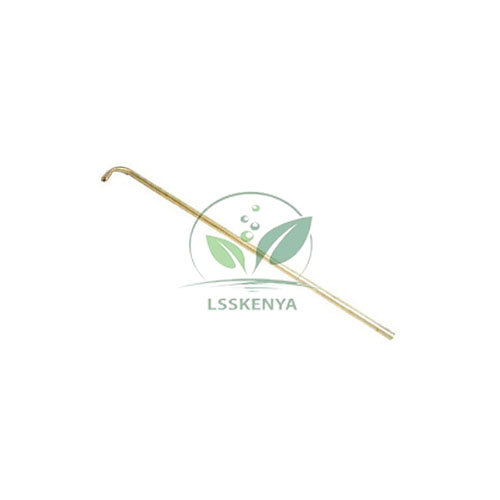
The Blowpipe Nickel Plated Brass is a plated brass tube with a bent end. Blown through by mouth, it directs a stream of air into a burner flame. The air mixes with the fuel and the flame leaving the tip becomes small and very hot, which suits the testing of small samples.
Specifications of the Laboratory Blowpipe
| Specification | Value |
|---|---|
| Material | Brass pipe, plated finish |
| Tip | Bent end |
| Function | Directs a stream of air through a flame for better fuel and air mixing |
| Use | Heating and analysis of small samples |
| Supplied by | Science Lab Supplies, Ambala, India |
Blowpipe Analysis in the Chemistry Lab
The bent tip is held just at the edge of a small flame and the user blows a steady stream through the pipe. The flame turns sideways into a narrow, pointed cone that can be aimed at a sample.
- Reducing flame: hold the tip just outside the edge of the flame and blow gently, so the luminous part is pushed onto the sample. Aim the flame at a salt in a hollow on Blowpipe Carbon Blocks to reduce some metal oxides to a bead.
- Oxidising flame: push the tip a little into the flame and blow steadily, with the sample just beyond the point of the blue cone.
- Flame source: a Bunsen Burner, 150 mm long, or a spirit lamp gives a small flame that turns easily under the blowpipe.
Common errors: blowing in short puffs, which makes the flame flicker, and holding the tip too far inside the flame, which smothers it.
Frequently Asked Questions
How do you keep a steady blast without running out of breath?
Fill the cheeks with air and let them push it out through the pipe, while you breathe in and out through the nose. With practice the cheeks act like a small bellows and the stream does not stop.
What is the difference between the oxidising and the reducing flame?
The oxidising flame has extra air and the sample sits just beyond its tip. The reducing flame is made with less air and the sample sits in the inner, luminous part, where fuel gases remove oxygen from oxides.
Why is a mouth blowpipe used only for small samples?
One pair of lungs can supply only a small stream of air, so the heat it adds is limited. It suits a grain or pinch of material; larger work needs a burner with a blower.
Which flame sources can be used with this blowpipe?
Any small, steady flame will do: a spirit lamp, a candle, or a Bunsen burner turned low with the air hole closed so the flame is luminous. The blowpipe then turns that soft flame into a narrow, hot cone that can be aimed at the sample.
How does this blowpipe differ from a gas torch with a mouthpiece hose?
This blowpipe is a plain plated brass tube with a bent end and no gas connection. It is held beside a separate flame and air is blown through it by mouth. A mouth-blown torch has its own gas jet and an air hose built into one head.
Related Blowpipe and Flame Items
- Blow Pipe: nickel plated brass with a curved end, used with a charcoal block.
- Cobalt Blue Glass (Flame Testing): optical filter that cuts out the yellow sodium flame in flame tests.
- Brass Spirit Lamp 100ml: compact lamp that burns alcohol fuel to give a small open flame.
- Wood Splints: for lighting burners or testing for oxygen.
- Crucible Tongs: metal tongs with a 4 cm jaw opening for handling hot items.
Browse the Chemistry Lab range or the School Lab Equipments range.
Science Lab Supplies holds an Importer-Exporter Code, so this blowpipe can be shipped to schools and laboratories in South Africa, Qatar, Sri Lanka, Vietnam, Malaysia and Peru. A message on the contact page, or the blowpipe added to the enquiry cart, will start a quotation.
Last updated: 15 November 2026