Polystyrene Foam Balls, 100 g
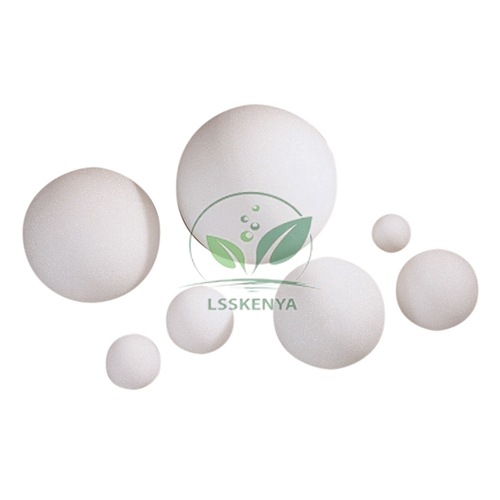
Product Code : LSK-CL-10043
These polystyrene foam balls are light spheres for many uses in the school lab. Pupils build models of atoms and molecules with them, and hang them on threads for electrostatic experiments, where their low mass makes small charges easy to see. The balls come in a 100 g pack.
Specifications of the Foam Balls
| Specification | Value |
|---|---|
| Material | Polystyrene foam |
| Pack | 100 g |
| Uses | Building atom models, electrostatic experiments, general lab use |
| Supplied by | Science Lab Supplies, Ambala, India |
Model Building and Static Electricity with Foam Balls
For models, balls are painted, joined with sticks or wire, and labelled. For electrostatics, a ball is tied to a fine nylon thread and hung from a stand, so it can swing freely towards or away from a charged object.
- Bohr model of an atom: use a large ball as the nucleus and small balls as electrons on wire rings for the shells.
- Attraction and repulsion: bring a rubbed Ebonite Rod near a hanging ball, watch it swing in, touch, then jump away.
- Two kinds of charge: compare the effect of the ebonite rod with a Glass Rod with Rubbing Material on two charged balls.
Tip: electrostatic work is most reliable on a dry day; damp air lets charge leak away quickly.
Frequently Asked Questions
What paint should be used on foam balls?
Water-based paints such as poster or acrylic colours. Spray paints and solvent-based paints can dissolve the foam and leave holes in the surface.
How is the 100 g pack different from packs sold by count?
This pack is sold by mass, 100 g of foam balls, not by number. Polystyrene foam is very light, so 100 g holds many small balls or fewer large ones. Check the ball sizes your models and electrostatic set-ups need before ordering.
Why does a hanging ball jump away after touching the charged rod?
At first the rod attracts the uncharged ball. On contact some charge passes to the ball, so both now carry the same charge and repel each other.
How do I join balls to make molecules?
Push toothpicks, cocktail sticks or short lengths of wire into the balls to act as bonds. Use different colours for different elements and set the sticks at the right angles.
Why does a foam ball sometimes cling to the rod instead of jumping away?
Plain polystyrene foam is an insulator, so contact passes on only a little surface charge, often too little for repulsion. A thin coat of conductive paint, such as graphite paint, lets the ball take up charge and spring away.
Can the foam balls replace pith balls in electrostatics?
Yes. Polystyrene foam balls are widely used in place of pith for attraction and repulsion demonstrations, and they cope with damp air better than pith, though a dry day still gives the clearest results. Hang a small ball on a fine nylon thread from an insulated stand.
Related Model and Electrostatics Items
- Model of The Atom: 475 x 475 mm table with coloured electron, proton and neutron spheres.
- Molecular Models Demonstration Kit: 40 hydrogen and 38 carbon atoms with single, double and triple bonds.
- Atom Activity Model: transparent plastic model for use on an overhead projector.
- Electrostatics Friction Rods Set: glass and ebonite rods with silk and synthetic-fur cloths.
- Electroscope: sheet metal case with sliding glass panels and a removable disc electrode.
See the Chemistry Lab range or the full School Lab Equipments section.
Packs of these foam balls can be shipped by Science Lab Supplies to Bangladesh, Zambia, Rwanda, South Africa, Qatar and Sri Lanka under its Importer-Exporter Code. For a quotation, go to the contact page or the enquiry cart.
Last updated: 15 November 2026