Hofmann Voltameter, 25 ml Tubes, 600 mm
Product Code : SCL-CL-11449
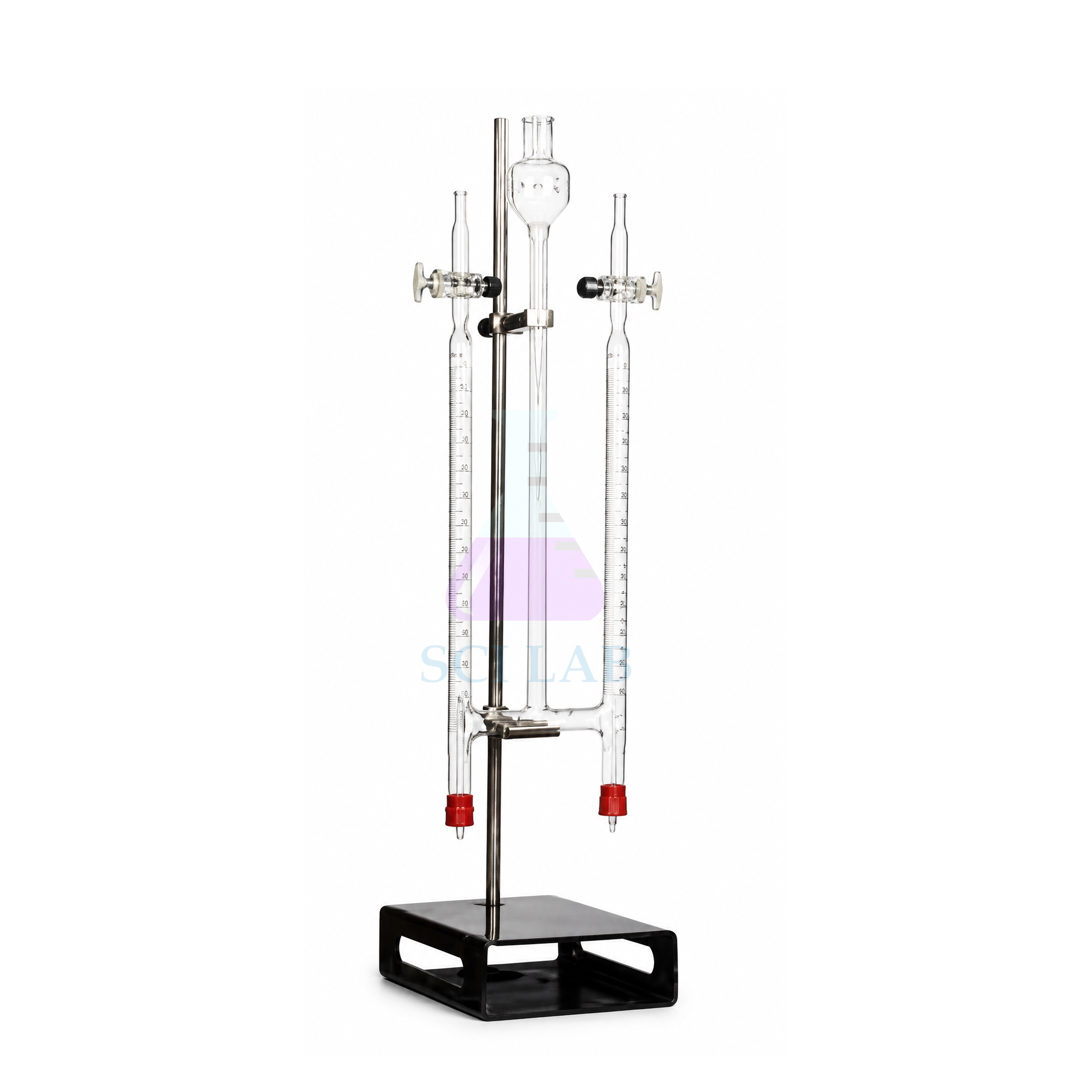
The Apparatus for Water Electrolysis is a Hofmann type voltameter, 600 mm high, that splits water into hydrogen and oxygen. It has three glass tubes, two of them graduated 25 ml tubes, ground glass taps, carbon and carbon-platinum electrodes and connecting wires, so the volume of each gas can be read directly.
Specifications of the Hofmann Water Electrolysis Apparatus
| Specification | Value |
|---|---|
| Glass tubes | 3: two graduated, one central reservoir tube |
| Graduated tubes | 25 ml, 1 mm graduation marks |
| Electrodes | Carbon and carbon-platinum |
| Taps | Ground glass |
| Wiring | Electrical conducting wires |
| Height | 600 mm |
| Supplied by | Science Lab Supplies, Ambala, India |
Electrolysis of Water with the Hofmann Apparatus
Clamp the apparatus upright, open both taps and fill through the central tube with dilute acid or a salt solution until the side tubes are full. Close the taps and connect the electrodes to a low-voltage DC supply such as the Power Supply Unit/ Block for DC.
- Composition of water: run the current, then read the gas volumes and show that hydrogen is about twice the volume of oxygen.
- Gas tests: let out each gas in turn; hydrogen gives a squeaky pop with a lit Wood Splints splint, and oxygen relights a glowing one.
- Charge and volume: record the gas volume at set times and plot it against time at a steady current.
Common errors: air left in the side tubes, reading volumes with the liquid levels unequal, and using chloride solutions with platinum, which gives chlorine instead of oxygen.
Frequently Asked Questions
Why is the hydrogen volume twice the oxygen volume?
Each water molecule has two hydrogen atoms and one oxygen atom. Electrolysis gives two molecules of hydrogen for every molecule of oxygen, so at the same temperature and pressure the volumes are 2 to 1.
Why add acid or a salt to the water?
Pure water has too few ions to carry much current. A little dilute sulphuric acid or sodium sulphate adds ions, so electrolysis runs at a useful rate.
Which electrodes should be used?
Use the platinum-type electrodes for acidified water. With chloride solutions, carbon electrodes are preferred, since chlorine is given off in place of oxygen and can attack platinum.
Why are the taps opened while filling?
Open taps let air escape as the liquid rises, so the side tubes fill completely. Any trapped air would add to the gas reading.
Related Electrolysis Apparatus
- Hofmann Voltameter with Electrodes, 50 ml Limbs: two limbs of about 50 ml, graduated 2 to 50 ml, with carbon and platinum electrodes.
- Hofmann Voltameter Stand: metal stand with 600 mm rod and support clamp.
- Voltameter: base with terminals, platinum electrodes and two 10 ml graduated tubes.
- Platinum Foil Electrodes (Pair): pair of platinum foil electrodes fused in glass tubes.
- Apparatus for Water Synthesis (Eudiometer): 16 mm graduated glass tube with an electrical filament.
- Electrolysis Kit: insulated stainless steel electrodes and rubber gaskets for splitting water.
Browse the Chemistry Lab range or all School Lab Equipments.
Science Lab Supplies holds an Importer-Exporter Code and can ship to buyers in the Philippines, Nepal, Bangladesh, Zambia, Rwanda and South Africa. To ask for a quotation, use the contact page or the enquiry cart.
Last updated: 13 November 2026