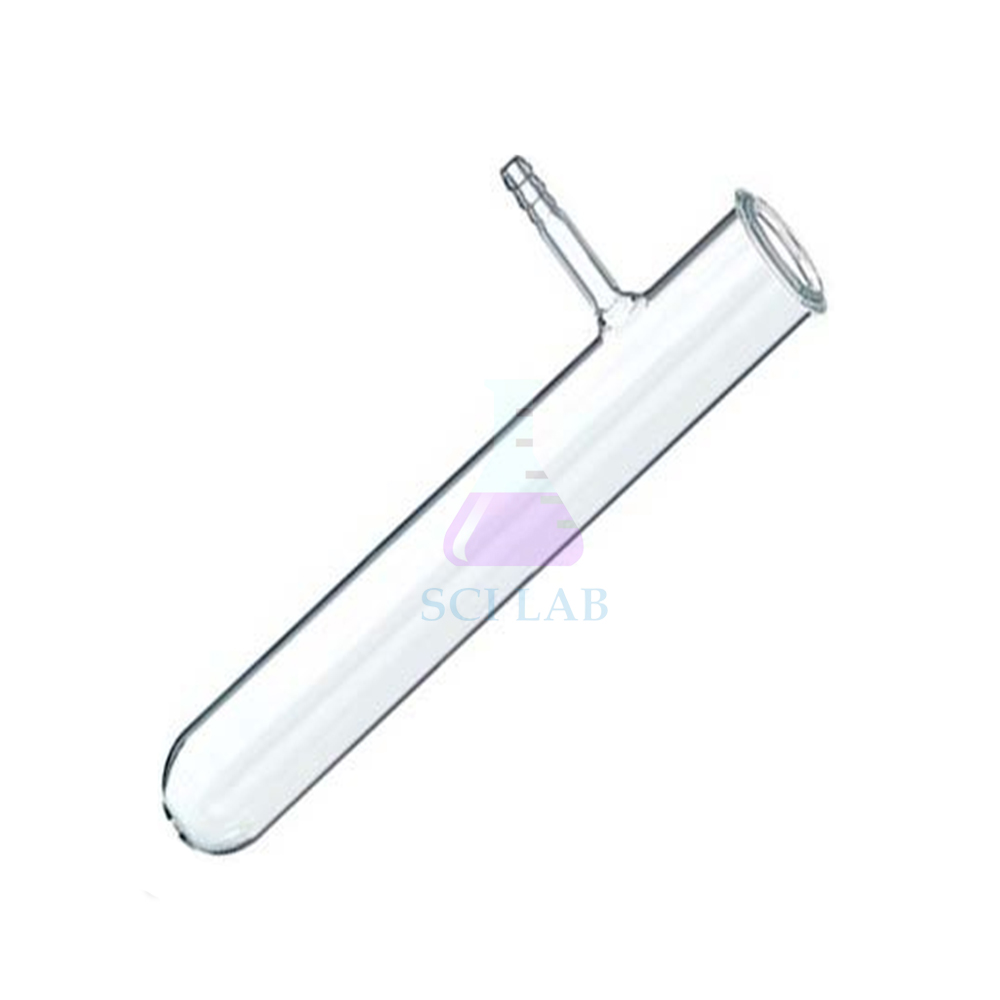
Side-Arm Test Tube Set
Product Code : SCL-CL-11463
This set is built around test tubes with a side tube of about 22 mm, which turn an ordinary test tube into a small gas generator. It also has a dropper, rubber tubes and glass tubes, so the tubes can be linked to delivery lines and collecting vessels.
Specifications of the Side-Arm Test Tube Set
| Specification | Value |
|---|---|
| Test tubes | With a side tube, about 22 mm long |
| Accessories | Dropper, rubber tubes, glass tubes |
| Supplied by | Science Lab Supplies, Ambala, India |
Using Side-Arm Test Tubes in Practicals
The reagent goes in the tube and the mouth is closed with one of our Rubber Stoppers Without Holes. Gas leaves through the side tube into a rubber tube and on to a glass delivery tube. The dropper adds liquid in small amounts to control the rate.
- Small gas preparations: hydrogen from zinc and acid, or oxygen from hydrogen peroxide with manganese dioxide, collected in an inverted tube.
- Gas tests: lead carbon dioxide from marble chips and acid through the rubber tube into limewater.
- Stopping the flow: pinch the rubber tube with a Mohr Pinchcock Clamp to hold back the gas between tests.
Frequently Asked Questions
What is a side-arm test tube used for?
It is used as a small gas generator in lessons. The reaction runs in the tube while the gas leaves through the side tube, so the mouth stays free for a stopper or for adding reagent.
How is the gas from the side tube collected?
Join a rubber tube and a glass tube to the side arm. Lead the gas over water, or upwards or downwards into a dry container, depending on how soluble and how dense it is.
Why add the liquid reagent with a dropper?
Adding liquid a few drops at a time keeps the reaction gentle. Gas forms at a steady rate and does not froth up into the side tube.
What safety steps apply when making gases in these tubes?
Use small amounts, wear eye protection, and make toxic gases only in a fume cupboard. Never close every outlet, because gas pressure can build up and force out the stopper.
Can the gas be dried before it is collected?
Yes. Pass it through a drying tube or bottle placed in the tubing line. Choose a drying agent that does not react with the gas.
Related Tubes and Fittings
- Glass Tubes of Different Diameters: 100 mm glass tubes in diameters from 5 to 6 mm up to 12 to 13 mm.
- T-Shaped Glass Connector Tube, 7 mm: T-shaped glass pipe, 7 mm diameter.
- Rubber Tube (Laboratory): natural rubber hose, 9 mm outer and 6 mm inner diameter.
- Simple Gas Preparation Kit: includes a test tube with side arm and one-hole stopper, a thistle funnel and a delivery tube.
- Plastic Vessel with Side Arm: 500 ml graduated plastic vessel with a side tube.
- Drying Column: 250 ml drying column for gases.
Browse further tubes and fittings in Chemistry Lab or the main School Lab Equipments listing.
Science Lab Supplies is registered with an Importer-Exporter Code and can export to schools and colleges in Kenya, Ghana, Ethiopia, Tanzania, Uganda and the UAE. To ask for a quotation, use the contact page or the enquiry cart.
Last updated: 14 November 2026