Monocotyledon Flower Model
Product Code : SCL-BLE-11722
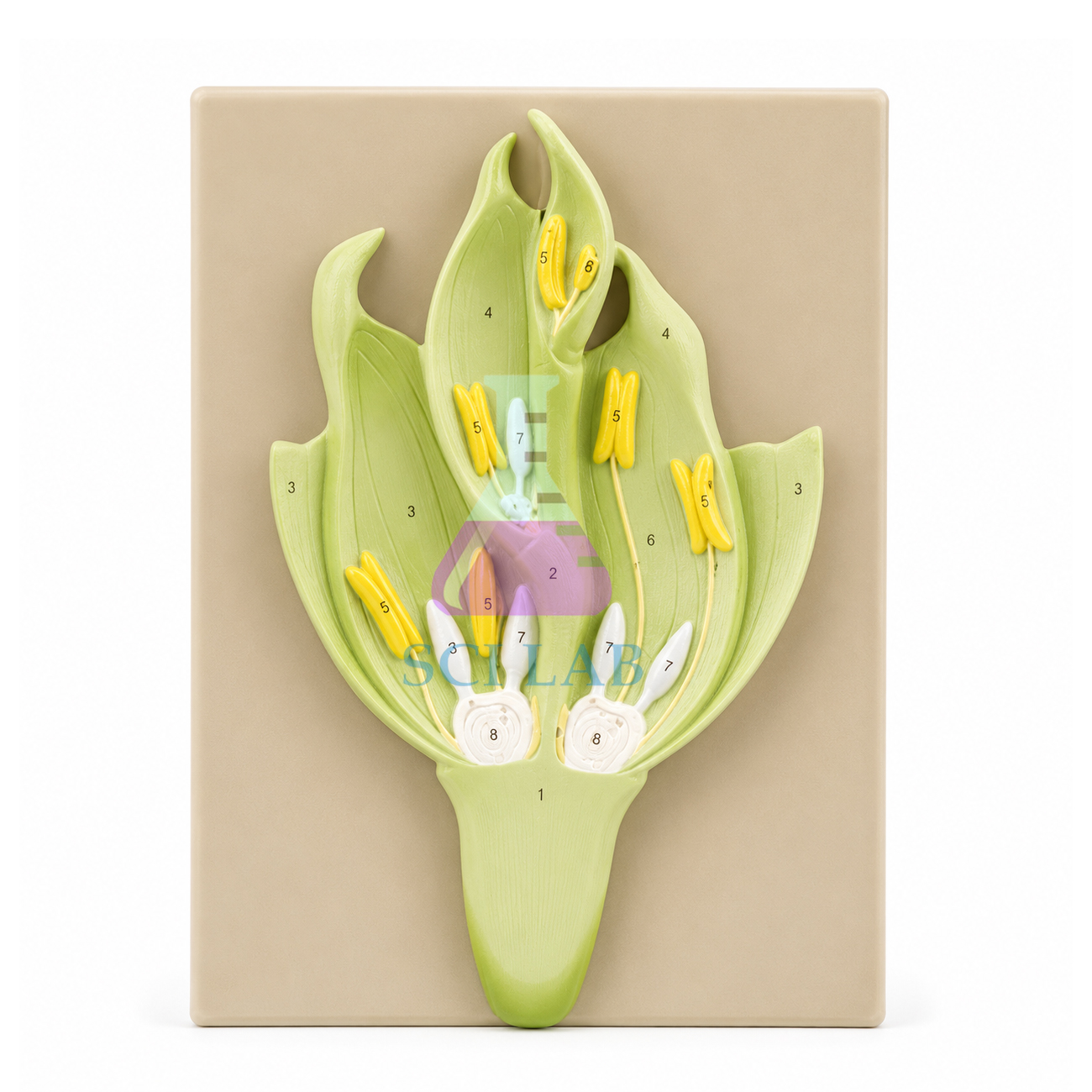
The Monocotyledon Flower Model shows a wheat flower greatly magnified and cut lengthwise, so students can see the structures inside a monocot flower. The PVC model is coloured with non-toxic dyes, measures 250 x 350 mm and is mounted on an ABS plastic base, with numbered features and a key card.
Specifications of the Wheat Flower Model
| Specification | Value |
|---|---|
| Flower shown | Wheat, a monocot, in longitudinal section |
| Enlargement | Greatly magnified |
| Material | PVC, coloured with non-toxic dyes |
| Size | 250 x 350 mm |
| Base | ABS plastic |
| Labelling | Numbered features with key card |
| Supplied by | Science Lab Supplies, Ambala, India |
Grass Flower Studies with the Wheat Flower Model
The teacher names each numbered part from the key card. Students then compare the model with a real wheat or grass spikelet taken apart with forceps.
- Monocot and dicot flowers (Class 11): set the wheat flower, with its bracts and no showy petals, beside the Dicotyledon Flower Model, 180 x 300 x 60 mm and list the differences.
- Monocot features: collect the features shared by wheat flowers, stems and leaves, using the Monocot Leaf T.S. Educational Chart for the leaf.
- Pollination: relate the hanging anthers and feathery stigmas of grasses to pollen carried by wind rather than insects.
Common errors: calling the lemma and palea petals, when they are bracts, and missing the tiny lodicules at the base of the ovary.
Frequently Asked Questions
Is the model a whole flower or a section?
It is a longitudinal section. The wheat flower is greatly magnified and cut lengthwise, so the structures inside the floret are on view, with numbers matched to a key card.
Does it work as a pair with a dicot flower model?
Yes. Monocot and dicot flowers are usually taught side by side. Placing the wheat model next to a dicot flower lets students compare a flower enclosed by bracts with one that has sepals and coloured petals.
What does the ABS base add for classroom use?
The flower is mounted on an ABS plastic base, so it stands on a bench for display and can be passed round a group without anyone holding the flower itself.
What are the lemma and palea?
They are the two bracts that enclose each grass floret. The lemma is the outer, larger one and the palea the inner one. Together they protect the stamens and ovary until the floret opens.
What makes a wheat floret open?
The lodicules, two tiny scales at the base of the ovary, swell with water and push the lemma and palea apart so the anthers can hang out. Wheat is mostly self-pollinated, and wind carries the rest of the pollen.
How many stamens does a wheat flower have?
Three. Each wheat floret has three stamens and one ovary with two feathery stigmas, the usual pattern in grasses.
Related Flower and Monocot Teaching Items
- Dicotyledonous Flower Model, 250 x 350 mm: three-dimensional PVC flower model, 250 x 350 mm, coloured with non-toxic dyes.
- Typical Flower V.S. Model: flower in vertical section mounted on a base, 650 g.
- Large Size Flower Model: large flower model, 220 x 330 mm, with the pistil and anthers shown in section.
- Flower Structure Chart: teaching chart naming sepals, petals, stamens, pistil, ovary, style, stigma and anther.
- Monocotyledonous and Dicotyledonous Stems, Cross Section: coloured slide on 25.4 x 76.2 mm borosilicate glass, in a plastic box.
Other flower and plant models sit in the Biology Lab Equipment category; the Biology Lab section holds more botany items.
Export of the wheat flower model is possible to Malaysia, Peru, Egypt, Iraq, Nigeria and Kenya, since Science Lab Supplies is registered with an Importer-Exporter Code. Send the monocot model to the enquiry cart, or use the contact page, to receive a quotation.
Last updated: 15 November 2026