Lizard Dissection
Product Code : SCL-BLE-11709
The Lizard Dissection is a sealed preserved display: a dissected lizard kept in formalin inside a sealed glass container of 200 x 70 x 40 mm. It is for observation through the glass, not a kit for hands-on dissection. The unit stays sealed, and the same jar serves each new group.
Specifications of the Lizard Dissection
| Specification | Value |
|---|---|
| Specimen | Dissected lizard |
| Preservative | Formalin |
| Container | Sealed glass container, 200 x 70 x 40 mm |
| Format | Sealed preserved display, kept closed |
| Safety data sheet | Kept with the unit: exact preservative, concentration and transport data |
| Supplied by | Science Lab Supplies, Ambala, India |
Reptile Anatomy Lessons with the Lizard Dissection
Stand the jar on a white sheet under good light and let small groups view it in turn. A 2x Hand Magnifier with a 50 mm lens helps pupils pick out small details through the glass.
- Spotting practice (Class 11 to B.Sc.): write the class of the animal, two identifying features and one adaptation, as in a practical examination.
- Labelled sketch: draw only what is clearly visible through the glass and add labels from a reptile anatomy diagram.
- Amphibian and reptile compared: place the jar beside the Dissection of the Frog and list differences in skin, limbs and body form.
Handling the Formalin Container
Formalin is a solution of formaldehyde, which irritates the eyes, skin and airways and is classed as a cancer-causing substance. The jar is therefore for sealed display only and is not opened for routine class use. Keep the unit sealed as supplied, and keep its supplied safety data sheet with the specimen record: that sheet gives the exact preservative, its concentration and the transport data.
Keep the container closed and upright in a cool cupboard away from sunlight. Check the seal and fluid level each term. If the glass cracks or leaks, open the windows, wear gloves and eye protection, and follow your institution's rules for formaldehyde spills.
Frequently Asked Questions
Should the sealed jar be opened for class use?
No. The dissection is meant to be viewed through the glass. Opening it releases formaldehyde vapour, lets the fluid evaporate and allows the specimen to dry out and spoil, so keep the unit sealed as supplied.
What should an importer check before bringing in formalin-preserved specimens?
Formalin is a formaldehyde solution, which many countries treat as a hazardous chemical. Importers usually check national rules for labelling and transport of such liquids against the exact preservative, concentration and transport data on the safety data sheet of the finished specimen. They also confirm which permits or veterinary documents the destination country asks for, given the species.
How does a lizard's skin differ from a frog's?
A lizard's skin is dry and covered with horny scales, which cut water loss and let reptiles live away from water. A frog's skin is thin, moist and has no scales; it lets water pass and also takes in oxygen, so frogs must stay damp.
Where is the gall bladder in a lizard?
The liver is large and two-lobed. The gall bladder lies against the liver, usually near the right lobe, and its bile duct runs to the duodenum, where bile helps break down fats.
Why does a lizard have a single opening at the rear?
In reptiles the gut, the urinary ducts and the reproductive ducts all empty into the cloaca. It has three chambers in sequence before the vent, so faeces, urine and eggs or sperm leave through one opening.
Related Preserved Vertebrate Specimens
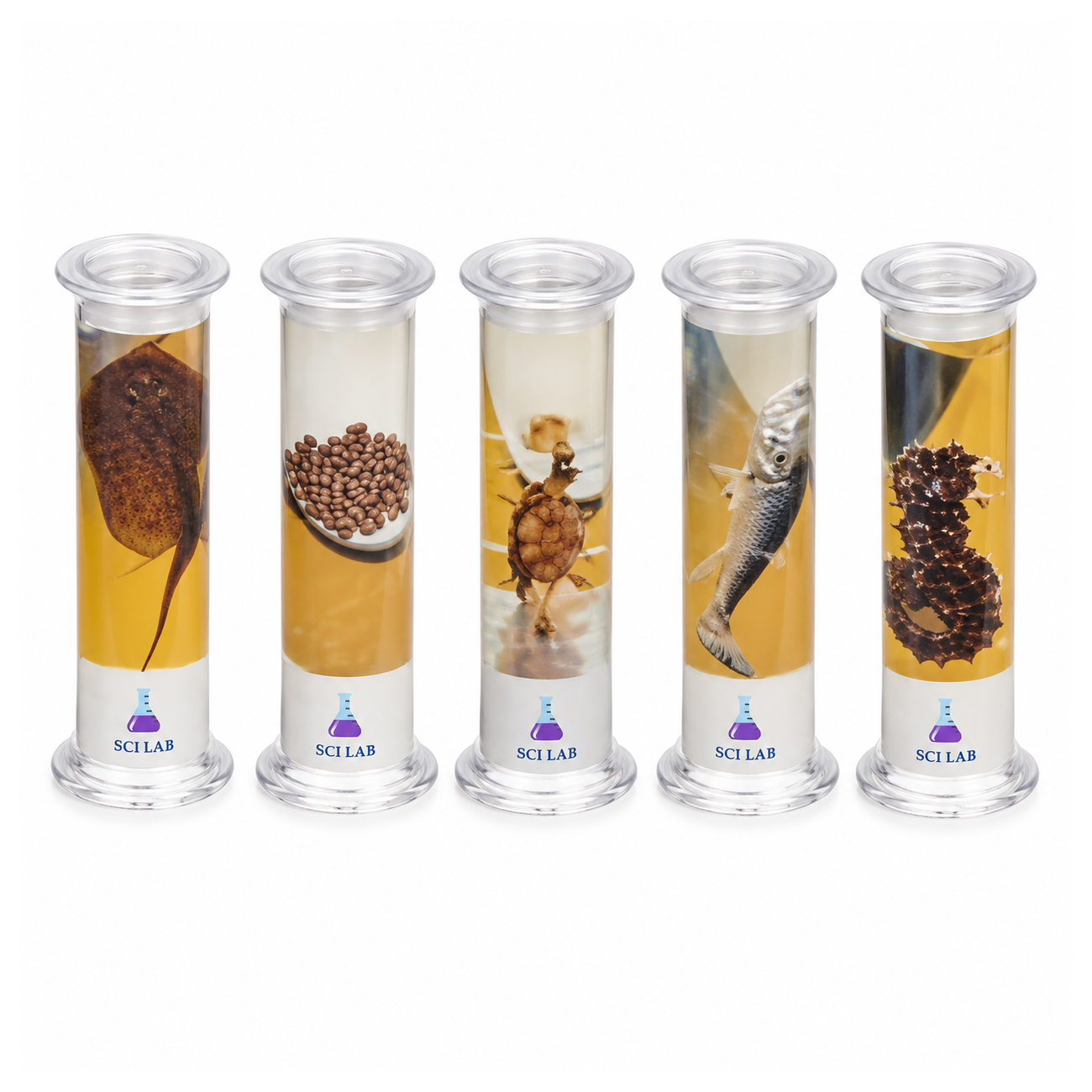
- Fish Dissection: dissection in formalin, sealed in a 200 x 70 x 40 mm glass container.
- Rabbit Dissection: formalin-preserved dissection in a sealed glass container.
- Chicken Dissection: dissection kept in formalin in a sealed glass container.
- Comparison of Limbs in Vertebrates: scaled PVC replicas of five homologous forelimbs on one board.
- Protective Gloves, White, Disposable: single-use gloves for work with acids, bases and organic liquids.
Further zoology and botany items appear on the Biology Lab Equipment page, within School Lab Equipments.
Science Lab Supplies exports under its Importer-Exporter Code and is able to ship to Uganda, the UAE, Saudi Arabia, Oman, the Philippines and Nepal. Quoting for the lizard specimen begins with a message on the contact page; the enquiry cart helps when several specimens are ordered together.
Last updated: 19 November 2026
.jpg)