Hand Magnifier, 2x, 50 mm Lens, Plastic Handle
Product Code : SCL-BLE-11648
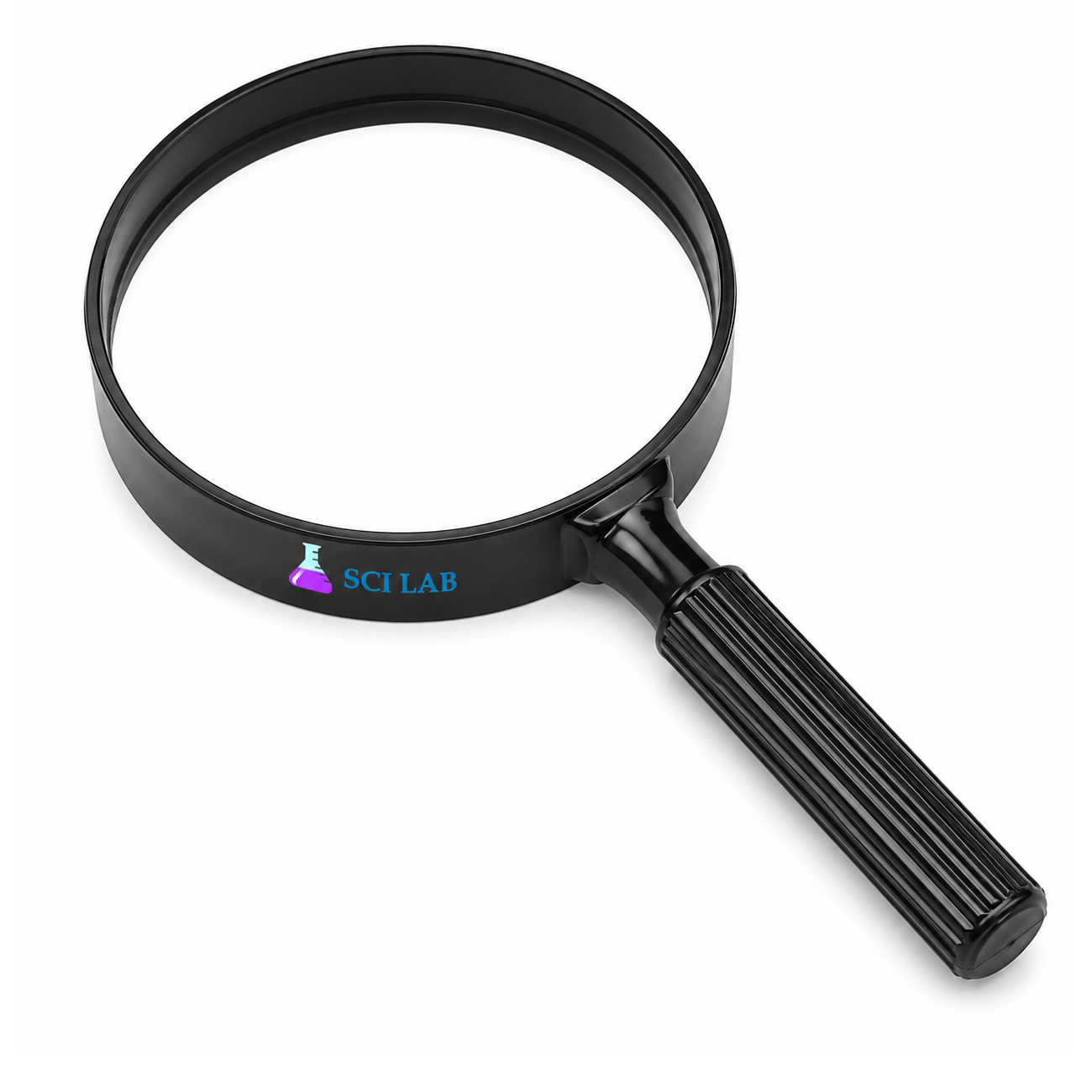
The Hand Magnifier has a 50 mm lens giving 2X magnification, set on a plastic handle, and measures 140 mm from end to end. The low power shows more of the object at once than a stronger lens, so pupils can follow leaf veins, flower parts, seeds and small insects while holding the lens steady.
Specifications of the Hand Magnifier
| Specification | Value |
|---|---|
| Magnification | 2X |
| Lens diameter | 50 mm |
| Overall length | 140 mm |
| Handle | Plastic |
| Supplied by | Science Lab Supplies, Ambala, India |
Close Observation with the Hand Magnifier
Hold the lens close to the object, then raise it slowly until the image is sharp; or hold it near the eye and bring the object closer. Work in good light but out of direct sun.
- Plant structure: look at leaf veins, hairs, flower parts and seeds, then draw and label what is seen.
- Leaf litter: spread a sample in a Glass Petri Dish with Cover, 100 mm and pick out the small animals living in it.
- Dissection: view organs of a specimen pinned out on a Dissection Pan.
- Comparing lenses: look at the same seed with this 2X lens and with a 10X Tripod Magnifier and note the difference in field of view.
Wipe the lens with a soft dry cloth only; grit and paper towels scratch it.
Frequently Asked Questions
How should the 2X and 50 mm figures in a magnifier specification be read?
2X means the object looks about twice as long and twice as wide as it does to the eye alone. 50 mm is the diameter of the lens itself. Many listings also give an overall length that includes the handle: on this magnifier it is 140 mm. When comparing models, set lens diameter against lens diameter, not against overall length.
What do pupils examine with the magnifier in biology lessons?
Leaves, flowers, seeds, insects, skin, hair and soil samples are typical. At 2X a larger patch of a leaf or flower stays in view than with a stronger lens, which makes drawing and labelling easier for younger classes.
How can pupils share what they see through the lens?
Work in pairs: one pupil finds a feature, such as the vein pattern of a leaf or the hairs on a stem, and describes it in words. The partner then finds the same feature and adds it to a shared labelled drawing.
Is it safe to use the magnifier in sunshine?
Take care. A lens can focus sunlight into a hot spot that burns skin or paper and can harm the eyes. Use it in shade, never look at the sun through it, and store it covered or face down away from windows.
How can pupils measure how much the lens magnifies?
Hold the lens over a millimetre ruler and compare a magnified gap with the marks just outside the rim of the lens. Magnification is the apparent size divided by the real size. Repeat at a few lens heights: the result changes with distance, so 2X is the figure for normal use rather than for every position.
Related Hand Lenses and Magnifiers
- Hand Lens with White Plastic Handle: 50 mm optically worked lens on a white plastic handle.
- Hand Lens with Black Plastic Case: hand lens with black plastic handle and case, in 50, 75 and 100 mm.
- Single Lens Eye Loupe: 5X lens with 65 mm focal length in a frame that fits over one eye.
- Magnifier: x10 biconvex glass lens.
- Junior Dissecting Microscope: high-eyepoint lenses on a jointed arm scan the whole stage.
- Insect Observation Container with 6x Magnifying Lid: 6X lens in the lid, with three ventilation holes.
Other hand lenses are in the Light and Optics range; the Biology Lab Equipment range covers the wider biology bench.
From Ambala, Science Lab Supplies can export the magnifier to schools in Nepal, Bangladesh, Zambia, Rwanda, South Africa and Qatar, drawing on its Importer-Exporter Code. For a quotation, use the enquiry cart or the form on the contact page.
Last updated: 16 November 2026