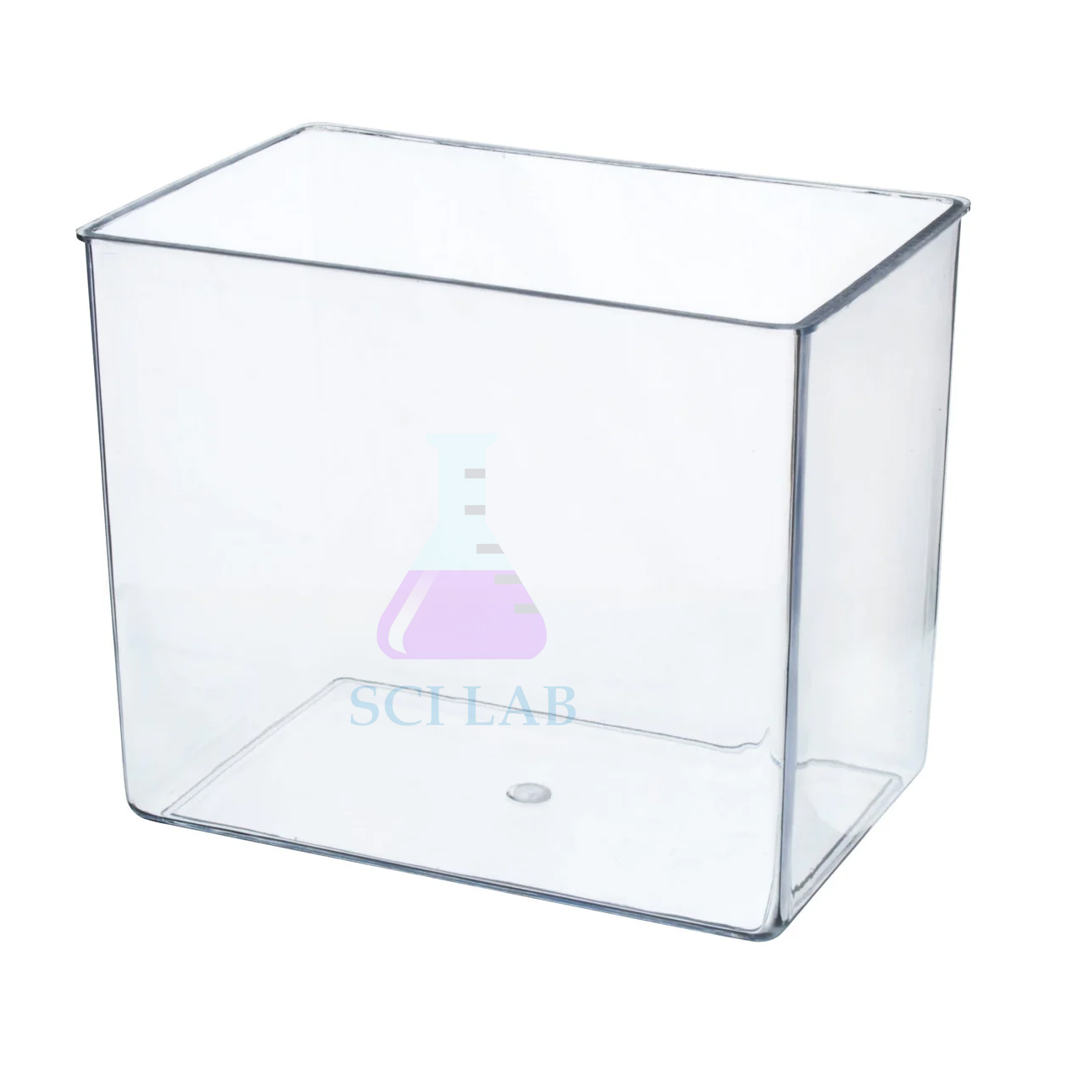
Rectangular Laboratory Container, 26 x 19 x 10 cm
Product Code : SCL-BLE-11664
The Rectangular Laboratory Container is a clear borosilicate 3.3 glass container measuring 260 × 190 × 100 mm outside (length × width × height), with a flat base and a smooth rim. It is supplied without a lid. Its glass resists chemicals and heat, so it serves on the bench and on an incubator shelf as a tray for germination trials, a holder for culture dishes or a soaking bath for small glassware.
Specifications of the Rectangular Container, 26 x 19 x 10 cm
| Specification | Value |
|---|---|
| Material | Clear borosilicate glass 3.3 |
| Shape | Rectangular |
| Outside dimensions | 260 × 190 × 100 mm, length × width × height (26 × 19 × 10 cm) |
| Base and rim | Flat base, smooth rim |
| Lid | Supplied without a lid |
| Chemical resistance | Resistant to chemicals |
| Heat resistance | Heat resistant |
| Supplied by | Science Lab Supplies, Ambala, India |
Germination Trays and Bench Work with the Container
The container keeps a small set-up together, so a group can move its whole experiment between the bench, a dark cupboard and an incubator in one piece. Everything inside it stays at the same temperature and is checked at the same time. The 260 × 190 × 100 mm size is measured outside, so dishes placed inside must allow for the wall thickness.
- Germination trial (Class 6–10): place seeds on damp filter paper in Petri Dish Glass With Lid dishes, stand them in the container and use one container per condition, for example one in the incubator and one on the bench.
- Temperature log: lay a Glass Thermometer in the container beside the dishes and read it at each check, so the results show the temperature the seeds really had.
- Water plants: keep the shoots for the Aquatic Plant Photosynthesis (Oxygen) Demonstration Kit in water in the container until the practical.
- Soaking bath: leave used slides and small glassware in detergent solution in the container before washing.
Precautions: avoid sudden temperature changes, such as hot water poured into a cold container or a warm container set on a wet bench, and check the edges for chips before each use.
Frequently Asked Questions
What should a buyer check on the glass before the container is filled?
Look along every edge and corner for chips or hairline cracks when it is unpacked. A small crack can spread once water presses on the glass, so a damaged container should not be used. A first fill in a sink shows any leak safely.
Does heat resistant mean the container can take sudden temperature changes?
No. Borosilicate 3.3 glass copes with warm work, such as incubator shelves or warm rinsing water, far better than ordinary soda-lime glass, but any glass can crack when one part is heated or cooled much faster than the rest. Warm and cool the container gradually and heat liquids in beakers or flasks, not in the container.
How damp should the paper be for a germination trial?
Damp all over but never standing in water. Seeds sitting in a pool are short of air and rot easily, and wet paper also encourages mould and damping-off of young seedlings. Tip off any extra water and add a few drops daily as the paper dries.
Should germinating seeds be kept in the dark or in the light?
Most seeds used in school trials, such as mustard, cress or beans, need no light to germinate, so the container can start in a cupboard or an incubator. Once shoots appear, move it to a warm, well-lit place, or the seedlings grow long, pale and weak.
Related Culture and Incubation Equipment
- Tissue Culture Dish: borosilicate glass dish with a beaded edge in 50, 75 and 100 mm sizes.
- Incubation Oven: digital control from ambient +1 °C to 60 °C and two removable shelves.
- Incubator 32 L, up to 80 C: natural-convection unit with a tempered glass inner door.
- Glass Bottle, Wide Mouth: 60 ml colourless bottle closed by a frosted stopper.
- Dropper: straight squeeze-bulb dropper for adding water a few drops at a time.
More culture vessels and glass items are listed under Biology Lab Equipment and Lab Glassware.
With its Importer-Exporter Code, Science Lab Supplies is able to send this container to Tanzania, Uganda, the UAE, Saudi Arabia, Oman and the Philippines. The quickest way to a quotation on the container is a note on the contact page; larger lists fit the enquiry cart.
Last updated: 19 November 2026