Chicken Dissection
Product Code : SCL-BLE-11710
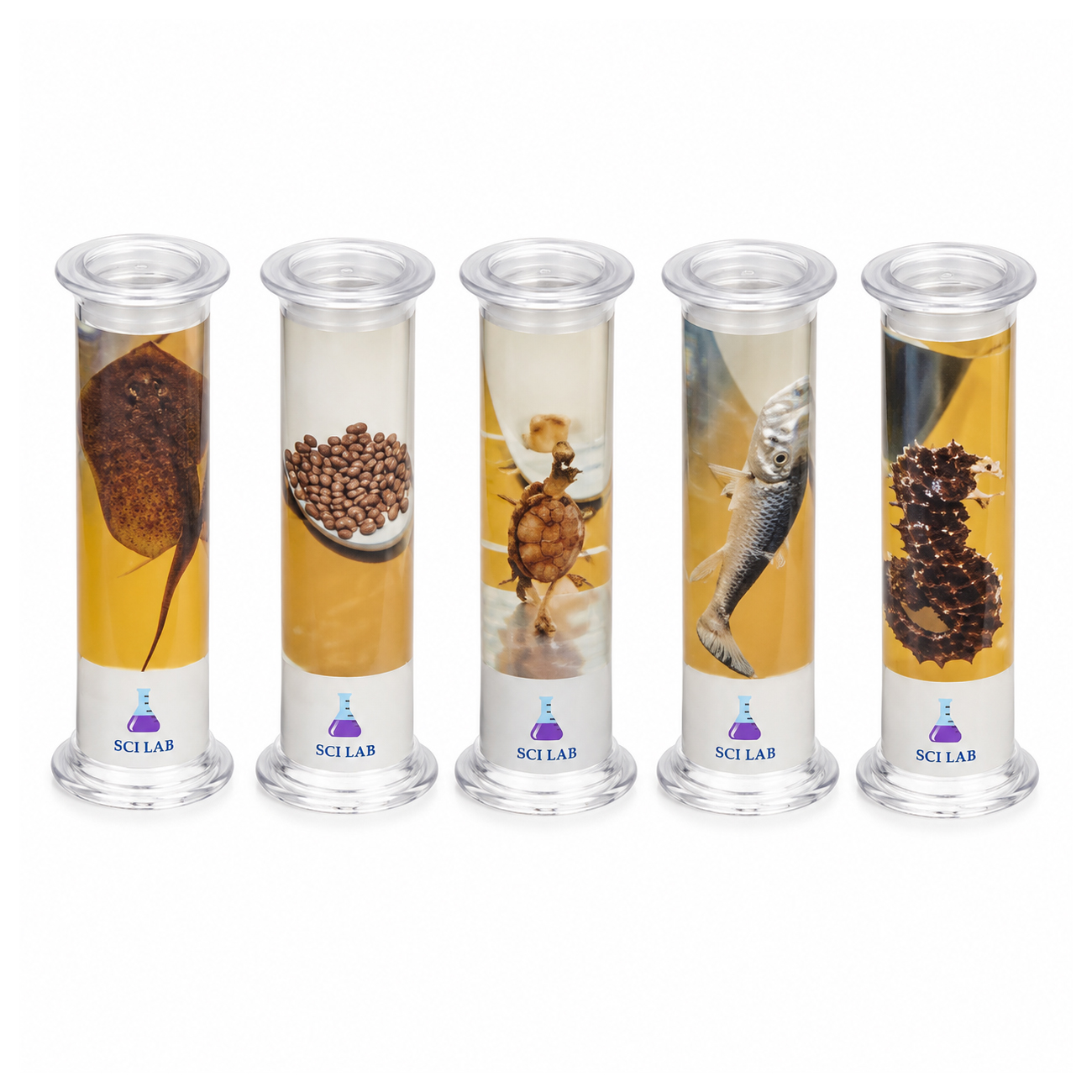
The Chicken Dissection is a sealed preserved display: a labelled sectional preparation of a juvenile domestic chicken (Gallus gallus domesticus), kept in formalin inside a sealed glass container of 200 x 70 x 40 mm. A class views it through the glass, term after term, with no fresh dissection and no handling of the specimen.
Specifications of the Chicken Dissection
| Specification | Value |
|---|---|
| Specimen | Domestic chicken (Gallus gallus domesticus), juvenile |
| Display | Labelled sectional anatomy; digestive tract, heart and lungs labelled where the section shows them |
| Preservative | Formalin |
| Container | Sealed glass container, kept closed |
| Container size | 200 x 70 x 40 mm |
| Safety data sheet | Kept with the unit: exact preservative, concentration and transport data |
| Supplied by | Science Lab Supplies, Ambala, India |
Bird Anatomy Lessons with the Chicken Dissection
Set the container at a viewing station with a labelled diagram beside it and let small groups visit in turn. Pupils sketch what they see, then check the display labels for the digestive tract, heart and lungs, where the section shows them, against the diagram.
- Bird gut (Class 9 to 12): learn the crop, gizzard and intestine from a labelled diagram, write one job for each, then compare the diagram with what is visible through the glass.
- Bird and human gut: use the Human Digestive System Model, which shows the human tract from mouth to rectum, and note the parts a bird has that a human lacks.
- Reptile and bird: set the jar beside the Lizard Dissection and discuss which features birds share with reptiles.
Safe Storage of the Preserved Specimen
The jar is for sealed display and is not opened in class. Formalin gives off formaldehyde, which irritates the eyes, skin and airways and is a cancer hazard with repeated exposure, so keep the unit sealed as supplied. Its supplied safety data sheet gives the exact preservative, its concentration and the transport data; keep it with the specimen record.
Store the container upright and closed, in a shaded cupboard at room temperature. Do not freeze it. Look at the seal before each lesson; a damp ring or a sharp smell means formalin is escaping and the container should be set aside for the laboratory staff.
Frequently Asked Questions
How should a school dispose of the specimen and its fluid when it is retired?
Never pour formalin down the sink or put the specimen in general waste. Keep the container sealed and send it through the institution's chemical waste route, or follow local rules for formaldehyde waste.
Does the specimen need refrigeration in transit or storage?
No. Formalin keeps the tissue at normal room temperature, so no cold chain is needed. Keep the jar upright, sealed and out of direct sun, and protect it from frost and from heat such as a sunny window or a radiator, which can strain the seal.
What does the crop do?
The crop is a thin-walled pouch of the oesophagus at the base of the neck. It stores and softens food that the bird swallows quickly, then passes it on in small amounts to the stomach.
Why does a chicken need a gizzard?
Birds have no teeth. Food first passes the proventriculus, which adds acid and enzymes, then reaches the muscular gizzard. Its thick walls, often helped by swallowed grit, grind the food into a paste.
How is a bird's body built for flight on the inside?
Bones are light and partly hollow, air sacs extend from the lungs into the body, and large breast muscles attach to a deep keel on the breastbone. A short, fast gut also keeps body weight low.
Related Vertebrate Specimens and Dissection Items
- Dissection of the Frog: formalin-preserved dissection, sealed in a 200 x 70 x 40 mm glass container.
- Fish Dissection: dissection in formalin inside a sealed glass container.
- Rabbit Dissection: sealed glass container, 200 x 70 x 40 mm, with formalin.
- Dissection Pan: 28 x 20 cm metal pan with a wax base.
- Educational Zoology Specimen Kit: teaching kit for observing animal specimens and their visible structures.
The Biology Lab Equipment category lists more zoology material; the wider range is under School Lab Equipments.
Holding an Importer-Exporter Code, Science Lab Supplies can arrange export to institutions in the UAE, Saudi Arabia, Oman, the Philippines, Nepal and Bangladesh. Quotations are prepared on request: reach the team through the contact page or the enquiry cart.
Last updated: 19 November 2026