Fish Dissection
Product Code : SCL-BLE-11713
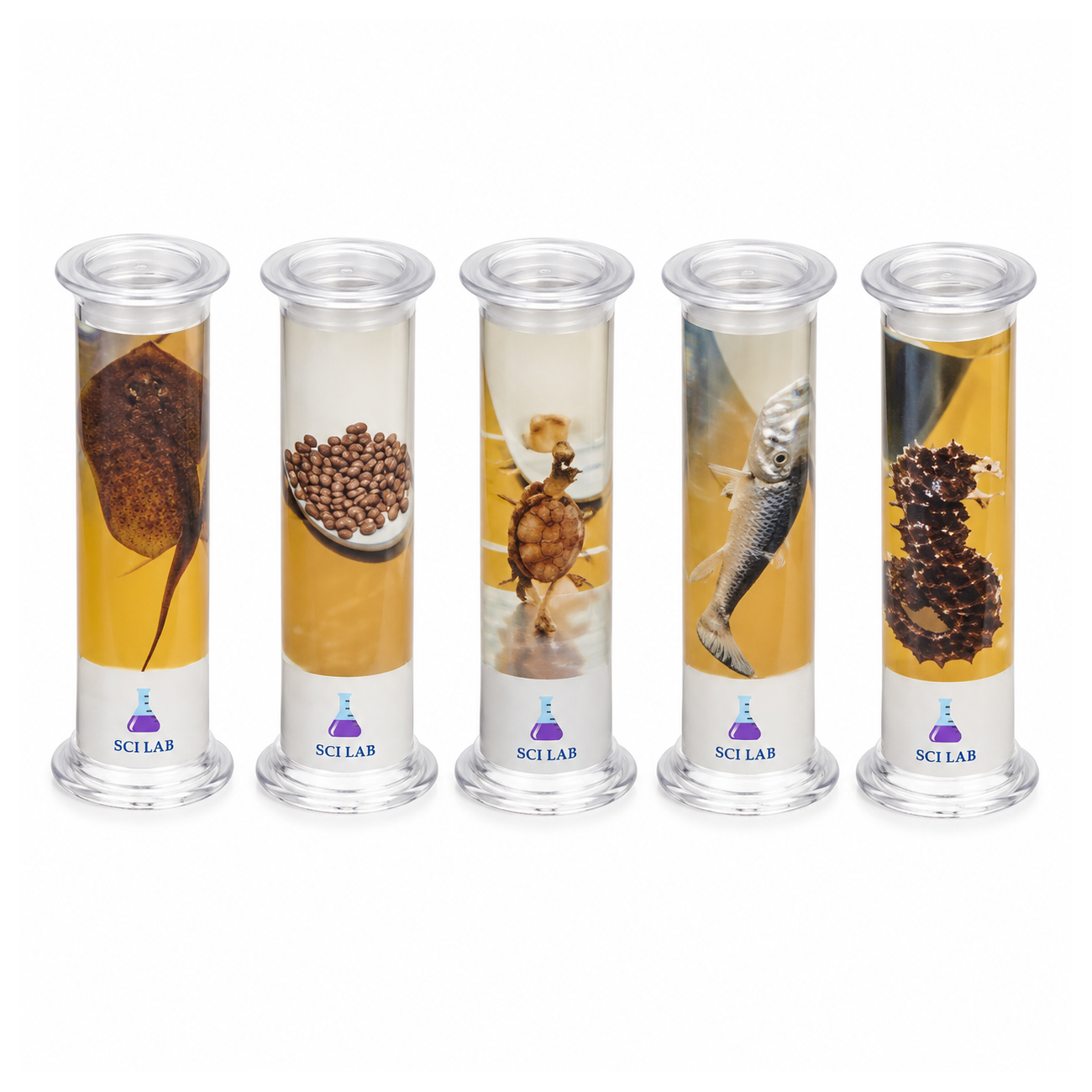
The Fish Dissection is a dissected fish preserved in formalin and sealed in a glass container, 200 x 70 x 40 mm. It shows a class the inside of a bony vertebrate that lives in water, and it can be kept as a permanent teaching specimen for fish anatomy, breathing and buoyancy lessons.
Specifications of the Fish Dissection
| Specification | Value |
|---|---|
| Specimen | Dissected fish |
| Preservative | Formalin |
| Container | Glass, sealed, 200 x 70 x 40 mm |
| Supplied by | Science Lab Supplies, Ambala, India |
Fish Anatomy and Breathing Lessons
Begin outside the body with fins, gill cover and lateral line, then move inside to the gills, gut and swim bladder. Students draw the fish in side view and label what they find.
- External and internal features (Class 9 to 12): list each fin, the gill cover and the lateral line, then the internal organs visible in the dissection.
- Gills against lungs: compare the gill arches with the Human Lung Model and explain why gills collapse and fail in air.
- Fins to limbs: match the pectoral fins to the five forelimbs shown on the Comparison of Limbs in Vertebrates model.
Looking After a Wet Specimen
Keep the container sealed, upright and out of direct sun. A falling fluid level or a white crust round the lid shows a weak seal. Only trained staff should reseal or refill it, in a ventilated room with gloves and eye protection.
Frequently Asked Questions
Why is a glass container used rather than an acrylic one?
Glass does not react with formalin, resists scratching and stays clear for many years, so the organs remain easy to see after much handling. Acrylic jars are lighter and less likely to break, but they scratch more easily and can turn cloudy with age.
What should be done if the fluid level drops or the seal fails?
Set the container aside and tell the laboratory staff. Wearing gloves and eye protection in a ventilated room, they can reseal it or top it up with formalin of the usual working strength, not plain water, under the institution's chemical rules.
What does the swim bladder do?
It is a gas-filled sac above the gut. By changing the amount of gas inside, a bony fish can float at a chosen depth without swimming hard. Sharks and rays have no swim bladder and rely on an oily liver and constant movement instead.
How do gills take oxygen from water?
Water enters the mouth, passes over the gill filaments on each gill arch and leaves under the gill cover. The filaments carry thin plates full of capillaries, and blood flows against the water current, so oxygen keeps passing into the blood.
What is the lateral line for?
It is a row of pores along each side, over a canal lined with sense cells. These cells pick up movement and pressure changes in the water, which helps the fish find prey, avoid predators and keep its place in a school.
Related Specimens and Aquatic Study Items
- Dissection of the Frog: amphibian dissection in formalin, sealed in a glass container.
- Lizard Dissection: formalin specimen in a sealed 200 x 70 x 40 mm glass container.
- Chicken Dissection: bird dissection kept in formalin in sealed glass.
- Rectangular Laboratory Container, 26 x 19 x 10 cm: glass container of 26 x 19 x 10 cm, chemical and heat resistant.
- Human Respiratory System Chart, Laminated, 70 x 100 cm: laminated wall chart, 70 x 100 cm.
More animal specimens and models are in Biology Lab Equipment, which belongs to the School Lab Equipments range.
Shipments from Science Lab Supplies go out under its Importer-Exporter Code, and buyers in the Philippines, Nepal, Bangladesh, Zambia, Rwanda and South Africa can be served. For the fish specimen, quotation requests can be made from the contact page, or the jar can join other items in the enquiry cart.
Last updated: 15 November 2026