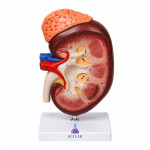
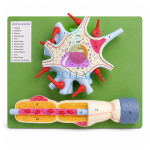
Glomerulus Model, 250 x 350 mm
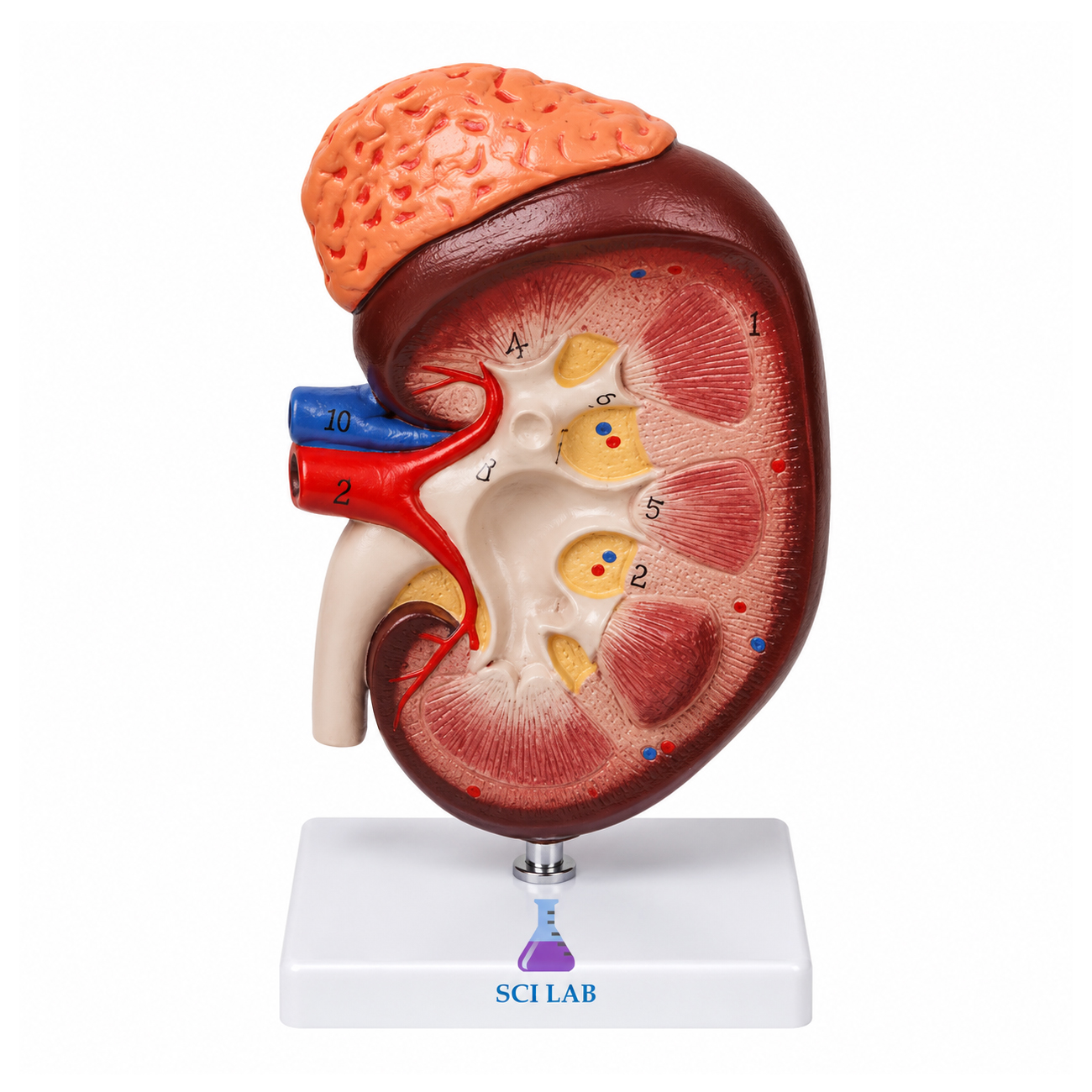
Product Code : SCL-BLE-11715
The Glomerulus Model is a three-dimensional teaching model of one glomerular unit, the filter at the start of each nephron where the kidney first filters blood. It is made of PVC coloured with non-toxic dyes and measures 250 x 350 mm, large enough for a class to follow the filtering step together.
Specifications of the Glomerulus Model
| Specification | Value |
|---|---|
| Type | Three-dimensional model of one glomerular unit |
| Material | PVC with non-toxic dyes |
| Size | 250 x 350 mm |
| Supplied by | Science Lab Supplies, Ambala, India |
Teaching Kidney Filtration with the Glomerulus Model
Start with the whole organ, zoom in to one nephron, then finish on the glomerulus. Moving down in scale this way helps students see that about a million of these small filters work side by side in each kidney.
- Kidney to filter (Class 10 to 12): show the cortex on the Kidney Model, explain that each glomerulus sits there, then turn to this model.
- Filtrate path: trace blood into the glomerulus and filtrate into the capsule, then follow the tubule on the Nephron Model.
- Sort the substances: give pupils cards for water, glucose, salts, urea, proteins and red cells and ask them to place each card on the blood side or the filtrate side.
Labelling: the glomerulus is the knot of capillaries only. With the cup-shaped Bowman's capsule around it, it forms the renal corpuscle, so keep the two terms apart on diagrams and worksheets.
Frequently Asked Questions
What should a buyer check on a glomerulus model before ordering?
Check which structures the course needs to see, such as the two arterioles, the capillary knot, the capsule and the start of the tubule, and whether a board or key is wanted. This model measures 250 x 350 mm and is made of PVC with non-toxic dyes.
How does it differ from a kidney or nephron model a distributor may already stock?
A kidney model shows the whole organ, and a nephron model shows one complete tubule at lower enlargement. A glomerulus model enlarges one filtering unit at the start of a nephron, so the capillary knot and the filtration step can be studied closely.
Which substances pass from the glomerulus into the capsule?
Water, glucose, amino acids, salts and urea pass into the capsule as filtrate. Blood cells and most plasma proteins are too large to cross the filter, so they stay in the blood and leave through the outgoing arteriole.
What drives filtration in the glomerulus?
Blood pressure in the capillaries. The outgoing arteriole is narrower than the incoming one, so pressure stays high inside the knot. The pull of plasma proteins and the fluid pressure in the capsule work against it, and the difference sets the filtration rate.
What are podocytes?
Podocytes are cells of the inner capsule wall with foot-like branches that wrap the capillaries. The narrow slits between their feet, together with the capillary lining and the basement membrane, make the three-layer filter that holds back blood cells and proteins.
Related Excretory and Circulation Teaching Aids
- Human Urinary System Model, PVC: enlarged three-dimensional PVC model with non-toxic dyes.
- Human Excretory System Chart, 70 x 100 cm: laminated and made for wall mounting.
- Human Blood Circulation Chart: laminated, wall-mounted chart of 70 x 100 cm.
- Human Heart Model, 3 Detachable Parts: built in three detachable parts and enlarged 3 to 4 times life size.
- Human Anatomical Torso Model with Head and Removable Organs: 85 cm PVC bust with non-toxic colouring.
The Biology Lab Equipment page lists the other organ models, and the School Lab Equipments hub covers every school subject.
Glomerulus models can be exported from India to Bangladesh, Zambia, Rwanda, South Africa, Qatar and Sri Lanka, with Science Lab Supplies holding the Importer-Exporter Code for such orders. Glomerulus model quotations start from the contact page, or from an enquiry cart that holds the kidney models as well.
Last updated: 16 November 2026