Laboratory Glassware Washing Brush, 200 x 35 mm
Product Code : SCL-BLE-11662
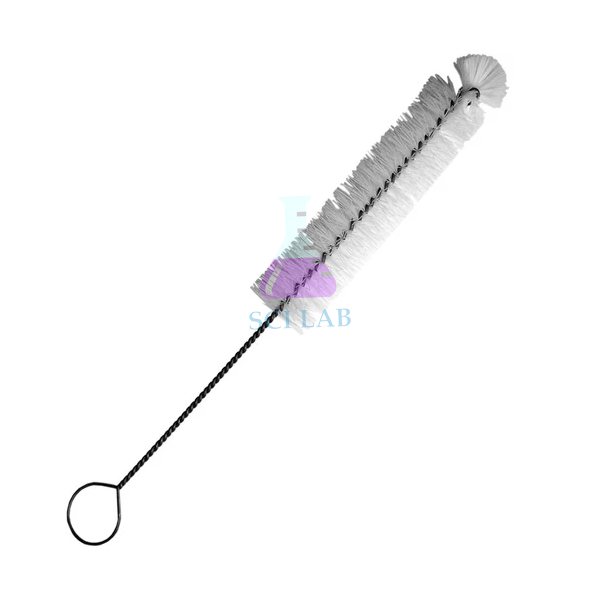
The Laboratory Glassware Washing Brush is a cleaning brush 200 mm long overall, with a 35 mm diameter head of medium nylon bristles set in a twisted stainless-steel core. A rounded tip protects the glass and a wire loop forms the grip. It resists the chemicals met in the wash-up sink and is used for scrubbing laboratory dishes and glassware clean after practicals.
Specifications of the Washing Brush, 200 x 35 mm
| Specification | Value |
|---|---|
| Use | Washing laboratory dishes and glassware |
| Overall length | 200 mm |
| Brush-head diameter | 35 mm |
| Bristles | Medium nylon |
| Core | Twisted stainless-steel wire |
| Tip and grip | Rounded protective tip; wire-loop grip |
| Property | Chemical resistant |
| Supplied by | Science Lab Supplies, Ambala, India |
Washing Up after Practicals
Glassware is emptied, rinsed under the tap and then scrubbed inside with the brush and warm detergent solution. A final rinse with distilled water removes tap-water salts, and the items dry upside down.
- Beakers: scrub the base and walls of the Glass Beakers, Assorted Capacities with a twisting motion, working up from the bottom.
- Flasks: use the 35 mm head only where it passes the neck of a flask from the Conical Flasks Set (50-500 ml) without forcing; narrower necks need a smaller brush.
- Final rinse: squirt distilled water from a Plastic Wash Bottle, 500 ml round the inside of each vessel.
- Drying: stand the clean items on a Plastic Draining Rack for Glassware, 28 Places so water runs off and air reaches the inside.
Push the brush in gently: even with the rounded tip, pressing hard against the base can crack thin glass. After use, rinse the bristles and hang the brush by its wire loop so it dries in the air.
Frequently Asked Questions
Why do some labs keep separate brushes for different jobs?
A brush holds traces of whatever it last cleaned. Keeping one brush for greasy or stained ware, another for biology cultureware and another for clean analytical glass stops residues moving between them. A twist of coloured tape on each wire-loop grip makes the sets easy to tell apart.
Which brush sizes should a distributor stock beside this one?
Schools wash vessels of many widths, and each brush should match the glass it cleans so it reaches the walls without being forced. Choose by head diameter: this 35 mm head suits beakers and other wide vessels. It is usually stocked with the smaller 180 x 30 mm washing brush and narrow test tube brushes, so every item on the rack has a brush that fits.
Why check glassware for chips before scrubbing it?
A chipped rim or a star crack can break under the pressure of the brush and cut the hand holding it. Damaged items should be taken out of use and put in the broken-glass bin, not washed and returned to the shelf.
Are gloves needed when washing glassware with the brush?
Chemical-resistant gloves are advised. Residues of acids, stains and fixatives may still be on the glass, and detergent in warm water dries the skin. Gloves also give a better grip on wet, slippery glass.
Related Cleaning and Drying Items
- Brush for Washing Dishes: a smaller brush, 180 mm long and 30 mm in diameter.
- Brush for Washing Test Tubes: soft white nylon bristles, 12 mm in diameter.
- Test Tube Brush, Nylon, 8 inch (Pack of 12): flexible wire stem with radial bristles for narrow tubes.
- Beaker Brush: extra-large brush with wire-wound polyester bristles.
- Wash Bottle, LDPE, 500 ml, Pack of 6: squeeze bottle for rinsing labware and transferring distilled water.
- Drying Rack Glass & Plastic Ware: plastic-coated wire, about 36 x 16 x 65 cm, free-standing or wall-mounted.
Other wash-up and bench items appear under Biology Lab Equipment and in the Chemistry Lab section.
For buyers in Ghana, Ethiopia, Tanzania, Uganda, the UAE and Saudi Arabia, Science Lab Supplies can export the brush under its Importer-Exporter Code. Add it to the enquiry cart with any other wash-up items, or ask for a quotation through the contact page.
Last updated: 19 November 2026
.jpg)