
Acrylic Burette with PTFE Stopcock
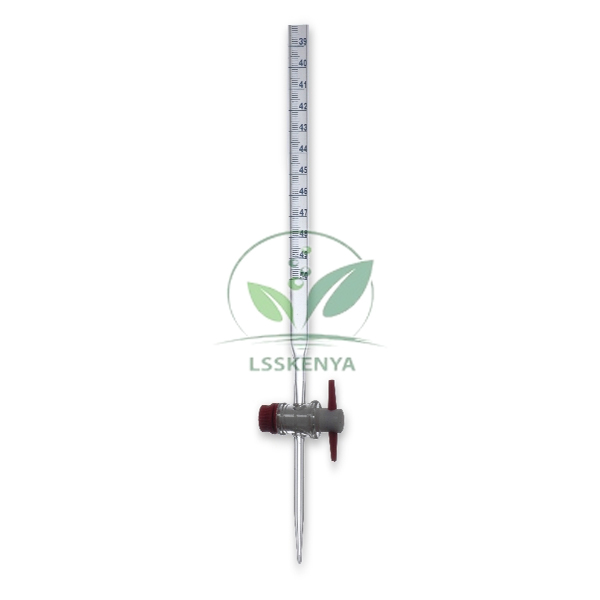
Product Code : LSK-GB-10411
The Acrylic Burette is a titration burette with a transparent acrylic (polymethyl methacrylate) body, a PTFE stopcock with a self-lubricating plug and a plastic delivery tip. It comes in 25 mL and 50 mL sizes, both graduated in 0.1 mL, and each burette is individually calibrated. It is made for dilute aqueous titrants from pH 1 to 14, not hydrofluoric acid or ammonium hydroxide.
Specifications of the Acrylic-Body Burette
| Specification | Value |
|---|---|
| Body | Transparent acrylic (polymethyl methacrylate) |
| Capacity | 25 mL or 50 mL |
| Graduation | 0.1 mL on both sizes |
| Stopcock | Leakproof PTFE stopcock assembly with a self-lubricating PTFE plug |
| Delivery tip | Plastic |
| Calibration | Each burette individually calibrated |
| Working range | Dilute aqueous titrants, pH 1 to 14; acids up to 5% w/w, bases up to 30% |
| Chemical resistance | Body unaffected by dilute mineral acids and bases |
| Not for | Hydrofluoric acid, ammonium hydroxide, alcohols and incompatible organic solvents; do not autoclave |
| Manufacturer | Science Lab Supplies, Saha, Ambala, India |
Water-Based Titrations with the Acrylic-Body Burette
Hold the burette upright in Burette Clamps with Fasteners on a Laboratory Retort Stand, fill it with a dilute aqueous titrant and run a little through the tip into a waste beaker. The self-lubricating PTFE plug turns without grease, so no grease film reaches the titrant.
- Standardising sodium hydroxide (Class 11): titrate it against oxalic acid solution with phenolphthalein as the indicator, reading the burette at eye level.
- Neutralisation (Class 10): find the volume of dilute hydrochloric acid that neutralises 25 mL of dilute sodium hydroxide, then repeat without indicator to make a salt solution.
- Antacid test: dissolve a crushed antacid tablet and titrate it with dilute hydrochloric acid to compare tablets by the acid each one neutralises.
Keep alcohols and other organic solvents out of the burette, never heat or autoclave the acrylic body, and clean it with warm detergent rather than abrasive powder.
Frequently Asked Questions
Which chemicals should not be run through this burette?
Not hydrofluoric acid or ammonium hydroxide, which attack the acrylic body, and not acids stronger than 5% w/w or bases stronger than 30%. Acrylic is also softened by many organic solvents, such as acetone and alcohols, so keep to water-based titrants between pH 1 and 14.
What does individually calibrated mean for a buyer?
Each burette is calibrated on its own rather than the batch being judged from one sample. Every burette in a class set therefore reads true to its own marks, which helps when burettes move between groups or benches during a term.
Why do drops cling to the inside wall after the burette drains?
Drops that stay behind show a film of grease or old residue on the wall. The liquid left in those drops is not delivered, so the titre reads high. Wash with warm detergent and a soft burette brush and rinse with distilled water until the wall drains in an even film.
Related Burettes and Clamps
- Burette for Bases, 50 ml: glass burette with a PTFE or latex tap with a valve.
- Burette for Acids, 50 ml, Glass Stopcock: heat- and chemical-resistant glass with 0.1 ml divisions.
- Burette Class-B with PTFE Key Stopcock: Class B burette with amber enamel printing.
- Burette Clamp Aluminium: die-cast aluminium double clamp with rubber-sleeved jaws that open to 30 mm.
- Wash Bottle, LDPE, 500 ml, Pack of 6: squeeze bottles with a built-in delivery tube.
Glass, acrylic and automatic burettes are compared in the Glassware Burette range; indicators and titration reagents sit under Chemistry Lab.
Science Lab Supplies, an Importer-Exporter Code holder, can ship this burette to Uganda, the UAE, Saudi Arabia, Oman, the Philippines and Nepal. Teachers and distributors can open a quotation request on the contact page or drop the burette into the enquiry cart.
Last updated: 20 November 2026


