Apparatus for Water Synthesis (Eudiometer)
Product Code : SCL-CL-11450
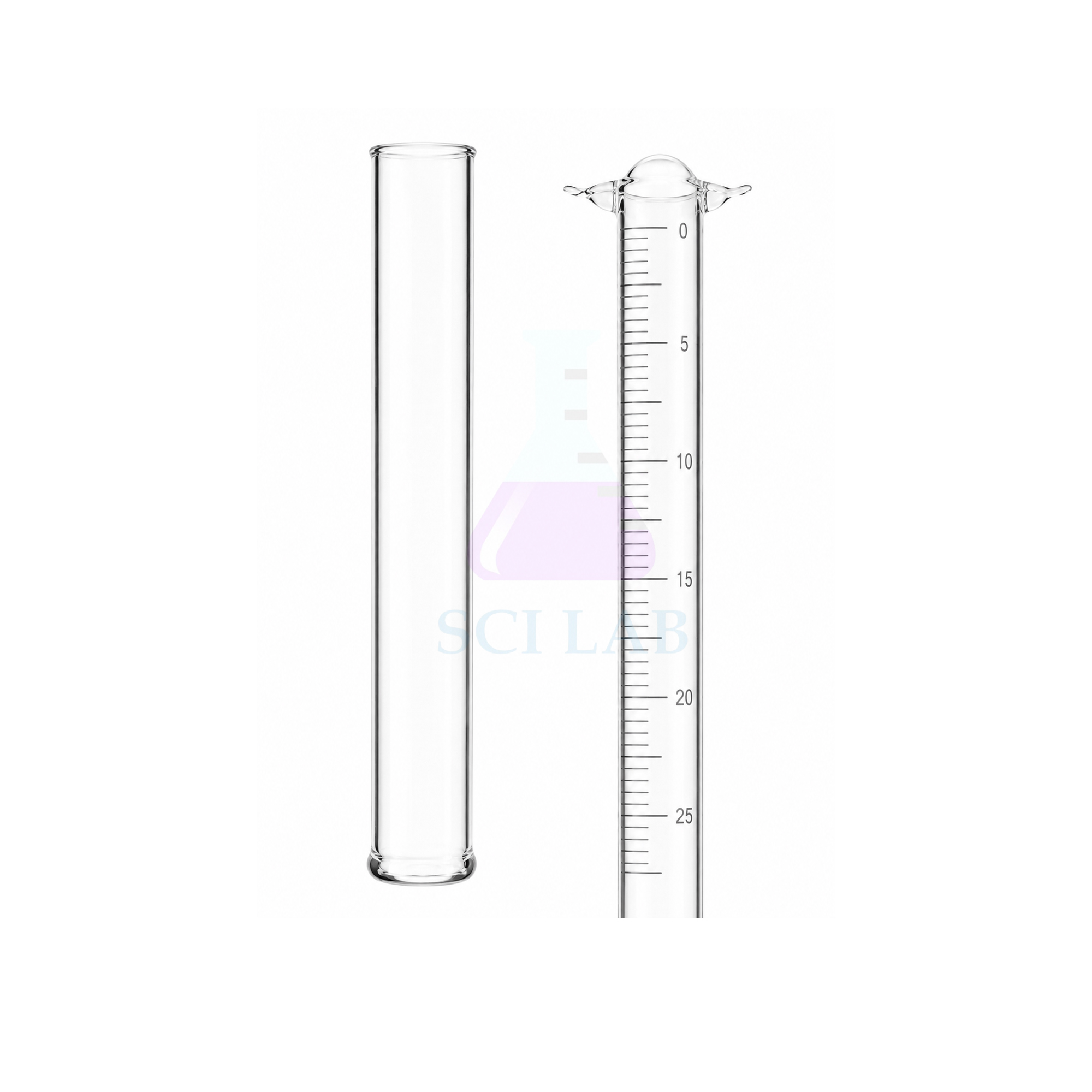
The Apparatus for Water Synthesis (Eudiometer) is a graduated glass tube used to show that hydrogen and oxygen combine to form water. The tube is made of resistant glass, 16 mm in diameter, and is closed at one end, where an electrical conductor wire is fitted so a spark can fire the gas mixture.
Specifications of the Eudiometer
| Specification | Value |
|---|---|
| Tube | Resistant glass, 16 mm diameter |
| Ends | Closed at one end, open at the other |
| Scale | Graduated along the tube |
| Ignition | Electrical conductor wire fitted at the closed end |
| Supplied by | Science Lab Supplies, Ambala, India |
Water Synthesis Practicals with the Eudiometer
The tube is filled with water and stood open end down in a trough of water, such as one of our Glass Crystallizing Dishes. Measured volumes of hydrogen and oxygen are let in and read on the scale. A spark at the conductor wire fires the mixture, and the gas volume falls as water forms.
- Volume ratio of water (Class 9 to 11): fill hydrogen from a Kipp's Apparatus, add oxygen, spark, and compare the volumes before and after.
- Synthesis against decomposition: split water in a Hofmann Voltameter and show the same 2:1 hydrogen to oxygen ratio by volume.
- Limiting gas: start with extra oxygen, spark, and test the gas left over with a glowing splint.
Precautions: use small gas volumes, keep the open end under the liquid when sparking, and stand behind a safety screen, since the mixture explodes.
Frequently Asked Questions
What does a eudiometer measure?
It measures the change in volume of a gas mixture when the gases react. In water synthesis it shows how much hydrogen and oxygen are used up when the spark fires them.
Why do hydrogen and oxygen react in a 2:1 ratio by volume?
Two molecules of hydrogen react with one molecule of oxygen to form water. Equal gas volumes hold equal numbers of molecules at the same temperature and pressure, so the volumes used are in a 2:1 ratio.
Why is some gas left in the tube after the spark?
If the gases were not mixed in exactly a 2:1 ratio, the gas in excess stays unreacted. Test it: a glowing splint relights in oxygen, while hydrogen burns with a squeaky pop.
Why does the gas volume drop so much after sparking?
The water formed condenses to a liquid at room temperature, and liquid water takes up almost no space compared with the gases. The liquid in the tube rises to fill the space.
Is this the same as making water by burning hydrogen?
Both methods combine hydrogen with oxygen. Burning a jet of hydrogen in air gives water you can collect, while the eudiometer reacts measured volumes in a closed tube, so the volume ratio can be found.
Related Water Composition and Gas Apparatus
- Hofmann Voltameter with Electrodes, 50 ml Limbs: two connected limbs of about 50 ml, graduated 2 to 50 ml, with carbon and platinum electrodes.
- Voltameter: platinum electrodes with two graduated 10 ml test tubes, mounted on a base with terminals.
- Electrolysis Kit: two insulated stainless steel electrodes with large-clip leads and rubber gaskets for the test tubes.
- Simple Kipp's Apparatus, 6 ml: a compact gas generator built on the principles of the classic Kipp apparatus.
- Glass Tubes of Different Diameters: 100 mm glass tubes in diameters from 5 to 6 mm up to 12 to 13 mm.
See more glassware for gas experiments in the Chemistry Lab range, or go back to School Lab Equipments.
Science Lab Supplies holds an Importer-Exporter Code and can ship to buyers in Nepal, Bangladesh, Zambia, Rwanda, South Africa and Qatar. To ask for a quotation, use the contact page or the enquiry cart.
Last updated: 14 November 2026
.jpg)