
Test Tube Brush, Nylon, 8 inch (Pack of 12)
.jpg)
Product Code : SCL-CL-12009
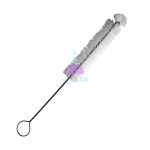
The Test Tube Brush has nylon bristles on a twisted galvanised steel wire stem for scrubbing residues out of test tubes and other narrow glassware. It is 200 mm long with a 75 mm brush section 19 mm across, and a fan tip that cleans the rounded bottom of a tube. The kit holds 12 brushes.
Specifications of the Test Tube Brush
| Specification | Value |
|---|---|
| Bristles | Nylon |
| Stem | Twisted galvanised steel wire with hanging loop |
| Overall length | 8 in (200 mm) |
| Brush section | 3 in (75 mm) long, 0.75 in (19 mm) diameter |
| Tip | Radial fan tip |
| Pack | 12 brushes with a cleaning guide |
| Supplied by | Science Lab Supplies, Ambala, India |
Cleaning Glassware after a Practical
Empty and rinse the tube first. Wet the brush in warm water with a little detergent, push it in gently and twist it both ways while moving it up and down so the tip scrubs the rounded bottom.
- Precipitates and films: clear tubes after precipitation tests, then rinse with distilled water from an LDPE Wash Bottle.
- Draining: stand washed tubes upside down in a Laboratory Apparatus Test Tube Stand to dry.
- Small vessels: clean narrow cylinders and vials whose openings take the brush without force.
Never force a brush that is too wide into a tube: the glass can crack and cut the hand.
Frequently Asked Questions
How hard should I scrub with the brush?
Use light, steady strokes with a gentle twist and let the bristles do the work. Hard jabbing bends the wire stem, can crack a thin tube and flattens the bristles sooner.
What if residue will not come off with soap?
Wash glassware soon after use, as dried residue is harder to shift, or soak it in warm detergent water. For organic residues, a small rinse of acetone under supervision often removes what water cannot.
How should the brushes be stored?
Rinse out trapped particles, shake off the water and hang each brush by its loop to dry. Replace brushes once the bristles are flattened, worn or discoloured, as they no longer clean well.
How can I check that a tube is clean?
Hold it up to the light and look for films, stains or specks on the wall. Rinse water should drain off in an even layer; drops that cling in patches show grease is still there and the tube needs another wash.
Related Cleaning Brushes and Drying Racks
- Brush for Washing Test Tubes: soft round nylon brush, 12 mm diameter.
- Beaker Brush: extra-large brush with wire-wound polyester bristles.
- Brush for Washing Dishes: 180 mm long and 30 mm in diameter, for lab dishes.
- Drying Rack Glass & Plastic Ware: plastic-coated wire rack, about 36 x 16 x 65 cm.
- Plastic Draining Rack for Glassware, 28 Places: plastic draining holder with 28 seats.
See the Chemistry Lab category for more cleaning tools, and the Lab Glassware range for tubes and flasks.
Using its Importer-Exporter Code, Science Lab Supplies ships to Peru, Egypt, Iraq, Nigeria, Kenya and Ghana. Brush packs can be listed in the enquiry cart; quotation requests are also taken on the contact page.
Last updated: 15 November 2026


.jpg)


