Rust Race Lab Investigation
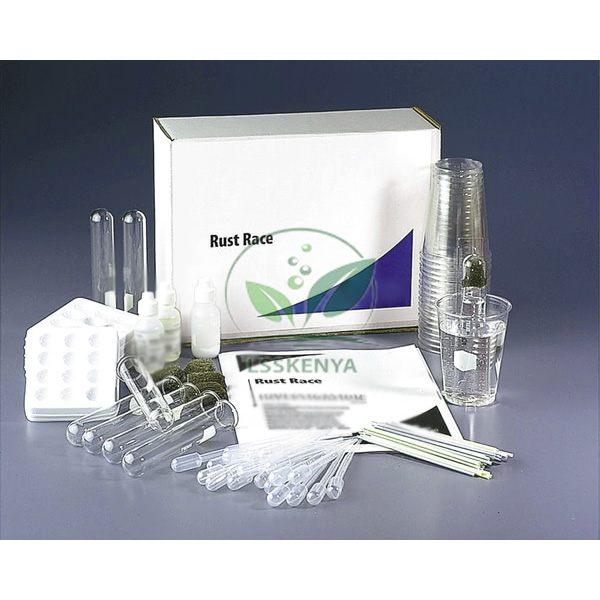
Product Code : LSK-CL-10257
Rust Race Lab Investigation (SKU LSK-CL-10257) is a class activity on corrosion in which students test metals for rusting, measure the oxygen consumed as metal corrodes and compare how well different rust inhibitors work. Along the way it introduces oxidation-reduction reactions, and it is sized for a class of 40 students. Science Lab Supplies in Ambala, India, quotes the investigation for individual schools, education departments, distributors and tender contractors.
Specifications
The rust investigation's topics and class size are tabulated below. In short, it is a set of linked experiments for 40 students: corrosion tests on metals, measurement of oxygen use during corrosion, hands-on redox reactions and a comparison of rust inhibitors. The component list for the kit is confirmed on the quotation.
| Specification | Value |
|---|---|
| SKU | LSK-CL-10257 |
| Class size | 40 students |
| Investigation 1 | Testing metals for corrosion |
| Investigation 2 | Measuring oxygen consumption during metal corrosion |
| Investigation 3 | Performing oxidation-reduction reactions |
| Investigation 4 | Comparing the effectiveness of rust inhibitors |
| Topic introduced | Oxidation-reduction reactions |
| Components | Confirmed on the quotation |
| Supplied by | Science Lab Supplies, Ambala, India |
Applications and Experiments for the Rust Race Lab Investigation
The kit turns rusting, a change pupils see every day, into measurable chemistry. Students set up samples, track which metals corrode and how fast, link the loss of oxygen to the reaction, and then judge which inhibitor protects the metal most effectively, building conclusions from their own evidence.
- Class 7 science: rusting of iron as a chemical change and ways to prevent it.
- Class 10 chemistry: corrosion, oxidation and reduction.
- Senior secondary chemistry: redox reactions and protection of metals.
- Engineering and ITI foundation courses: why metal parts corrode and how coatings or inhibitors help.
Standard Scope of Supply
The Rust Race Lab Investigation is supplied as one class kit for 40 students, with its contents set out on the quotation before you order. Shelf life depends on the chemical, its grade and storage conditions; ask us for the expiry date of the batch you are quoted.
Packing, MOQ and Lead Time
One kit covers a full class, and schools with several sections can ask for more. Your quotation states the packing, delivery time and price for that number of kits, and related metals or labware from our school chemistry lab equipment in India can be added.
Science Lab Supplies holds an Importer-Exporter Code and, as a registered exporter, can ship to buyers in Uganda, the UAE, Saudi Arabia, Oman, the Philippines and Nepal. Use the contact page to ask about kit contents, the enquiry cart to combine it with metal samples, or the lab tender page for a formal tender.
Frequently Asked Questions
How many students does the Rust Race Lab Investigation serve?
It is designed for a class size of 40 students, so one kit can cover a full section working in small groups. Additional kits can be quoted for parallel sections.
What will students learn from this corrosion kit?
They test metals for corrosion, measure oxygen consumption as metals corrode, carry out oxidation-reduction reactions and compare how effective different rust inhibitors are.
Who supplies the Rust Race Lab Investigation?
Science Lab Supplies arranges supply of this investigation from Ambala, India. Schools, colleges and tender contractors receive the quotation, contents list and dispatch details directly from its team.
What safety steps should the class follow?
Treat all test solutions and inhibitors as laboratory chemicals: wear Safety Glasses and disposable Gloves Protective, work under teacher supervision and follow your school's disposal rules.
Related Metals, Reagents and Redox Teaching Aids
The items below support the rust investigation and follow-up work on metal reactivity: metal strips, magnesium and other metal reagents for comparison tests, glass Petri dishes for setting up samples, and a reduction potential chart for the classroom wall. Any of them can be quoted together with the kit.
- Metal Strip — aluminium, copper, lead and zinc strips for simple cells or thermal conductivity tests.
- Magnesium (Bar) — round silver magnesium supplied in a 5 m length.
- Iron Metal Turnings / Filings — laboratory iron for reaction-behaviour and metal-property demonstrations.
- Copper Metal Turning — metallic copper for reactivity, conductivity and corrosion demonstrations.
- Aluminium Metal — elemental aluminium for displacement, oxidation and reactivity experiments.
- Petri Dish (Set) — 100 x 20 mm glass dishes with caps, heat and chemical resistant.
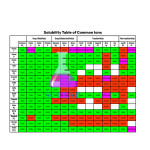
- Reduction Potential — laminated 70 x 100 cm wall chart.
Browse the full Chemistry Lab range, the Lab Chemicals range for metal reagents, or all school lab equipment.
Last updated: 9 October 2026


.jpg)