Test Paper Books
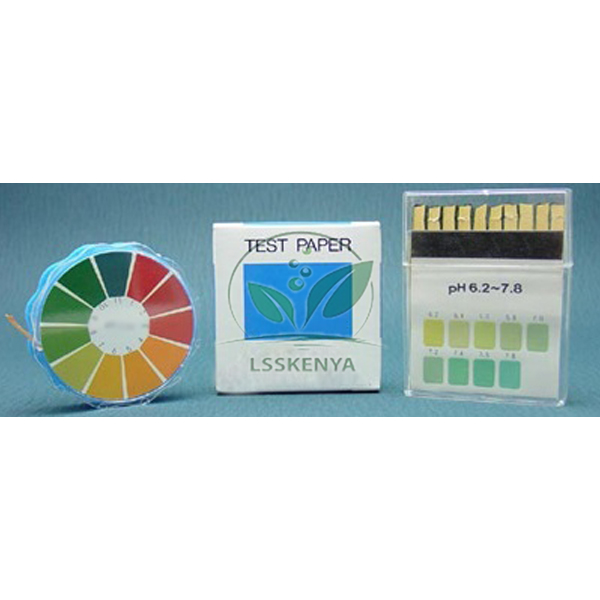
Product Code : LSK-CL-10079
Test Paper Books are booklets of indicator and test papers for quick chemistry checks at the bench. The range covers cobalt chloride, lead acetate, blue, neutral and red litmus, universal pH 1–14 and starch-iodide papers, so one shelf of books serves acid-base, gas and water tests.
Specifications of the Test Paper Books
| Specification | Value |
|---|---|
| Paper types | Cobalt chloride, lead acetate, starch-iodide |
| Litmus papers | Blue, neutral and red |
| Universal paper | pH 1–14 |
| Format | Books of test papers for chemistry applications |
| Supplied by | Science Lab Supplies, Ambala, India |
Bench Tests with Test Papers
Tear off one strip at a time and close the book again. For liquids, touch a drop on the paper with a glass rod. For gases, wet the strip with distilled water and hold it just above the mouth of the tube.
- Gas identification: damp red litmus for ammonia, damp blue litmus or starch-iodide for chlorine, lead acetate for hydrogen sulfide. Generate the gases with the Simple Gas Preparation Kit or a Kipp's Apparatus.
- Water test: blue cobalt chloride paper turns pink when water is present, for example on condensation from burning fuels.
- Acid-base survey: test household and lab solutions with universal paper, then compare a few results with a pH Pocket Tester.
Precautions: lead acetate paper contains a lead compound, so handle it with forceps and wash hands afterwards. Do not let papers touch the side of a tube, which gives false results.
Frequently Asked Questions
Which paper tests for which substance?
Cobalt chloride shows water, lead acetate shows hydrogen sulfide, and starch-iodide shows chlorine and other oxidising agents. Blue litmus detects acids, red litmus detects alkalis, neutral litmus shows either, and universal paper gives an approximate pH.
Why did blue litmus turn white instead of red?
Chlorine first reddens damp blue litmus and then bleaches it. A white strip is therefore a positive sign for chlorine, not a faulty paper.
What is neutral litmus paper used for?
It is a single paper that turns red in acid and blue in alkali. Teachers use it when students do not yet know whether a sample is acidic or alkaline.
Is the universal paper full range or narrow range?
Full range: it covers pH 1-14, so one strip places any unknown solution on the scale. Narrow-range papers read smaller steps over a short span and are used once the rough pH is known, so a lab that needs finer readings keeps both kinds.
Why choose test paper books over reels or strips?
A book keeps the unused leaves covered and lets each student tear off one leaf at a time, so the rest stay clean and dry. Reels suit a technician cutting many strips for a class; books suit students testing at their own bench.
Related Indicators and pH Testers
- Blue Litmus Paper: acids turn it red, while bases and neutral substances leave it blue.
- Red Litmus Paper: bases turn it blue, while acids leave it red.
- Universal Ph Indicator: paper indicator covering pH 0–14.
- Phenolphthalein Solution Indicator: acid-base indicator for titration endpoints and alkalinity checks.
- Acids and Bases Kit: student kit for metal-acid reactions, indicator dyes and neutralisation.
- Glass Dropping Bottle with Colourless Dropper, 60 ml: 60 ml glass bottle with a colourless dropper.
Indicators, pH testers and gas-test supplies are grouped under Chemistry Lab, which sits inside School Lab Equipments.
School suppliers in Ethiopia, Tanzania, Uganda, the UAE, Saudi Arabia and Oman can bring in the test paper books from Science Lab Supplies, whose Importer-Exporter Code covers export. Name the paper types and the number of books on the contact page, or tick them into the enquiry cart, to start a quotation.
Last updated: 15 November 2026