Solid Red Rubber Stoppers, 3-20 mm
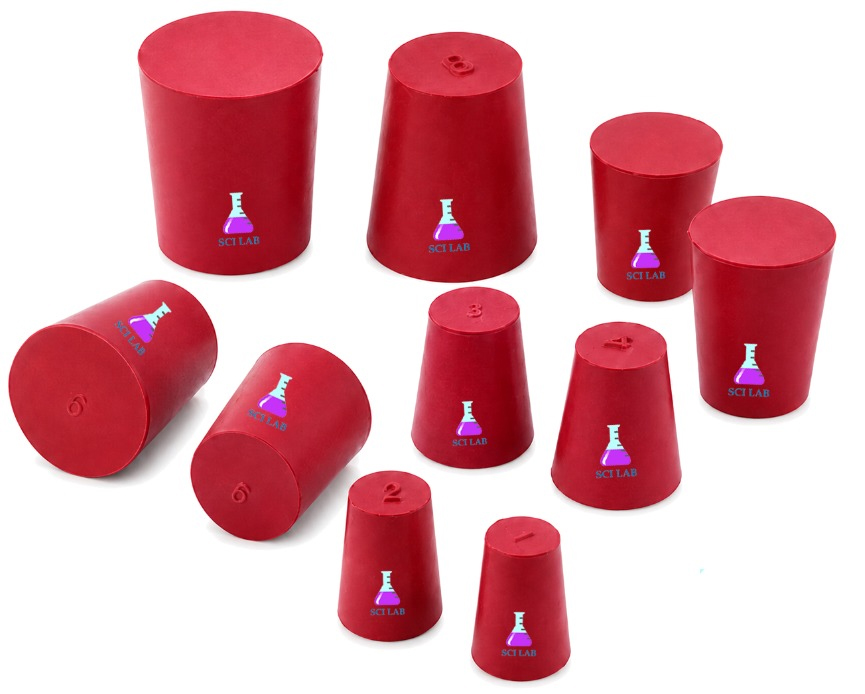
Product Code : SCL-CL-11896
These solid red rubber stoppers seal test tubes, flasks, bottles and other glassware. They come in tapered sizes from 3 mm to 20 mm to fit different neck and mouth diameters. A fitted stopper stops evaporation, leaks and contamination of samples during laboratory use.
Specifications of the Rubber Stoppers
| Specification | Value |
|---|---|
| Material | Solid red rubber |
| Sizes | 3 mm to 20 mm |
| Shape | Standard tapered sizes |
| Fits | Test tubes, flasks, bottles and other glassware |
| Purpose | Temporary sealing against evaporation, leaks and contamination |
| Supplied by | Science Lab Supplies, Ambala, India |
Sealing Glassware with Rubber Stoppers
Twist the stopper in gently until it grips; do not force it. Check the seal by inverting the closed vessel over a sink.
- Storage: close a Flat-Bottomed Flasks 100ml of prepared solution to keep it from evaporating.
- Shaking tests: stopper a tube from the Test Tubes pack and shake to mix two liquids.
- Gas apparatus: bore a stopper with the Cork Borer Set to take a glass delivery tube.
Precaution: never stopper a vessel that is being heated or in which gas is forming.
Frequently Asked Questions
Why has an old stopper gone hard and cracked?
Rubber ages. Heat, sunlight and ozone in the air slowly harden it until surface cracks appear and it no longer seals. A stopper that has lost its spring or shows cracks should be replaced, not forced in harder.
Should I use a rubber stopper or a cork?
Rubber gives a tighter, airtight seal and resists water-based solutions. Cork is lighter and better with some organic solvents that make rubber swell, but it is porous and seals less well.
How should spare stoppers be stored?
Keep them in a closed bag or box in a cool, dark cupboard, away from sunlight, heaters and electric motors. Store them loose rather than squashed or stretched, and use the oldest stock first.
Why must a stoppered vessel never be heated?
Heated air and vapour expand and gases may form. With no way out, the pressure rises until the stopper shoots out or the glass bursts. Always leave an open, unblocked outlet.
Which chemicals damage rubber stoppers?
Many organic solvents swell or soften rubber, and some gases such as nitrogen dioxide attack it and can turn it sticky. Use glass stoppers or cork for those materials.
Related Stoppers and Closures
- Rubber Stoppers of Various Diameters with Holes: bored rubber stoppers with 11, 13, 14 and 15 mm bottom diameters.
- Rubber Stoppers Without Holes, 11-15 mm: solid round stoppers in 11 to 15 mm bottom sizes.
- Glass Bell Jar with Cork, 150 x 200 mm: clear glass, 150 mm diameter and 200 mm long.
- Glass Tubes of Different Diameters: 100 mm tubes from 5 to 13 mm diameter.
- Conical Flask: ground-joint flask supplied with a hollow glass stopper.
More sealing items and glassware are under Chemistry Lab; all school ranges sit in School Lab Equipments.
Science Lab Supplies holds an Importer-Exporter Code and serves buyers in Sri Lanka, Vietnam, Malaysia, Peru, Egypt and Iraq. To obtain a quotation, use our contact page or the enquiry cart.
Last updated: 15 November 2026