Chromatographic Paper
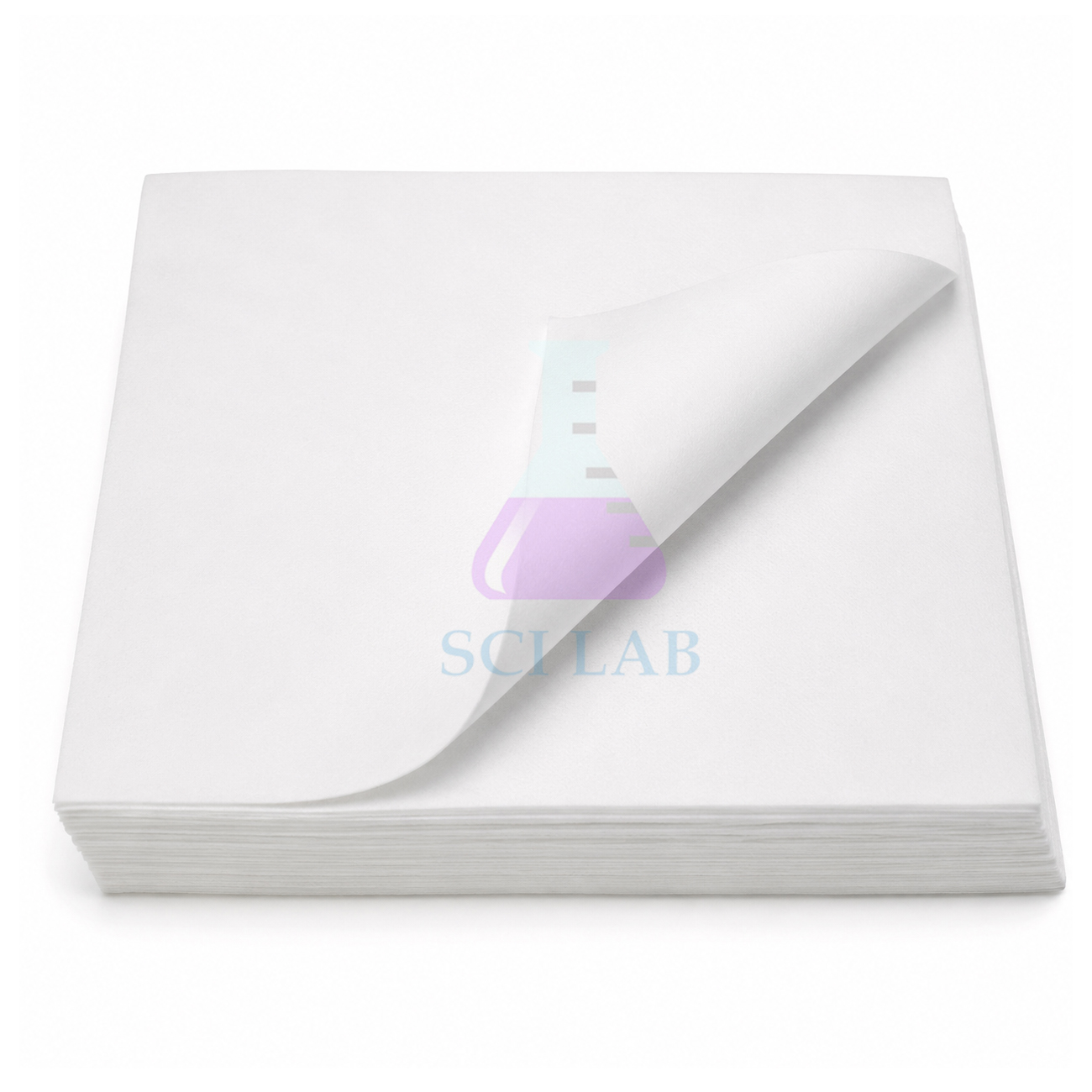
Product Code : SCL-CL-11708
This Chromatographic Paper is laboratory grade chromatography paper in 110 x 140 mm sheets. It separates a mixture, such as the pigments in an ink or a leaf extract, into its components as a solvent rises through the sheet.
Specifications of the Chromatographic Paper
| Specification | Value |
|---|---|
| Size | 110 x 140 mm |
| Grade | Laboratory grade chromatography paper |
| Use | Separating mixtures, such as pigments, into their components |
| Supplied by | Science Lab Supplies, Ambala, India |
Paper Chromatography Practicals
Draw a pencil line near the lower edge, spot the sample on it, and stand the sheet in a little solvent. Remove it before the solvent reaches the top and mark the front.
- Felt-pen inks: run black and coloured inks with water in a 250 ml Glass Beaker and compare the colours each one contains.
- Leaf pigments: run a concentrated leaf extract with a suitable solvent to show the separate bands.
- Rf values: measure the spot and solvent distances with the Measuring Rulers Set and identify food colours against known samples.
Frequently Asked Questions
Why should the sample spots be small and dry?
A small spot gives a tight, separate band. A large or wet spot spreads as the solvent rises, so the colours overlap. For more sample, touch the same spot again once it has dried instead of making it wider.
Why must the paper not touch the sides of the container?
Where the sheet touches the glass, solvent creeps along the wall and wets the paper unevenly. The front then rises crooked, the spots smear and the distances taken from the sheet are no longer reliable.
Which solvent suits ink and which suits leaf pigments?
Water-soluble felt-pen inks run well in water. Leaf pigments such as chlorophyll do not dissolve in water, so they need an organic solvent such as ethanol, which is flammable and must be used away from flames.
Why cover the container during the run?
A lid keeps the air inside full of solvent vapour, so the solvent does not dry off the paper and the front rises evenly. It also holds in fumes from alcohol solvents.
When should the solvent front be marked?
Mark it in pencil as soon as the sheet is lifted out, while the edge of the wet area can still be seen. Once the solvent dries the front disappears and it can no longer be measured.
Related Separation and Filter Papers
- Filter Paper: 120 mm filter paper used for clarifying liquids.
- Filter Paper: paper for separating fine precipitates in gravity filtration.
- Chromatography Set: kit with beaker, paper sheets, wooden dowels, clips, coloured pens and a pencil.
- Ion Exchange Chromatography Kit: separates a two-chemical mixture on an ion-exchange column.
- Methods of Separation of Substances Chart, 70 x 100 cm: laminated wall chart, 70 cm x 100 cm.
Find further items on the Chemistry Lab page, part of the School Lab Equipments range.
Holding an Importer-Exporter Code, Science Lab Supplies can dispatch export orders to Tanzania, Uganda, the UAE, Saudi Arabia, Oman and the Philippines. To request a quotation for the paper, write via the contact page or add it to the enquiry cart.
Last updated: 15 November 2026

.png)