Stains and Reagents for Microscopy

Product Code : SCL-BLE-11617
Stains and Reagents for Microscopy is a starter set for colouring and mounting specimens on glass slides. It holds six aqueous dyes in 10 ml bottles: 1% methylene blue, 1% eosin Y, 1% gentian (crystal) violet, 10% nigrosine, 0.1% neutral red and Lugol's iodine. It also has 25 ml of 70% ethyl alcohol, 10 ml of natural Canada balsam and 10 ml of microscope immersion oil.
Specifications of the Microscopy Stain Set
| Specification | Value |
|---|---|
| Methylene blue | 10 ml, 1% aqueous |
| Eosin Y | 10 ml, 1% aqueous |
| Gentian (crystal) violet | 10 ml, 1% aqueous |
| Nigrosine | 10 ml, aqueous, 10% w/v |
| Neutral red | 10 ml, aqueous, 0.1% w/v |
| Lugol's solution | 10 ml, 1% iodine and 2% potassium iodide w/v |
| Ethyl alcohol | 25 ml, 70% v/v |
| Canada balsam | 10 ml, natural, mounting medium |
| Microscope immersion oil | 10 ml, for oil-immersion objectives, refractive index (nD) approx. 1.515 |
| Supplied by | Science Lab Supplies, Ambala, India |
Staining and Mounting Slides with the Stain Set
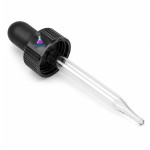
A thin specimen is laid on a slide and one or two drops of dye are added with a Dropper. After a short wait the extra dye is drained off and a cover glass is lowered from one edge. Work on a tray, and wear the gloves and eye protection that each reagent's safety data sheet (SDS) calls for, since dyes also mark skin and clothes.
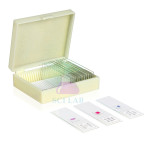
- Cheek cells (Class 9): spread a gentle cheek scraping on a slide from the Glass Microscope Slides box, add methylene blue and look for blue-stained nuclei.
- Onion peel and potato starch: Lugol's solution turns nuclei and cell walls yellow-brown and starch grains blue-black.
- Negative staining: mix a drop of curd water with nigrosine and spread a thin film; bacteria show as clear shapes on a dark ground.
- Permanent mounts (B.Sc.): pass a stained section through the 70% ethyl alcohol as the first dehydration step, finish in stronger alcohol, clear it, and seal it with a drop of Canada balsam under one of the Cover Glasses, 24 x 24 mm, Box of 150.
Common errors: using too much stain, which hides cell detail; trapping air bubbles under the cover; and letting the specimen dry out before it is covered.
Safety: ethyl alcohol is flammable, so keep the bottle capped, away from flames and hot plates, and store it in a cabinet for flammable liquids. Keep the current SDS for every reagent and label any dish or bottle a reagent is poured into. The immersion oil, of refractive index about 1.515, goes as one drop between an oil-immersion objective and the cover glass, never on an eyepiece; follow its label and SDS.
Frequently Asked Questions
Which items in the set need care when shipping or storing?
The 25 ml of 70% ethyl alcohol is a flammable liquid, and gentian violet and some other dyes are harmful if swallowed or splashed in the eyes. Importers should keep the safety data sheets with the goods and check national rules for flammable and hazardous chemicals.
What should a buyer check in the contents before ordering?
Match each reagent and strength to the practicals planned: 1% methylene blue, eosin Y and gentian violet; 10% w/v nigrosine; 0.1% w/v neutral red; Lugol's iodine (1% iodine, 2% potassium iodide); 70% v/v ethyl alcohol; natural Canada balsam; and immersion oil of refractive index about 1.515.
Which items are usually ordered with a stain set?
Glass slides, cover glasses, droppers, disposable gloves and a microscope with low and high power objectives, plus an oil-immersion objective to use the immersion oil. A slide box keeps finished permanent mounts clean and dust-free.
Why stain a specimen at all?
Most cells are thin and nearly colourless, so light passes through them with little contrast. A stain binds to parts such as nuclei, cell walls or starch grains and colours them, so detail shows clearly at low and high power.
Why does a stained slide look too dark or full of bubbles?
Too much stain, or stain left on too long, hides the cell outlines, so drain or blot the extra before covering. Bubbles form when the cover glass is dropped flat; lower it from one edge with a needle.
Related Microscopy Tools and Kits
- Microscopy Accessory Kit: 150 mm ruler, two pairs of scissors, two tweezers, a No. 3 scalpel handle with one No. 11 blade and two needles with handles, in a fitted case.
- Microscope Slide Preparation Kit: four tweezers with straight, curved, round and blunt ends, two scalpels, microscope scissors and a 120 x 6 mm double spatula.
- Field Microscopy Kit: monocular microscope, 50 slides, 200 coverslips and a 60 mm plastic Petri dish.
- Compound Biological Microscope: 4X, 10X and 40X achromatic objectives, 10X and 25X eyepieces, and top and bottom LED lights.
- Biological Microscope: monocular microscope with a WF10x eyepiece, plan objectives and transmitted LED light.
More slide-work items sit in Biology Lab Equipment, and microscopes in the Microscope range.
With its Importer-Exporter Code, Science Lab Supplies can send stain sets to buyers in Kenya, Ghana, Ethiopia, Tanzania, Uganda and the UAE. A quotation for the stain set can be requested by writing from the contact page or by placing the set in the enquiry cart.
Last updated: 19 November 2026