Dropper
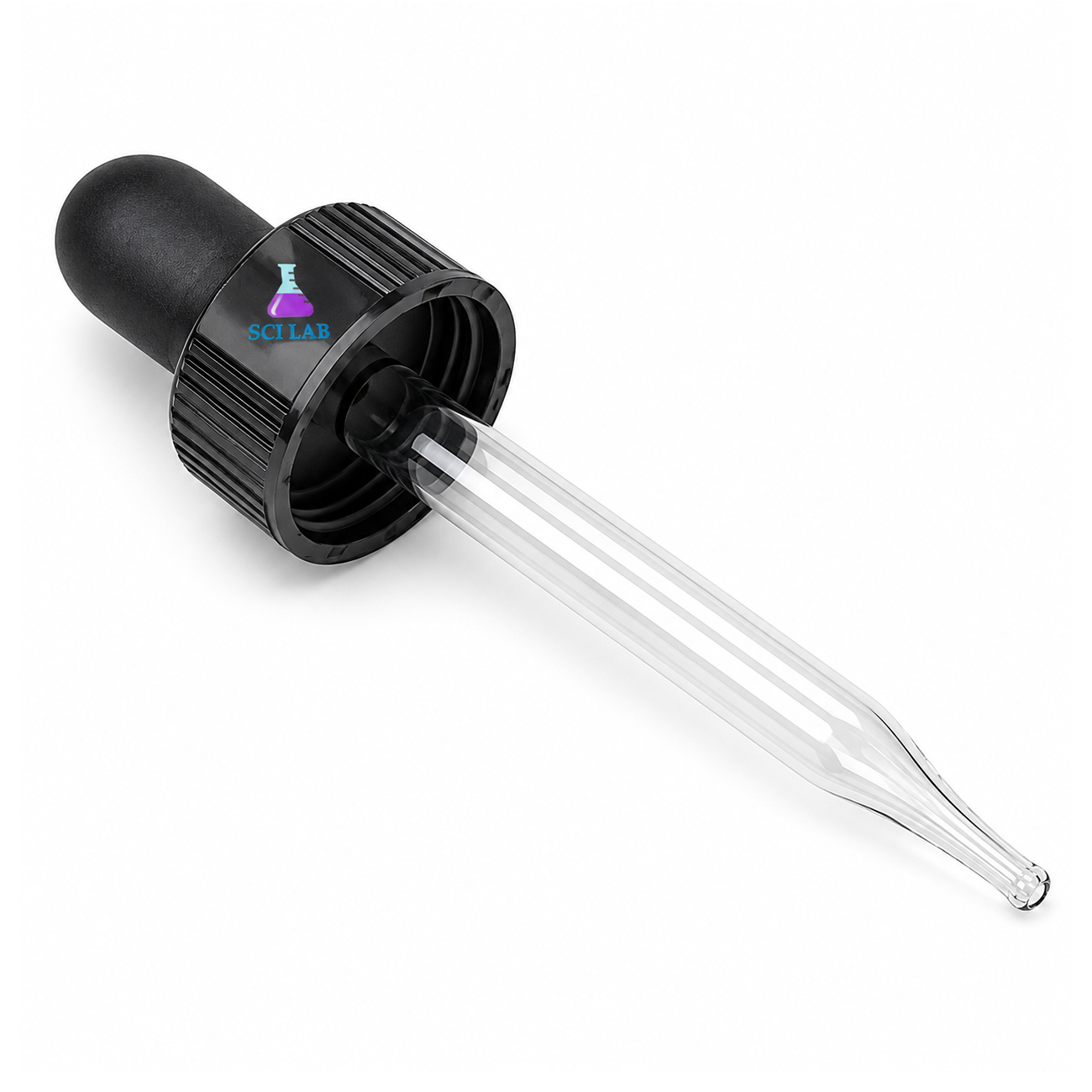
Product Code : SCL-BLE-11649
The Dropper is a straight glass dropper with a separate rubber bulb and a smooth fire-polished tip, for moving small amounts of liquid one drop at a time. Its tube is annealed borosilicate glass about 150 mm long, and one fill takes up about 1 to 3 ml. It is non-volumetric and supplied non-sterile. It suits stains, indicators and food-test reagents in school and college laboratories.
Specifications of the Dropper
| Specification | Value |
|---|---|
| Shape | Straight tube with a smooth, fire-polished tip |
| Tube | Annealed borosilicate glass, about 150 mm long, chemical and heat resistant |
| Bulb | Separate rubber bulb, replaceable |
| Working volume | About 1-3 ml; non-volumetric |
| Sterility | Supplied non-sterile |
| Use | Laboratory liquid transfer |
| Supplied by | Science Lab Supplies, Ambala, India |
Adding Stains and Reagents Drop by Drop
Squeeze the bulb, dip the tip into the liquid and release the bulb slowly to draw the liquid up. Hold the dropper upright over the slide or tube and press gently, so one drop forms and falls before the next.
- Staining a mount: run a drop of Lugol's solution or methylene blue from the Stains and Reagents for Microscopy set onto onion peel or cheek cells on one of the Glass Microscope Slides.
- Food tests: add iodine solution to a starch sample, or biuret reagent to a protein sample, in a Glass Test Tube, 16 x 150 mm and compare the colour with a tube of water.
- Indicator work: add a few drops of indicator to a solution before testing whether it is acidic, neutral or alkaline.
Precautions: keep one dropper for each reagent, never let liquid run up into the rubber bulb, and after use pull the bulb off so the glass tube can be rinsed with distilled water.
Frequently Asked Questions
Can a dropper be used to measure a volume?
No. This is a non-volumetric dropper: one fill takes up about 1 to 3 ml, and drop size changes with the liquid, the tip and how hard the bulb is pressed. Use a graduated pipette or a measuring cylinder when a volume in millilitres must be exact.
Which tube length should be ordered for school reagent bottles?
Match the length to the containers in use. This dropper has a glass tube of about 150 mm, which reaches well into a 150 mm test tube and into the liquid in most bench reagent bottles. Longer droppers are only needed for tall stock bottles.
Why do some pupils get a squirt instead of a single drop?
They press the bulb too hard or hold the dropper at an angle. Hold it upright just above the vessel, press slowly and stop as soon as a drop forms. A wet or dirty tip also makes drops run together.
How can shared reagents be kept free of contamination?
Give each reagent bottle its own labelled dropper and return it only to that bottle. Never touch the tip on a sample, a slide or another liquid, and set aside any dropper that has touched one.
Related Droppers and Small-Volume Glassware
- Calibrated Plastic Droppers: transparent plastic droppers in 0.5 ml, 1 ml and 5 ml capacities.
- Glass Dropper Pipette 6 inch (150 mm): 150 mm borosilicate glass tube with a removable rubber bulb.
- Glass Dropping Bottle with Colourless Dropper, 60 ml: 60 ml glass bottle fitted with a colourless dropper.
- Dropper Bottle 10 ml: polypropylene bottle with a removable dropper and a leakproof lid.
- Microscope Cover Glass, 20 x 20 mm (10 g): square borosilicate glass cover slips that hold specimens flat.
- Graduated Pipette, 10 ml: 10 ml graduated glass pipette for measured volumes.
Find more bench items in the Biology Lab Equipment section, or step up to the full School Lab Equipments catalogue.
Droppers can travel from Ambala to Bangladesh, Zambia, Rwanda, South Africa, Qatar and Sri Lanka, as Science Lab Supplies is registered with an Importer-Exporter Code. Quotations are prepared on request: send the details through the contact page or place the item in the enquiry cart.
Last updated: 20 November 2026