Electrolysis Cells
Product Code : LSK-CL-10265
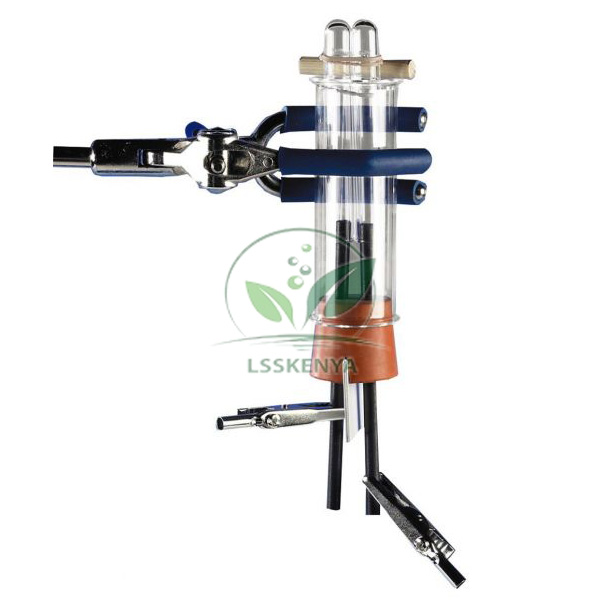
Electrolysis Cells (SKU LSK-CL-10265) are glass cells for passing a direct current through a solution and collecting the gases that form at two carbon electrodes. Chemistry teachers use them for electrolysis demonstrations and student practicals in secondary school, Class 10–12 and junior college labs. As a school chemistry lab equipment supplier in India, Science Lab Supplies quotes and dispatches these cells from Ambala for school science departments, colleges, tender contractors and distributors.
Specifications
The table sets out the build of these carbon-electrode cells one fact per row. In short, each cell is a 75 x 25 mm glass cylinder closed by a two-hole rubber stopper that carries two carbon electrodes, with insulating material between them, crocodile clips for the current and two 75 x 10 mm tubes to collect the gases.
| Specification | Value |
|---|---|
| SKU | LSK-CL-10265 |
| Cell body | Glass cylinder |
| Cell size | 75 x 25 mm |
| Stopper | Rubber |
| Stopper holes | 2 |
| Electrodes | 2, fitted in the stopper |
| Electrode material | Carbon |
| Separator | Piece of insulating material between the electrodes |
| Separator function | Prevents short circuiting |
| Electrical contact | Crocodile clips |
| Gas collection | Two test tubes suspended over the electrodes |
| Collection tube size | 75 x 10 mm |
| Tube suspension | Piece of wood and rubber bands (not supplied) |
| Supplied by | Science Lab Supplies, Ambala, India |
Applications and Experiments for the Electrolysis Cells
These cells let a class watch electrolysis at the student bench: gas bubbles form at each carbon electrode and collect in the small tubes above them, so students can compare the volumes and test the gases. They suit the chemical reactions and electrochemistry topics taught from middle school to Class 12.
- NCERT Class 10: decomposition of water by electrolysis, comparing the gas volumes at the two electrodes and testing them with Wood Splints.
- Class 12 electrochemistry: electrolytic cells and the products formed at the anode and cathode.
- Small-group practicals where each bench runs its own cell from a steady DC source such as the Laboratory Battery Eliminator.
- Follow-up tests on the electrolyte in tubes from the Test Tubes pack of 100.
Hydrogen, oxygen or chlorine can form depending on the electrolyte, so run the practical in a ventilated room under teacher supervision.
Standard Scope of Supply
Each cell comprises the 75 x 25 mm glass cylinder, the two-hole rubber stopper fitted with two carbon electrodes, and the insulating separator. The strip of wood and the rubber bands used to hang the collection tubes are not supplied. The quotation confirms the number of cells and whether the test tubes are included.
Packing, MOQ and Lead Time
Quotations are available for a single cell or for a full class set, one per bench. Every quotation lists the packing, delivery time and price for the quantity requested, and a DC power supply, connecting leads or other chemistry lab equipment can be priced together on the same enquiry.
Science Lab Supplies holds an Importer-Exporter Code and, as a registered exporter, can ship to buyers in Rwanda, South Africa, Qatar, Sri Lanka, Vietnam and Malaysia. To price cells for every bench, message us from the contact page, drop them into the enquiry cart, or route a formal bid through the lab tender page.
Frequently Asked Questions
What are Electrolysis Cells used for?
They split water or a salt solution with direct current and collect the gases produced at the two carbon electrodes, a standard school demonstration of electrolysis.
Why are the electrodes made of carbon?
Carbon is an inert electrode material, so it conducts current without taking part in most school electrolysis reactions, which keeps the products at each electrode easy to identify.
Who supplies the Electrolysis Cells?
They come from Science Lab Supplies in Ambala, India, which sources and quotes them for schools, colleges and contractors and can put them on one document with the rest of your chemistry order.
Can a class set be quoted for a school tender?
Yes. Send the number of cells, the delivery location and the tender specification, and you will receive an item-wise quotation based on the details in the table above.
Related Electrolysis Apparatus
These items extend a cell-based electrolysis practical, from a student kit and spare electrodes to graduated voltameters that measure gas volumes for teacher demonstrations. Any of them can be listed on the same quotation as the cells, so one order covers the whole electrolysis bench.
- Electrolysis Kit — two heavily insulated stainless steel electrodes, leads with extra-large clips and rubber gaskets for sealing the inverted test tubes.
- Electrode Rod — 100 x 10 mm rod with terminal, offered in aluminium, carbon, copper, iron or zinc.
- Electrode Connector — acid-resistant plastic holder with a 4 mm socket, for round electrodes up to 7.5 mm.
- Hoffman Voltameter With Electrodes — two limbs graduated 2–50 ml, with two carbon and two platinum electrodes; needs a 12 V supply.
- Voltameter — platinum electrodes on a base with terminals and two graduated 10 ml test tubes.
- Apparatus for the Electrolysis of Salts — 15 mm glass U-tube with a 60 mm graphite electrode, rubber stopper and conductor wire.
- Hoffman Voltameter — glass unit with two limbs graduated 50 x 0.2 ml, stopcocks and removable carbon electrodes.
Browse the full Chemistry Lab range, the Electrical and Electronics range, or all school lab equipment.
Last updated: 9 October 2026


.jpg)