Atomic In/Organic Junior Model

Product Code : LSK-CL-10073
Atomic In/Organic Junior Model (SKU LSK-CL-10073) is a molecular model set for building the structures of organic and inorganic compounds, with colour-coded atom balls for carbon, hydrogen, oxygen, metals and non-metals. It suits chemical bonding lessons in secondary school and first-year college chemistry. Orders for this piece of school chemistry lab equipment are handled by Science Lab Supplies from its base in Ambala, India, for schools, colleges, training institutes, tender contractors and distributors.
Specifications
The table breaks the junior set down ball by ball. In short, 75 coloured balls in nine groups stand for classes of element sorted by valency, white lugs show the valency bonds, and everything packs into a 24 x 20 x 5 cm storage box with a periodic chart of elements pasted inside the lid.
| Specification | Value |
|---|---|
| SKU | LSK-CL-10073 |
| Purpose | Modelling complex molecular structures of organic and inorganic compounds |
| Valency bonds | Depicted by white lugs |
| Total atom balls | 75 |
| Large black balls | 12: tetrahedral, ethylenic and acetylenic carbon |
| Large yellow balls | 4: divalent, tetravalent and hexavalent metals |
| Large orange balls | 4: monovalent metals |
| Large green balls | 5: monovalent non-metals (halogens) |
| White balls with lug | 26: hydrogen |
| Small orange balls | 6: divalent metals |
| Small red balls | 6: oxygen |
| Small blue balls | 6: trivalent and pentavalent non-metals |
| Small yellow balls | 6: trivalent metals |
| Storage box | 24 x 20 x 5 cm |
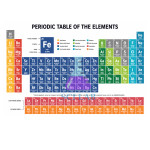
| Periodic chart | Chart of elements pasted inside the lid |
| Supplied by | Science Lab Supplies, Ambala, India |
Applications and Experiments for the Atomic In/Organic Junior Model
The set is used to build three-dimensional versions of simple organic and inorganic molecules, so students see valency, bond arrangement and isomer shapes instead of only drawing them. It fits the chemical bonding and carbon compounds chapters of CBSE and NCERT Class 10 to 12 and introductory B.Sc. chemistry.
- NCERT Class 10 carbon compounds: building methane, ethene and ethyne with the black carbon balls.
- Class 11 chemical bonding: tetrahedral carbon and double or triple bonds, with the Orbital Model of Sp3 Hybridization for the orbital picture.
- Class 11–12 organic chemistry: chain and position isomers, compared with the shapes on the Geometry of Molecules wall chart.
- Valency and element groups: matching ball colours to groups on the lid chart or the wall-size Periodic Table of Chemical Elements.
Standard Scope of Supply
Each set contains the 75 atom balls in the nine colour and size groups shown in the table, including the 26 white hydrogen balls with bond lugs, packed in the 24 x 20 x 5 cm storage box that carries the periodic chart in its lid.
Packing, MOQ and Lead Time
You can ask for one set for a teacher's desk or a class quantity for group work. Science Lab Supplies replies with a quotation that sets out the packing, delivery time and price for exactly that number, and other chemistry models can sit on the same quotation.
As a registered exporter holding an Importer-Exporter Code, Science Lab Supplies can ship to buyers in Peru, Egypt, Iraq, Nigeria, Kenya and Ghana. To have class sets priced, post your quantity on the contact page, drop the set into the enquiry cart, or use the lab tender page for a formal bid.
Frequently Asked Questions
What is this model set used for?
It is used to build ball models of organic and inorganic molecules, so students can see how atoms of different valency join and how carbon forms single, double and triple bonds.
How many atom balls are in the set?
There are 75 balls in nine colour and size groups, including 12 large black carbon balls and 26 white hydrogen balls with lugs; the table gives the full breakdown.
Who supplies the Atomic In/Organic Junior Model?
The set comes from Science Lab Supplies in Ambala, India, which quotes it to schools, colleges, distributors and tender contractors, whether the need is one demonstration set or a set for every bench group.
Can class sets be quoted for a school tender?
Yes. Send the number of sets, the delivery location and the tender specification, and the quotation will list the set with the ball counts and box size given above.
Related Molecular and Atomic Models
These models extend the same bonding and structure lessons, from demonstration and student kits to orbital and atomic-structure models, drawn from the Chemistry Lab and Physics Lab ranges. Any of them can go on the same quotation as the junior set.
- Molecular Models Demonstration Kit — 40 hydrogen, 38 carbon and 12 oxygen atoms with 55 single bonds and 25 double and triple bonds.
- Molecular Micro-Models — student kit of carbon, hydrogen and oxygen models with metal bars that snap together.
- Molecular Model Kits for Students — an inorganic/organic set of about 52 atoms and a stereochemistry set of about 74 atoms.
- Molecular Model Kits for Teachers — teacher versions with about 108 and about 166 atoms.
- Carbon-Carbon Molecular Model — a 3.0 kg set of orbital models for ethane, ethylene, acetylene and benzene.
- Schrodinger Atomic Model — colour-coded positive and negative orbital regions, with cross sections showing nodal planes.
- Atom Activity Model — transparent plastic model of nucleus, protons, neutrons and electron layers for overhead projection.
Browse the full Chemistry Lab range, the model kits in the Physics Lab range, or all school lab equipment.
Last updated: 9 October 2026




.jpg)