
Graduated Pipette, 10 ml
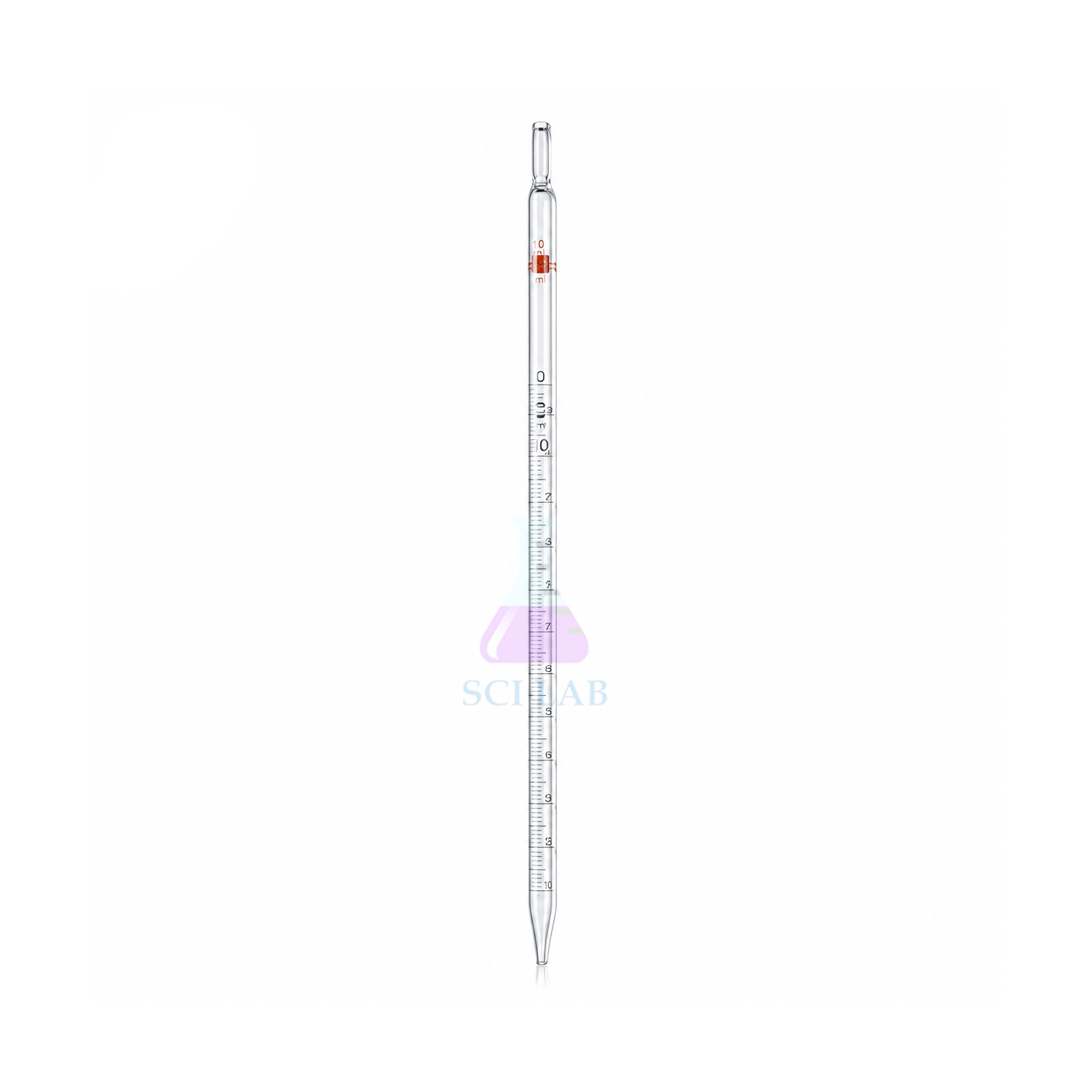
Product Code : SCL-CL-11499
The Graduated Pipette, 10 ml is a clear glass measuring pipette with a 10 ml nominal capacity and a graduated scale for measuring and transferring liquid volumes. The glass is chemical resistant and heat resistant. It suits reagent and sample work in biology and chemistry practicals where a measuring cylinder is not precise enough.
Specifications of the 10 ml Graduated Pipette
| Specification | Value |
|---|---|
| Capacity | 10 ml (nominal) |
| Type | Graduated (measuring) pipette |
| Material and colour | Clear glass |
| Resistance | Chemical resistant and heat resistant |
| Manufacturer | Science Lab Supplies, Saha, Ambala, India |
Measuring Volumes with the 10 ml Graduated Pipette
Fit a Pipette Filler Bulb to the top, draw the liquid a little above the needed mark and let it fall slowly until the bottom of the meniscus sits on the line, with the eye level with it. Wipe the outside of the tip, then run the volume into the receiving vessel as the drain or blow-out marking on the pipette directs. Rest the pipette in a holder between uses.
- Acidity or hardness tests on water: take a measured sample into a conical flask, then titrate it from a Burette, 50 ml, with Sampler Nozzles.
- Enzyme practicals: measure equal volumes of starch solution and amylase into each Glass Test Tube, 16 x 150 mm, so the tubes can be compared fairly.
- Dilution series: measure the larger amounts of water in the Glass Measuring Cylinders, Assorted Capacities and the small amounts of stock solution with the pipette.
- Density of a liquid: run a measured volume into a weighed beaker and weigh it again on the Electronic Balance, 200 g Capacity, 0.1 g Readability.
Precautions: never pipette by mouth, always use a pipette filler; keep the tip below the surface while filling so no air is drawn in; and let the pipette and the liquid reach room temperature before measuring.
Frequently Asked Questions
What should a buyer check on a 10 ml graduated pipette before ordering?
Check the smallest scale division the practicals need and whether the scale runs down to the tip or stops above it. Also make sure the pipette fillers already in the lab fit the top of the tube.
Which accessories are usually ordered with glass pipettes?
A pipette filler or bulb, because liquids should never be drawn up by mouth, and a pipette stand that keeps the tubes upright and protects the tips between lessons.
Why do some pipettes carry coloured bands?
The band shows the capacity at a glance, so a technician can sort mixed pipettes quickly after washing and pupils pick the right size. Where pipettes have no band, keep each size in its own labelled stand or tray.
What do TD and TC markings mean on pipettes?
TD or Ex means the pipette is calibrated to deliver the marked volume. TC or In means it is calibrated to contain it. Read the markings on the pipette in hand and drain it as they direct, rather than assuming blow-out.
Does temperature affect pipette readings?
Yes. Liquids and glass expand when warm, so volume readings shift. Measure liquids at room temperature and keep the pipette away from heat sources while working.
Can a pipette with a chipped tip still be used?
No. A chipped tip changes the flow and the volume released, and the sharp edge can cut. Set it aside and use an intact pipette.
Related Measuring and Titration Glassware
- Graduated Pipettes, 2 ml, 5 ml and 10 ml: three glass graduated pipettes, each 350 mm long.
- Graduated Pipettes 25ml: clear glass graduated pipette with a 25 ml capacity.
- Volumetric (One-Mark) Pipette, 25 ml: 25 ml glass pipette, chemical and heat resistant.
- Pipette Holder: white plastic carousel stand that holds up to 15 pipettes upright.
- Burette for Bases, 50 ml: 50 ml glass burette graduated in 0.1 ml steps.
- Measuring Cylinder 50ml: glass measuring cylinder graduated every 1 ml.
See the full Lab Glassware list for other shapes and sizes, or the Chemistry Lab range.
Science Lab Supplies is able to ship to Qatar, Sri Lanka, Vietnam, Malaysia, Peru and Egypt under its Importer-Exporter Code. Request a quotation from the contact page or the enquiry cart.
Last updated: 19 November 2026
.jpg)
.jpg)
.jpg)
.png)
.jpg)
.jpg)

.jpg)