Electrode Plate
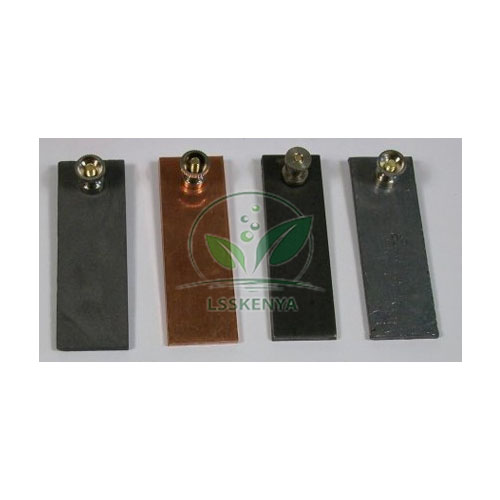
Product Code : LSK-CL-10055
The Electrode Plate is a flat 100 x 45 mm electrode with a socket terminal for electrochemistry experiments. It comes in aluminium, carbon, copper, lead and zinc, so students can build simple cells from different metal pairs or use the carbon plate as an inert electrode in electrolysis.
Specifications of the Electrode Plate
| Specification | Value |
|---|---|
| Size | 100 x 45 mm plate |
| Connection | Socket terminal |
| Materials | Aluminium, carbon, copper, lead, zinc |
| Use | Electrochemistry experiments |
| Supplied by | Science Lab Supplies, Ambala, India |
Electrochemistry Experiments with Electrode Plates
Two plates of different materials stand in a beaker of electrolyte without touching. Leads plug into the terminals and run to a meter or a power supply.
- Electrochemical series: pair copper with zinc, aluminium or lead in turn, as in the Cell Simple Copper With Zinc, and rank the metals by the voltage each pair gives.
- Electrolysis of copper sulphate: use two carbon plates, or two copper plates, in copper sulphate solution and compare what happens at each electrode.
- Copper transfer: in copper sulphate solution, make a copper plate the anode and the carbon plate the cathode, then weigh both plates before and after.
Containers: a Glass Beaker takes a pair of plates with room for the electrolyte.
Frequently Asked Questions
Can two lead plates be used to make a simple rechargeable cell?
Yes. Two lead plates in dilute sulphuric acid are charged from a low-voltage DC supply for a few minutes, and the plate joined to the positive terminal turns brown as lead dioxide forms. After the supply is removed, the pair can light a small bulb briefly. Wear goggles and wash hands after handling lead.
Which metals should a school stock to cover the usual electrode plate practicals?
The plate comes in aluminium, carbon, copper, lead and zinc. Copper and zinc make the basic cell, the other metals let students rank voltages across the reactivity series, carbon serves as the inert electrode for electrolysis, and lead suits a simple lead-acid cell.
Which beaker or cell size suits these plates?
Each plate is 100 x 45 mm, so the beaker or jar must be wide enough for two plates to stand upright and apart, and deep enough to cover most of each plate while the socket terminal stays above the liquid.
Why does the voltmeter show a negative reading?
The leads are the wrong way round. Join the more reactive metal, such as zinc, to the negative terminal and the less reactive one, such as copper, to the positive terminal. The size of the reading does not change.
Related Electrode and Cell Items
- Electrode Rod: 100 x 10 mm rods with terminal in aluminium, carbon, copper, iron and zinc.
- Metal Strips (Aluminium, Copper, Lead, Zinc): aluminium, copper, lead and zinc strips for simple cells.
- Electrode Connector: acid resistant plastic holder with a socket for 4 mm safety jacks.
- Apparatus for Demonstration of Electrolytic Processes: base with bulb, electrode supports and carbon, copper, zinc, lead and brass electrodes.
- Rust Race Lab Investigation: tests metals for corrosion and compares rust inhibitors.
Electrodes, cells and connectors for electrochemistry are listed in the Chemistry Lab range, part of the School Lab Equipments section.
Electrode plates are exported by Science Lab Supplies to Kenya, Ghana, Ethiopia, Tanzania, Uganda and the UAE under its Importer-Exporter Code. For a quotation on electrode plates, contact Science Lab Supplies via the contact page or use the enquiry cart.
Last updated: 15 November 2026
.png)