
Grinder Tool
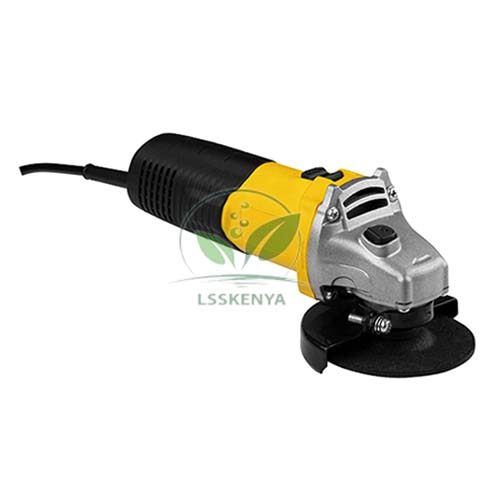
Product Code : LSK-TOMLE-10628
Grinder Tool (SKU LSK-TOMLE-10628) is a grinding tool dynamometer: a strain-gauge sensing unit and a two-channel digital force indicator that measure the forces produced while a surface grinder removes metal. Mechanical engineering students use it in metal-cutting and tool-design practicals to study real cutting forces. Engineering colleges, polytechnics, training institutes, tender contractors and distributors can obtain it through Science Lab Supplies, which dispatches it from Ambala, India.
Specifications
The table sets out each listed specification of this octagonal-ring grinding dynamometer. In short, two strain-gauged octagonal rings in a rigid, compact sensing unit carry the grinding load, and the two-channel digital indicator shows both force components at once, with balancing potentiometers for setting each channel before a run.
| Specification | Value |
|---|---|
| SKU | LSK-TOMLE-10628 |
| Type | Strain-gauge grinding tool dynamometer |
| Working principle | Octagonal ring method, strain gauges as sensors |
| Sensing unit | Mechanical unit with two octagonal rings and strain gauges |
| Forces measured | Two force components, read simultaneously |
| Force range | 0–200 kg in each coordinate direction |
| Indicator | Two-channel digital force indicator |
| Indicator controls | Balancing potentiometers |
| Front plate | Polycarbonate |
| Mechanical unit size | 300 x 300 mm overall |
| Construction | Rigid, compact unit |
| Parameters studied | Depth of cut, work material, speed and feed |
| Machine required | Surface grinding machine (not included) |
| Power supply required | 230 V, single phase, 50 Hz, stabilised |
| Supplied by | Science Lab Supplies, Ambala, India |
Applications and Experiments for the Grinder Tool Dynamometer
This dynamometer measures the two force components generated during surface grinding and shows how they respond to depth of cut, feed, speed and work material. It fits metal-cutting practicals in B.Tech and diploma mechanical engineering and demonstrations in vocational training equipment programmes for machining.
- B.Tech / B.E. mechanical engineering: grinding-force measurement in the metal-cutting laboratory.
- Diploma mechanical engineering: machine-tool practicals on a surface grinder.
- Plotting how each cutting parameter changes the two measured forces.
- ITI and TVET machining courses: instructor-led demonstrations.
The unit needs a surface grinding machine to work on. Where a workshop has none, the Reciprocating Spindle Surface Grinder or the High Precision Surface Grinder can be quoted alongside it.
Standard Scope of Supply
Each set comprises the mechanical sensing unit with its two strain-gauged octagonal rings and the two-channel digital force indicator with balancing potentiometers and polycarbonate front plate. Not included: the surface grinding machine and the 230 V stabilised power supply, which the laboratory provides.
Packing, MOQ and Lead Time
Quotations can cover a single dynamometer or several units for a complete machine-tool laboratory, and each one sets out the packing, delivery time and price for the quantity requested. The lathe, drilling and milling dynamometers from this range can join the same quotation for a full TVET workshop equipment list.
As a registered exporter holding an Importer-Exporter Code, Science Lab Supplies can ship to buyers in Ghana, Ethiopia, Tanzania, Uganda, the UAE and Saudi Arabia. Science Lab Supplies is registered for GST (GSTIN 06ADEPJ0574F2ZU). For a price on this grinding dynamometer, message the team from the contact page, place it in the enquiry cart beside other machine-tool items, or, if the purchase is going through a formal bid, start from the lab tender page.
Frequently Asked Questions
What does the Grinder Tool measure?
It measures two force components during surface grinding, up to 200 kg in each coordinate direction, using strain-gauged octagonal rings. Both readings appear together on the digital indicator, so students can compare them for each set of cutting conditions.
What is needed to run this dynamometer?
A surface grinding machine and a 230 V, single-phase, 50 Hz stabilised power supply. Neither is part of the set; both are provided by the laboratory that installs the unit.
Who supplies the Grinder Tool?
Science Lab Supplies is the supplier, and the dynamometer is dispatched from Ambala, India. Engineering colleges and training institutes can order it directly, while tender contractors and distributors receive the same item-wise quotation for their own bids.
Can it be quoted for a college or TVET tender?
Yes. Share the tender specification, quantity and delivery location, and an item-wise quotation will be prepared against the specification table above, with the lathe, drilling or milling dynamometers added where the tender covers them.
Related Tool Dynamometers and Grinding Equipment
A metal-cutting laboratory measures forces on more than one machine tool and needs the grinders and strain-gauge instruments that go with them. These items from the Theory of Machine, Welding Equipment and Workshop Lab Machine, and Material Testing ranges can all be quoted together with the grinding dynamometer.
- Lathe Tool — mounts on the cross slide in place of the compound slide and takes a ½ inch H.S.S. tool.
- Drilling Tool — arm-wheel dynamometer calibrated with a proving ring, reading thrust and torque directly in kg.
- Milling Tool — octagonal rings sandwiched between two M.S. plates, reading three force components up to 500 kg.
- Tool Dynamometers — multi-component machine-tool dynamometers for checking empirical force calculations by experiment.
- Universal Tool and Cutter Grinder — 175 mm maximum wheel diameter and 500 mm between centres.
- Strain Gauge Trainer — bending, torsion and tension structures for comparing quarter, half and full-bridge connections.
- Digital Strain Display — reads up to 16 strain-gauge channels in quarter, half or full bridge.
Browse the full Theory of Machine Lab Equipments range, the Welding Equipment and Workshop Lab Machine range for surface and tool grinders, or all TVET lab equipment.
Last updated: 9 October 2026


