Microphone
Product Code : LSK-PL-10296
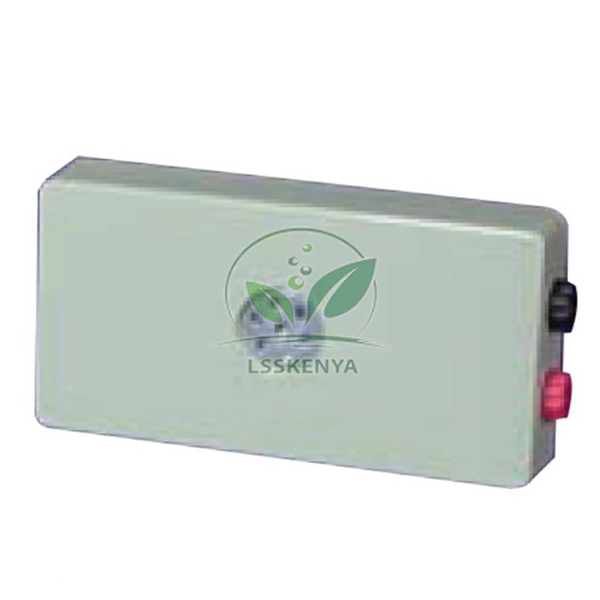
Microphone (SKU LSK-PL-10296) is a crystal microphone unit in a moulded plastic box, made to feed sound into an oscilloscope so a class can see the waveform of a voice, whistle or tuning fork. Physics teachers use it in sound and waves lessons at secondary and college level. The unit comes from the Saha, Ambala factory of Science Lab Supplies (Plot 448, HSIIDC Industrial Area, India), a laboratory equipment manufacturer in India selling directly to schools, colleges, tender contractors and distributors.
Specifications
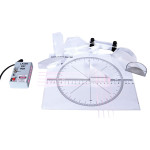
A crystal microphone element is mounted in a moulded plastic box measuring 55 x 110 x 22 mm, with a 4 mm connection for leads to the oscilloscope input. Its impedance is 1 MΩ, and the box shape lets it sit flat on the bench while students speak or sound a source nearby.
| Parameter | Value |
|---|---|
| SKU | LSK-PL-10296 |
| Type | Crystal microphone |
| Housing | Moulded plastic box |
| Connection | 4 mm |
| Impedance | 1 MΩ |
| Dimensions (L x W x H) | 55 x 110 x 22 mm |
| Use | With an oscilloscope, to demonstrate voice waveforms |
| Manufacturer | Science Lab Supplies, Saha, Ambala, Haryana |
| Country of origin | India |
Applications and Experiments for the Microphone
Connected to an oscilloscope, the microphone turns sound into a visible trace. Students can compare loud and soft sounds by amplitude, high and low notes by the spacing of the waves, and a pure tuning-fork note with the more complex shape of a voice, which makes sound lessons concrete.
- Class 9 science: sound as a wave, with pitch and loudness.
- Class 11 physics: waves, frequency and amplitude shown on a screen.
- B.Sc. physics: sound and acoustics demonstrations with an oscilloscope.
- Science clubs and exhibitions: live display of voice waveforms.
Standard Scope of Supply
The Microphone is supplied as a single unit: the crystal microphone in its moulded plastic box with the 4 mm connection. An oscilloscope and 4 mm leads are needed to display the signal and are separate items that can be listed on the same quotation.
Packing, MOQ and Lead Time
Order a single microphone for a demonstration kit or several for group work; your quotation will list packing, delivery time and price for the number requested. Oscilloscopes, leads and tuning forks for the same sound practical can be added so the set-up is priced in one go.
Science Lab Supplies is a registered exporter holding an Importer-Exporter Code, so it is able to ship to buyers in Nigeria, Kenya, Ghana, Ethiopia, Tanzania and Uganda. The business is registered under Udyam as a manufacturing enterprise (UDYAM-HR-01-0014546) and for GST (GSTIN 06ADEPJ0574F2ZU). Start an enquiry on the contact page, build a list in the enquiry cart, or visit the lab tender page.
Frequently Asked Questions
What is this microphone used for?
It is a microphone unit for use with an oscilloscope, so teachers can demonstrate the waveform of a voice or other sound on the screen during sound and waves lessons.
How does it connect to an oscilloscope?
The box has a 4 mm connection, so standard 4 mm leads run from the microphone to the oscilloscope input. Its impedance is 1 MΩ.
Is Science Lab Supplies the manufacturer or a trader?
The company is the manufacturer. This microphone unit is made at the Science Lab Supplies factory in Saha, Ambala, India, and buyers receive their quotation from that factory.
How big is the unit?
The moulded plastic box measures 55 x 110 x 22 mm (length x width x height), small enough to sit on a bench beside the oscilloscope.
Related Sound and Signal Equipment
A sound practical needs something to display the signal and often something to produce or measure sound. These four items give two ways to view the microphone's output, a loudspeaker for playing tones to a class, and a meter for putting a number on sound level.
- Oscilloscope — displays the voice waveform.
- PC Oscilloscope — shows the trace on a computer screen.
- Demonstration Loudspeaker — plays tones for a class.
- Digital Sound Meter — measures sound level.
Browse the full Physics Lab range or all physics lab equipment.
Last updated: 25 September 2026
.jpeg)