Crushing Can
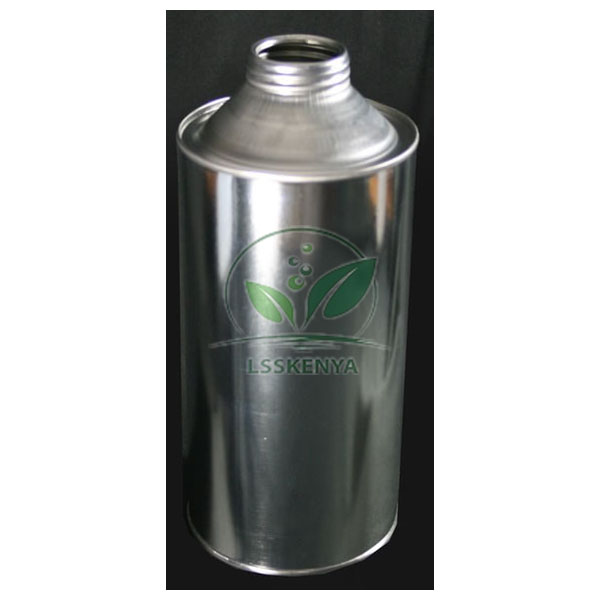
Product Code : LSK-PL-10302
Crushing Can (SKU LSK-PL-10302) is a light-walled tin plate can with an air-tight screw cap, used to demonstrate the force exerted by atmospheric pressure. When the air inside is driven out and the pressure inside drops, the outside air crushes the can in front of the class. Science teachers use it in pressure lessons from middle school to Class 11. Science Lab Supplies manufactures the can in Saha, Ambala, India (Plot 448, HSIIDC Industrial Area) and supplies schools, colleges, tender contractors and distributors directly.
Specifications
The can is made of light-walled tin plate so that it gives way under atmospheric pressure once the pressure inside is reduced. An air-tight screw cap seals it at the right moment. It measures 260 mm long with a 75 mm diameter, large enough for the whole class to see it collapse.
| Parameter | Value |
|---|---|
| SKU | LSK-PL-10302 |
| Material | Light-walled tin plate |
| Closure | Air-tight screw cap |
| Size | 260 x 75 mm (diameter) |
| Demonstrates | Force exerted by atmospheric pressure |
| Manufacturer | Science Lab Supplies, Saha, Ambala, Haryana |
| Country of origin | India |
Applications and Experiments for the Crushing Can
The demonstration makes an invisible force obvious. A little water is boiled in the open can so steam drives out the air; the cap is then screwed on and the can cooled. As the steam condenses, pressure inside falls and atmospheric pressure crushes the thin walls within moments.
- NCERT Class 8 science: force and pressure, including atmospheric pressure.
- Class 9 science: pressure in fluids and the effects of air pressure.
- Class 11 physics: mechanical properties of fluids and pressure differences.
- Science shows: a quick, visual demonstration for open days.
Never heat the can with the cap screwed on. Steam and the hot can can scald, so the teacher should handle it with heat-resistant gloves or tongs and keep students at a safe distance.
Standard Scope of Supply
The Crushing Can is supplied as a single tin plate can with its air-tight screw cap. A heat source, tongs and water are needed for the demonstration and are not part of the item. Because the can is crushed in use, several cans may be needed for repeated demonstrations.
Packing, MOQ and Lead Time
Ask us for a quote on a single can or on a batch for the year's demonstrations. The quotation sets out packing, delivery time and price for that number, and vacuum or pressure apparatus for the same topic, or other school physics lab equipment in India, can be quoted with it.
Holding an Importer-Exporter Code as a registered exporter, Science Lab Supplies can ship to buyers in the UAE, Saudi Arabia, Oman, the Philippines, Nepal and Bangladesh. Reach us through the contact page, gather items in the enquiry cart, or open the lab tender page for tender buying.
Frequently Asked Questions
How does the Crushing Can demonstration work?
Steam from boiling water pushes most of the air out of the open can. After the cap is closed and the can cools, the steam condenses, the pressure inside drops, and atmospheric pressure crushes the can.
Can a can be reused?
A crushed can cannot normally be restored, so plan one can per demonstration and order enough for the classes you teach.
Is Science Lab Supplies the manufacturer or a trader?
Science Lab Supplies makes the can itself and is its manufacturer. Production takes place at the company's factory in Saha, Ambala, India, and quotations are issued directly by the factory.
What size is the can?
It is 260 mm long and 75 mm in diameter, made from light-walled tin plate with an air-tight screw cap.
Related Air Pressure Apparatus
Atmospheric pressure is taught with several demonstrations. These four items let a teacher remove air with a pump, show what happens inside a bell jar, run a complete vacuum set and move on to the pressure-volume relationship of gases.
- Hand Vacuum Pump — removes air by hand.
- Bell Jars — enclosures for vacuum demonstrations.
- School Vacuum-Pump Set — a pump set for vacuum experiments.
- Boyle's Law Apparatus — pressure and volume of a gas.
Browse the full Physics Lab range or all physics lab equipment.
Last updated: 25 September 2026