Thermal Insulation Apparatus
Product Code : LSK-PL-10293
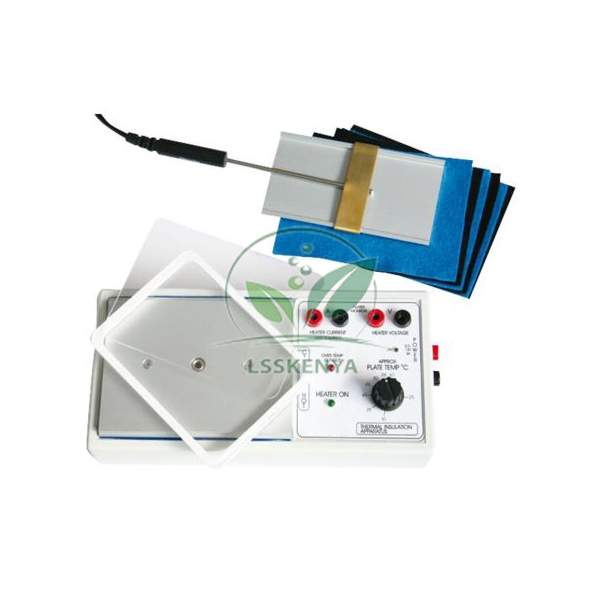
Thermal Insulation Apparatus (SKU LSK-PL-10293) measures how much energy insulation saves, using a thermostatically controlled hot plate and layers of felt or a double-glazing panel. It suits heat-transfer and energy-saving practicals from lower secondary to college level, as a simple or a detailed study. Science Lab Supplies builds the apparatus in Saha, Ambala, India, at its Plot 448 unit in the HSIIDC Industrial Area, and prices it for schools, colleges, tender contractors and distributors.
Specifications
The insulation rig’s heater, samples, power needs and size each have a row below. In short, a thermostatically controlled hot plate works between 25 and 600 °C with provision to monitor heater input power, six felt pads and an air-cell double-glazing panel vary the insulation, and the unit runs from a 12 V DC, 3 A supply.
| Specification | Value |
|---|---|
| SKU | LSK-PL-10293 |
| Heater | Thermostatically controlled hot plate |
| Temperature range | 25 to 600 °C |
| Power monitoring | Provision for monitoring input power to the heaters |
| Insulation pads | 6 felt pads |
| Glazing sample | Air-cell double-glazing panel |
| Measurement | Timing the heater on/off periods |
| Monitoring | Datalogger provision for all variables, or a simple stopwatch |
| Power requirement | 12 V DC, 3 A, smoothed or regulated |
| Connections | Standard 4 mm leads |
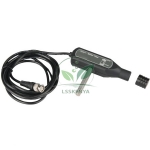
| Probe | Not included |
| Dimensions | 220 x 110 x 80 mm |
| Manufacturer | Science Lab Supplies, Saha, Ambala, Haryana |
| Country of origin | India |
Applications and Experiments for the Thermal Insulation Apparatus
Felt pads are added one at a time, or the double-glazing panel is fitted, and the time the thermostat keeps the heater on and off is recorded. Longer off periods mean less energy is needed, which ties the practical to the real question of insulating homes to reduce energy consumption.
- Lower secondary science: good and poor conductors of heat and why houses are insulated.
- Class 11 physics: heat transfer by conduction and the effect of thickness on heat loss.
- Energy topics: comparing electrical input with and without insulation, run from the 12 V DC output of an AC/DC Laboratory Power Supply.
- Timing each heater cycle with a Digital Stopwatch when no datalogger is available.
The hot plate becomes hot in use, so students should work under supervision and let it cool before changing pads.
Standard Scope of Supply
The apparatus comes with its thermostatically controlled hot plate, six felt pads and the air-cell double-glazing panel. The temperature probe is not included. A 12 V DC, 3 A smoothed or regulated supply and 4 mm leads are needed to run it and can be added to the quotation.
Packing, MOQ and Lead Time
Ask for one unit for a demonstration bench or several for group practicals; the quotation will state packing, delivery time and price for the quantity you give. A power supply, leads or a stopwatch can sit on the same quotation when you price heat and thermodynamics lab equipment.
Because Science Lab Supplies is a registered exporter with an Importer-Exporter Code, it can ship to buyers in Peru, Egypt, Iraq, Nigeria, Kenya and Ghana. Questions about running the apparatus can be sent through the contact page; quantities for a class go into the enquiry cart; tendered purchases follow the lab tender page.
Frequently Asked Questions
Do I need a datalogger?
No. The apparatus has provision for datalogger monitoring of all variables, but a simple stopwatch is enough to time the heater’s on and off periods.
What power supply does it need?
It needs a 12 V DC supply rated at 3 A, either smoothed or regulated, connected with standard 4 mm leads. The thermostatically controlled hot plate can be used between 25 and 600 °C.
Is Science Lab Supplies the manufacturer or a trader?
The apparatus is produced in the company’s Saha, Ambala factory in India, making Science Lab Supplies its manufacturer; that same factory prepares every quotation itself.
How is the thickness of insulation varied?
Six felt pads are supplied, so students can stack one, two or more pads to see how extra thickness changes the heater’s on and off cycle.
Related Heat Transfer Apparatus
These heat and thermodynamics items extend the insulation bench to conduction, radiation, expansion and electrical energy, so students can compare how heat moves through different materials and surfaces. Any of them can go on the same quotation as the apparatus for a school or college heat laboratory.
- Conductometer, For Thermal Conductivity — five rods of brass, copper, aluminium, iron and stainless steel on a brass hub.
- Conductivity Ring — copper, brass, steel and aluminium strips with wax cups on a ring.
- Heat Receiver / Leslie-Type Receiver — 80 mm hollow cylinder, one side black and the opposite side polished silver.
- Bimetallic Strip — 200 x 15 mm brass and steel strip on a wooden handle.
- Student Digital Joulemeter — energy readings from 1 J to 999,999 J, with a 9 V adaptor.
- Copper Calorimeter Set — calorimeter on a felt pad in a 100 x 75 mm outer vessel.
- Searle’s Thermal Conductivity Apparatus — copper rod with a steam jacket, in a felt-lined wooden case.
Browse the full Physics Lab range, the Heat range, or all physics lab equipment.
Last updated: 22 October 2026