Pair of Horseshoe Magnets with Keeper
Product Code : LSK-PL-10315
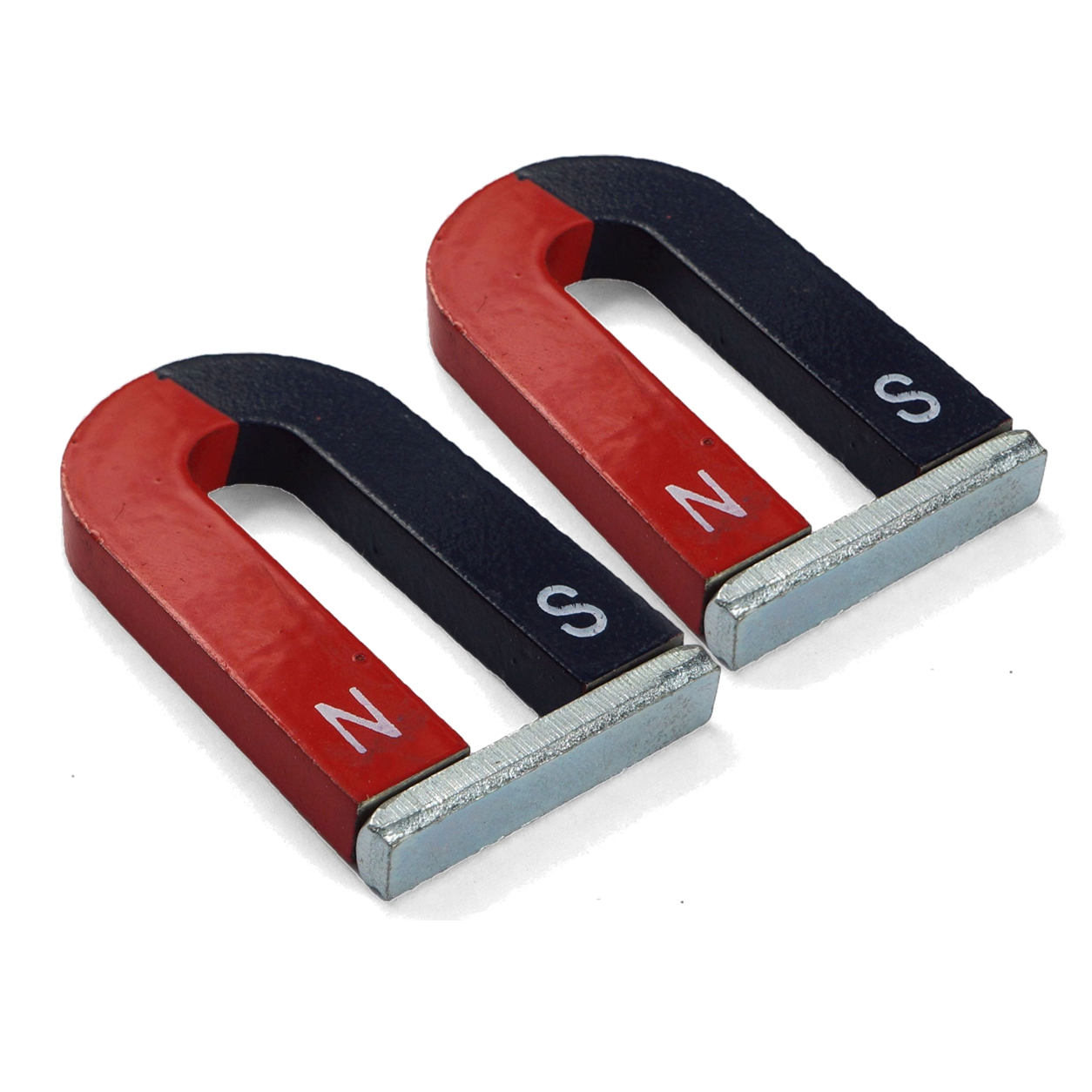
Pair of Horseshoe Magnets with Keeper (SKU LSK-PL-10315) is a set of two 100 mm steel horseshoe magnets supplied with a keeper. With both poles close together, each magnet gives a strong field in the gap, ideal for school lessons on poles, attraction and field patterns. Science Lab Supplies produces the pair in its own factory at Plot 448, HSIIDC Industrial Area, Saha, Ambala, India, and quotes schools, colleges, tender contractors and distributors without intermediaries.
Specifications
Each magnet is a 100 mm steel horseshoe with its two poles brought close together, which concentrates a strong magnetic field between them. They are permanent magnets, so they stay magnetised without any power supply, and the keeper is placed across the poles when the pair is stored.
| Parameter | Value |
|---|---|
| SKU | LSK-PL-10315 |
| Quantity | Pair (2 magnets) with keeper |
| Material | Steel |
| Length | 100 mm |
| Type | Permanent horseshoe magnet |
| Manufacturer | Science Lab Supplies, Saha, Ambala, Haryana |
| Country of origin | India |
Applications and Experiments for the Horseshoe Magnets
Horseshoe magnets are used wherever a lesson needs a concentrated field between two nearby poles: testing which materials are attracted, mapping the field in the gap and showing the force on a current-carrying wire. Having a pair lets students also compare like and unlike poles.
- NCERT Class 6 science (Fun with Magnets): poles, attraction and repulsion.
- Class 10 physics (Magnetic Effects of Electric Current): field in the gap and force on a conductor.
- Comparing a permanent magnet with an electromagnet.
Put the keeper back across the poles after use and keep the magnets away from watches, phones and computer media.
Standard Scope of Supply
Each order line covers a pair of 100 mm steel horseshoe magnets together with the keeper, as described above. Iron filings, compasses and other magnetism accessories are separate items and are not part of the pair, but they can be listed on the same quotation.
Packing, MOQ and Lead Time
One pair for the teacher's table or a pair for every student group can be quoted. Each quotation gives packing, delivery time and price for the number of pairs asked for, and other school physics lab equipment in India from the magnetism range can be added.
Science Lab Supplies, a registered exporter with an Importer-Exporter Code, can ship to buyers in Peru, Egypt, Iraq, Nigeria, Kenya and Ghana. Get in touch through the contact page, add the magnets to the enquiry cart, or visit the lab tender page for tenders.
Frequently Asked Questions
How big are the horseshoe magnets?
Each magnet is 100 mm long and made of steel. The pair comes with a keeper, which is placed across the poles when the magnets are stored.
What is the difference between a horseshoe magnet and an electromagnet?
A horseshoe magnet is a permanent magnet: it stays magnetised all the time. An electromagnet produces its field only while current flows, so its field can be started and stopped.
Is Science Lab Supplies the manufacturer or a trader?
Science Lab Supplies is the manufacturer and makes these magnets at its factory in Saha, Ambala, India. Buyers get their quotation from the maker itself, not from a trading agent.
Why is a horseshoe shape used?
Bending the magnet brings its two poles close together, which creates a strong magnetic field in the space between them. That makes the field easy to test and map in class.
Related Magnetism Equipment
These four items build a magnetism lesson around the horseshoe pair: another magnet shape, a set of strips to test, a compass for mapping the field and an electromagnet for comparison. Together they form a small electricity and magnetism lab kit for schools on one quotation.
- Bar Magnets — rectangular chrome steel pairs with keepers.
- Metal Testing Strips — 12 lettered magnetic and non-magnetic metal strips.
- Plotting Compass — 16 mm compass in an aluminium case.
- Electromagnet Set — lifts hooked masses to show field strength and current.
Browse the full Physics Lab range or all physics lab equipment.
Last updated: 25 September 2026