Oscilloscope
Product Code : LSK-PL-10295
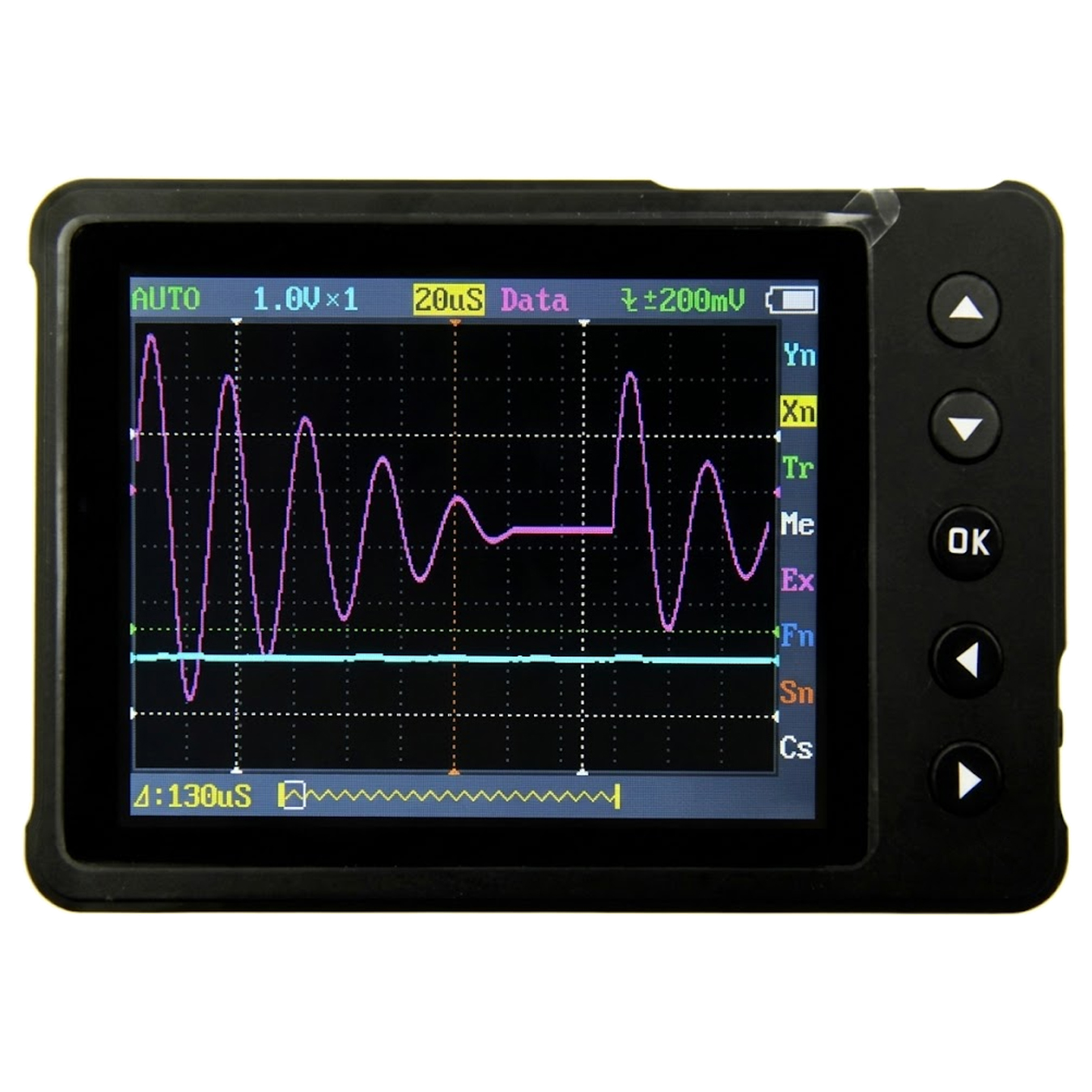
Oscilloscope (SKU LSK-PL-10295) is a 32-bit electronic signal recording instrument that draws a graph of voltage against time on a 320 x 240 colour display. It shows signal shape, frequency, amplitude and noise, so students and technicians can test and fault-find electronic circuits in physics and electronics labs. Science Lab Supplies supplies this instrument from Ambala, India to schools, colleges, training institutes, tender contractors and distributors.
Specifications
This oscilloscope combines a 32-bit recording system with a 320 x 240 colour screen and 2 MB of internal memory for storing captured signals. A rechargeable lithium battery powers it, and it arrives with a stand, probes, an Allen wrench and a protective case, so it can be used on the bench or carried between labs.
| Parameter | Value |
|---|---|
| SKU | LSK-PL-10295 |
| Type | 32-bit electronic signal recording instrument |
| Display | 320 x 240 colour |
| Internal memory | 2 MB |
| Power | Rechargeable lithium battery |
| Displays | Signal shape, frequency, amplitude and noise |
| Supplied by | Science Lab Supplies, Ambala, India |
Applications and Experiments for the Oscilloscope
An oscilloscope turns a changing voltage into a picture that students can measure. In teaching labs it is used to read the amplitude and frequency of waveforms, compare signals and trace faults in circuits, from senior school physics to college electronics and technical training.
- Class 12 physics: displaying alternating voltage and comparing waveform shapes.
- B.Sc. physics and electronics practicals: measuring amplitude, time period and frequency.
- Diploma and B.Tech basic electronics: observing rectifier, amplifier and oscillator outputs.
- ITI electronics trades: fault-finding in circuits by checking signals stage by stage.
Standard Scope of Supply
The listed contents are the oscilloscope itself, a stand, probes, an Allen wrench, a protective case and the rechargeable lithium battery. A signal source for practicals, such as a signal generator, is a separate item and can be quoted alongside the instrument.
Packing, MOQ and Lead Time
Whether you need a single oscilloscope for a teacher or one for each bench, send the number and we will quote packing, delivery time and price for that quantity. Signal generators, multimeters and leads for the same electronics bench can be added to the quotation.
Holding an Importer-Exporter Code as a registered exporter, Science Lab Supplies can ship to buyers in Iraq, Nigeria, Kenya, Ghana, Ethiopia and Tanzania. Enquiries go through the contact page or the enquiry cart, and institutions buying by tender will find details on the lab tender page.
Frequently Asked Questions
What does an oscilloscope show?
It draws a graph of electrical voltage over time. From that trace you can see the signal's shape, frequency, amplitude and noise, which is how circuits are tested and repaired.
How is the Oscilloscope powered?
It runs on a rechargeable lithium battery, which is included with the instrument along with a stand, probes, an Allen wrench and a protective case.
Who supplies the Oscilloscope?
Science Lab Supplies, a physics instruments supplier in India, supplies it from Ambala and can include it on a combined quotation with other physics and electronics equipment for your laboratory.
Can it store waveforms?
Yes. It is a signal recording instrument with 2 MB of internal memory. For recording length or file formats, please ask through the contact page before ordering.
Related Electronics Test Equipment
An oscilloscope is only half of most electronics practicals. These four items supply a signal to display, a computer-based alternative scope, a sound input for voice waveforms and a meter for quick voltage and resistance checks, so an electronics bench can be priced together.
- PC Oscilloscope — a scope that runs on a computer.
- Signal Generator — a waveform source to display.
- Microphone — shows voice waveforms on an oscilloscope.
- Digital Multimeter — everyday circuit measurements.
Browse the full Physics Lab range or all physics lab equipment.
Last updated: 25 September 2026


.jpeg)