Kit for Experiments with Breathing
Product Code : SCL-BLE-11629
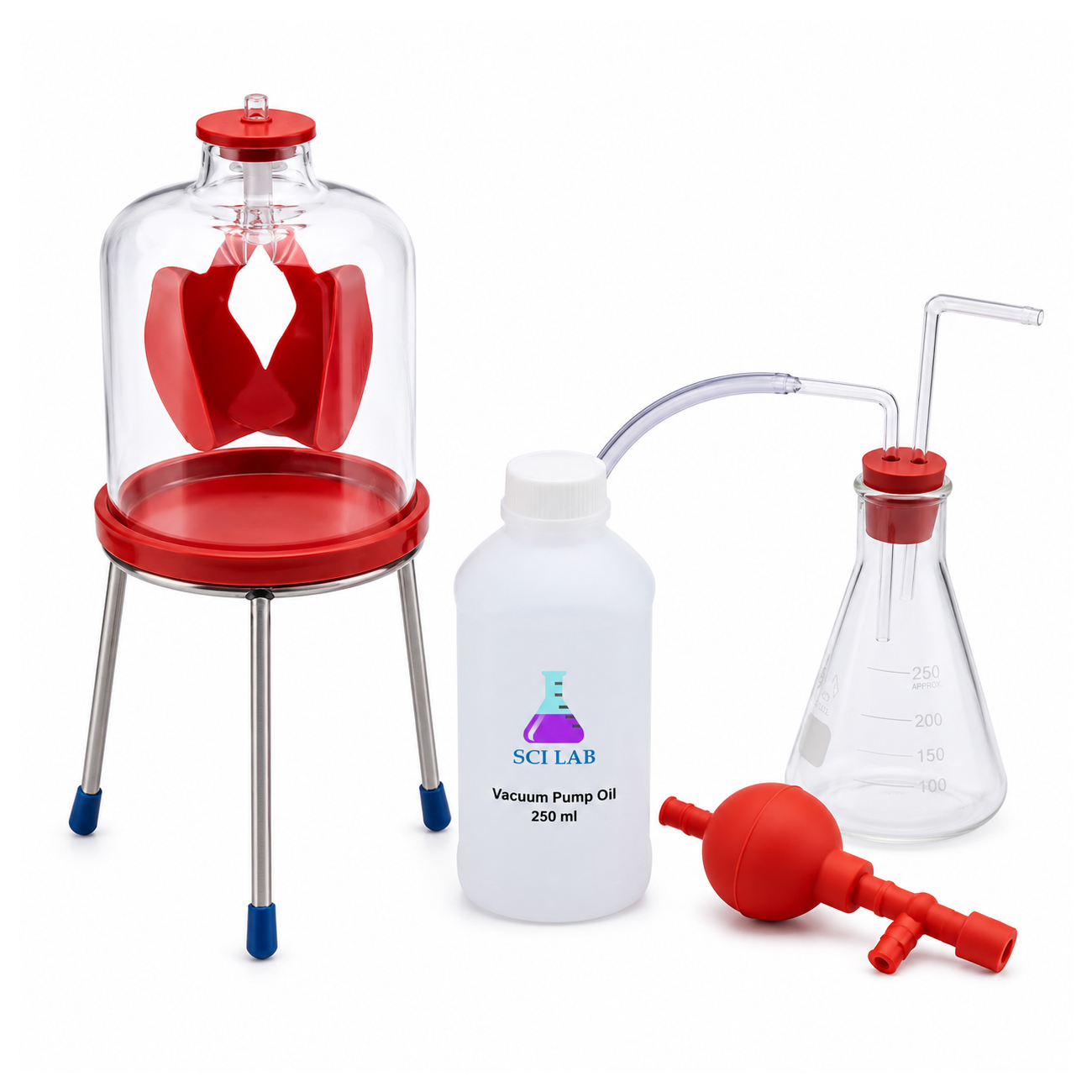
The Kit for Experiments with Breathing lets students model how the lungs work during the two phases of breathing and show carbon dioxide in the air they breathe out. It contains a clear bell-jar lung model with two lungs on a Y-piece and a flexible diaphragm, a hand-operated bulb pipette, a three-legged metal stand and a labelled 100 ml bottle of lime water with its safety data sheet.
Specifications of the Breathing Experiments Kit
| Specification | Value |
|---|---|
| Lung model | Clear bell jar with two model lungs on a Y-piece and a flexible diaphragm |
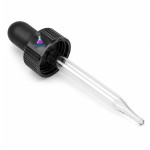
| Pipette | Hand-operated bulb pipette, for pressure and air-transfer demonstrations |
| Stand | Three-legged metal stand |
| Lime water | One labelled 100 ml bottle, with its safety data sheet |
| Supplied by | Science Lab Supplies, Ambala, India |
Breathing Practicals with the Lung Model and Lime Water
The bell-jar model is worked first: pulling the diaphragm down fills the two lungs, and pushing it up empties them. Lime water then tests breathed-out air against room air at a separate CO2 station, away from the model.
- Inhalation and exhalation: work the model through both phases and link each one to the diaphragm movement and the change in chest volume.
- Exhaled air (Class 7–10): blow gently through a straw into lime water in a Conical (Erlenmeyer) Flask, 250 ml. It turns milky much faster than lime water left standing in room air.
- Two-flask test: join two flasks with Rubber Tube (Laboratory) so that breathing in draws room air through one flask and breathing out passes through the other.
- Room-air control: squeeze the bulb pipette a few times to bubble room air through a second sample of lime water; it stays clear far longer.
Precautions: when blowing through a straw, blow out only and never suck; in the two-flask test, breathe in gently and only through the tube that ends above the lime water; give each student a fresh straw; read the lime water safety data sheet before the lesson; and rinse lime water off skin and eyes at once, as it is alkaline.
Frequently Asked Questions
Which parts of a lung model wear out first?
The flexible diaphragm and the two model lungs wear first. Rubber-type parts go sticky or split with use, sunlight and heat, so store the bell-jar model cool and out of direct sun and replace these parts when they tire.
Which breathing topics in the syllabus does the kit support?
The mechanism of breathing, the role of the diaphragm and chest volume, and the difference between inhaled and exhaled air. These appear in Class 7 and Class 10 science and in Class 11 biology.
What does each part of a bell-jar lung model stand for?
In this bell-jar model, the clear jar is the chest cavity, the two model lungs are the lungs, the Y-piece is the trachea and bronchi, and the flexible sheet is the diaphragm. Pulling the sheet down enlarges the space and the lungs fill.
What are the limits of a bell-jar lung model?
The jar is rigid, so it cannot show the ribs and intercostal muscles moving. The real diaphragm is dome-shaped, and the lungs fill the chest with only a thin pleural layer, not a large air space.
How do the ribs help with breathing?
When the external intercostal muscles contract, the ribs move up and out. This adds to the chest volume made by the flattening diaphragm, and a simple model of hinged strips shows the movement.
Related Breathing and Lung Models
- Human Lung Model with Dissectible Lobe and Alveoli: three-dimensional PVC model with removable parts, 3–4 times magnification.
- Lung Model Demo Kit: bell jar, single-hole bung, Y-shaped adapter, balloons and a latex rubber sheet.
- Peak Expiratory Flow Meter: piston-type meter for peak flow, used with a mouthpiece.
- Human Respiratory System Chart, Laminated, 70 x 100 cm: laminated wall chart, 70 x 100 cm.
- Kit on the Consequences of Smoking: 25 filters and a vacuum pump for collecting tar from cigarette smoke.
Human biology models and kits are grouped in Biology Lab Equipment; more are listed under General Biology Products.
Science Lab Supplies holds Indian export registration (an Importer-Exporter Code) and can send breathing kits to Rwanda, South Africa, Qatar, Sri Lanka, Vietnam and Malaysia. Requests for a breathing kit quotation can be sent from the contact page or collected in the enquiry cart.
Last updated: 19 November 2026