Hydrolysis of Salts Kit
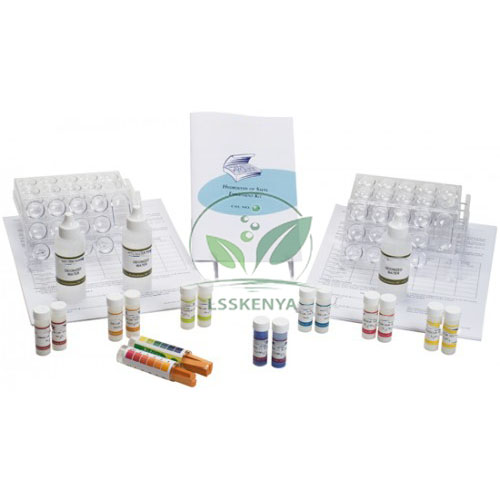
Product Code : LSK-CL-10065
The Hydrolysis of Salts Kit lets each student test salt solutions for relative pH, predict relative strength and decide whether hydrolysis takes place. Students work out the actual acid or base makeup of each solution to see how salts differ in neutrality, and why. Student worksheets and a teacher's guide are included.
Specifications of the Hydrolysis of Salts Kit
| Specification | Value |
|---|---|
| Student task | Test salt solutions for relative pH; predict relative strength; determine whether hydrolysis occurs |
| Outcome | Acid or base makeup of salt solutions and why salts vary in neutrality |
| Use | Individual student work |
| Included | Student worksheets and teacher's guide |
| Supplied by | Science Lab Supplies, Ambala, India |
Salt Hydrolysis Practicals
Each student names the parent acid and base of every salt, predicts whether its solution will be acidic, basic or neutral, then measures the pH and compares.
- pH survey: test each salt solution with Universal Ph Indicator paper and rank them from most acidic to most basic.
- Meter check: read the same solutions with a pH Pocket Tester and compare the numbers with the paper colours.
- Equations: write the hydrolysis equation for each ion that reacts with water, and mark the spectator ions.
Common errors: assuming distilled water reads exactly pH 7, and not rinsing the probe or glass rod between solutions.
Frequently Asked Questions
Why are some salt solutions not neutral?
A salt made from a weak acid or a weak base has an ion that reacts with water. That reaction, hydrolysis, releases extra H+ or OH− ions, so the solution turns acidic or basic.
Why does ammonium chloride give an acidic solution?
It comes from a strong acid and a weak base. The ammonium ion gives a proton to water, forming hydronium ions, while the chloride ion does not react. So the pH falls below 7.
Why is sodium acetate solution basic?
It comes from a weak acid and a strong base. The acetate ion takes a proton from water and leaves hydroxide ions behind, so the pH rises above 7.
Why does distilled water often read slightly below pH 7?
Water open to air absorbs carbon dioxide, which forms a weak acid. Students should test their water as a blank before comparing salt solutions.
Which classes and syllabus topics does the kit suit?
It suits secondary chemistry work on acids, bases and salts: predicting and measuring the pH of salt solutions, and explaining hydrolysis from the strength of the parent acid and base. It is set up for individual student work.
Which items are often ordered with the kit?
Schools often add universal indicator paper or a pocket pH tester so every bench can read pH, plus distilled water for making up the solutions and rinsing. Graph paper helps students plot and rank their results.
Related Acid–Base Kits and Test Papers
- Acids and Bases Kit: includes titration of an unknown and a neutralisation experiment.
- Equilibrium Shifts Kit: explores six systems, including acetic acid/sodium acetate.
- Blue Litmus Paper: turns red in acids; stays blue in bases and neutral substances.
- Test Paper Books: includes litmus, pH 1–14 universal and starch-iodide papers.
- Constants of Ionic Equilibria: laminated wall chart, 70 cm x 100 cm.
Acid, base and salt kits can be compared in the Chemistry Lab range; School Lab Equipments shows the full school catalogue.
Science Lab Supplies, an Importer-Exporter Code holder, supplies schools in Bangladesh, Zambia, Rwanda, South Africa, Qatar and Sri Lanka with kits like this one. Add the hydrolysis kit to the enquiry cart, or use the contact page, for a quotation.
Last updated: 15 November 2026



.jpg)