Human Teeth Chart, 70 x 100 cm
Product Code : SCL-BLE-11748
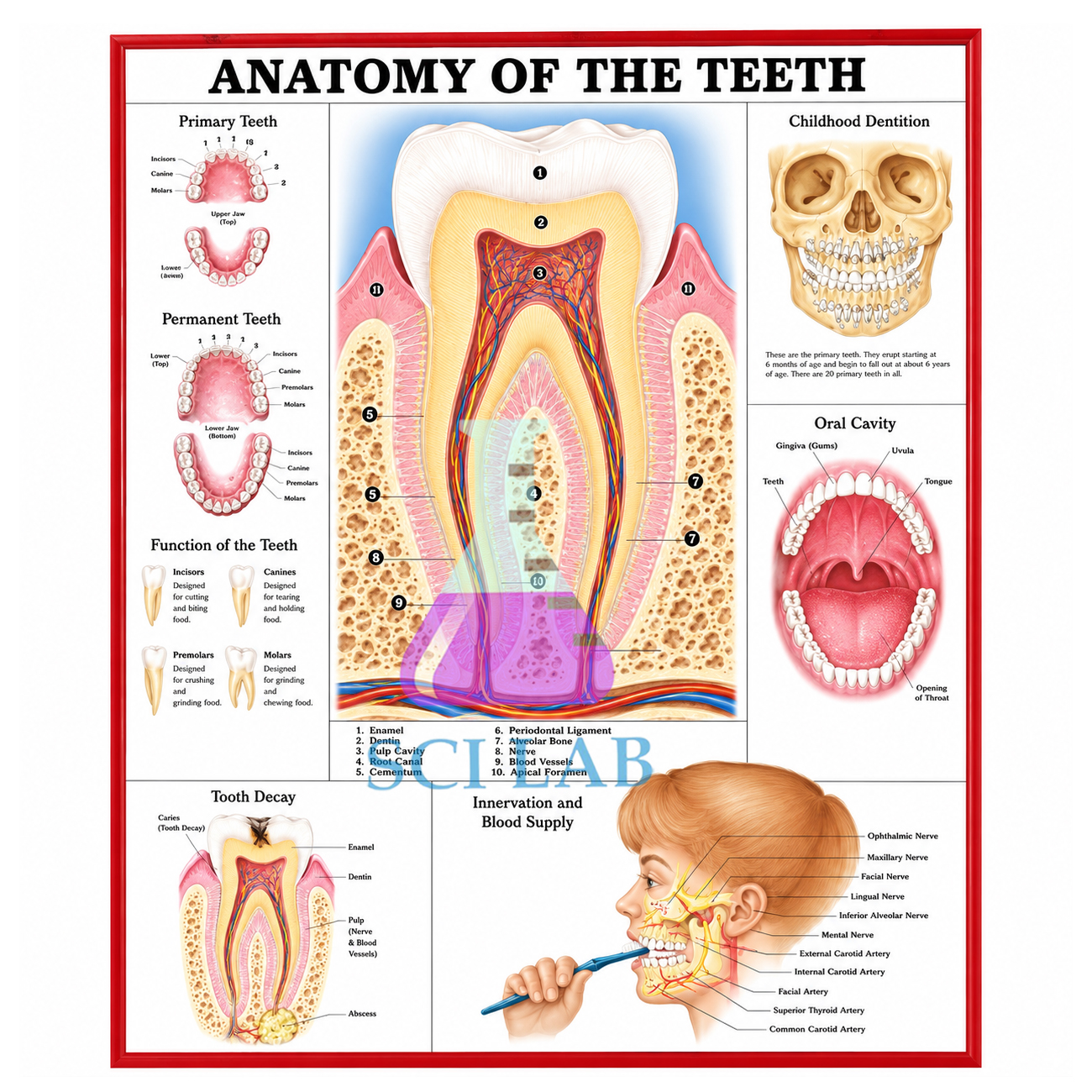
The Human Teeth Chart is a laminated wall chart on human teeth, measuring 70 x 100 cm. It is meant for display in laboratories and classrooms, where it supports lessons on the kinds of teeth, how a tooth is built and how teeth are kept healthy.
Specifications of the Human Teeth Chart
| Specification | Value |
|---|---|
| Theme | Human teeth |
| Dimensions | 70 x 100 cm |
| Protection | Laminated sheet |
| Hanging | Wall-mounted type |
| Place of use | Laboratory and classroom |
| Supplied by | Science Lab Supplies, Ambala, India |
Tooth and Dental Health Lessons with the Teeth Chart
The chart gives the class one shared picture. Students then check what it shows against their own mouths and against models.
- Own teeth survey (Class 5 to 7): with a clean Dental Inspection Mirror, each student counts and names the teeth on one side of the mouth.
- Tooth shapes: pass round the Human Tooth Set, which includes a molar with caries, and match each tooth to its job on the chart.
- Brushing: show the correct brushing movement on the Giant Teeth And Toothbrush model.
Common errors: calling every back tooth a molar, and thinking a tooth is solid enamel all the way through.
Frequently Asked Questions
Which syllabus topics can the teeth chart support?
Teeth charts are used for the four tooth types and their jobs, the inner structure of a tooth, and dental care, which come up in primary science and in Class 7 to 10 biology. The listing does not describe the chart's panels, so check them against the syllabus before ordering.
Why does lamination matter for a chart used with young pupils?
Young classes touch and point at wall charts. A laminated surface resists tearing, damp and finger marks and can be wiped down, so the chart stays clean and readable far longer than a plain paper print in daily use.
Why does sugar lead to tooth decay?
Sugar does not attack teeth directly. Bacteria in plaque feed on it and give off acid, and the acid dissolves the enamel. Frequent sugary snacks keep the mouth acidic for longer, so the damage builds up.
Why does decay spread faster once it reaches the dentine?
Dentine is softer and less mineralised than enamel, so acid and bacteria break it down more quickly. Decay that has broken through the enamel can then widen under the surface towards the pulp.
What causes toothache when decay goes deep?
When decay reaches the pulp cavity, bacteria infect the soft pulp with its nerves and blood vessels. The inflammation causes pain, and an abscess can form at the root tip if the infection spreads.
Which nutrients help keep enamel strong?
Calcium and phosphate form the mineral of enamel and dentine, and vitamin D helps the body absorb calcium from food. Fluoride from toothpaste also makes the enamel surface more resistant to acid.
Related Teeth Charts and Dental Models
- Human Teeth and their Hygiene Chart: laminated wall chart, 70 x 100 cm.
- Human Teeth and their Hygiene Model: PVC, 3 times magnified, upper and lower dental arch with tongue.
- Human Jaw and Teeth Model: enlarged PVC jaw with removable adult teeth.
- Human Teeth Model: enlarged for demonstration to a group, with tooth brush.
- Dental Care Model: hand-painted plastic jaw about 10 cm tall, with large toothbrush and a dental care booklet in English and French.
Teeth and other human body charts are part of the Charts & Portraits range, and teeth models on stands are found in Head and Facial Model.
An Importer-Exporter Code held by Science Lab Supplies lets the teeth chart be sent to Nigeria, Kenya, Ghana, Ethiopia, Tanzania and Uganda. Put the chart in the enquiry cart, or use the contact page, and a quotation can follow.
Last updated: 15 November 2026



.jpg)