Dewar Flask, Silvered Glass Vacuum
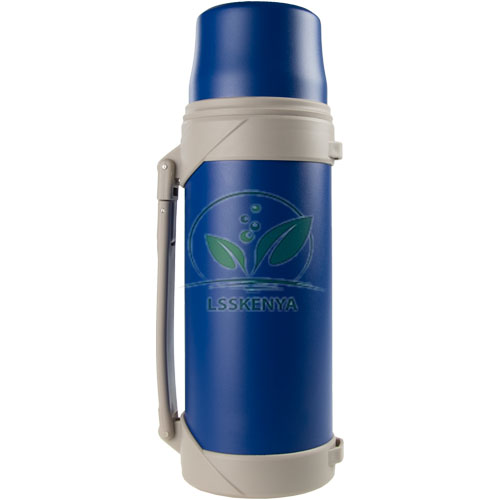
Product Code : LSK-CL-10059
This Dewar flask is a cylindrical vacuum vessel of silvered glass held in a plastic outer container with a screw cap. The vacuum and silvering slow heat flow in or out, so liquids stay hot or cold far longer than in an open beaker.
Specifications of the Dewar Flask
| Specification | Value |
|---|---|
| Shape | Cylindrical flask |
| Insulation | Vacuum between silvered glass walls |
| Outer container | Plastic |
| Closure | Screw cap |
| Supplied by | Science Lab Supplies, Ambala, India |
Using the Dewar Flask in the Lab
The flask keeps a liquid at a near-steady temperature while readings are taken. The cap is removed to add the liquid, a thermometer or stirrer is put in, and the heat lost to the room stays small.
- Simple calorimetry: use the flask as an insulated vessel for heats of neutralisation or solution, reading the temperature with Laboratory Thermometers.
- Heat loss comparison: fill the flask and a Copper Calorimeter Set with the same hot water and plot cooling curves side by side.
- Ice bath and cold samples: keep ice-water or chilled solutions cold through a practical session.
Care: the inner glass is fragile. Do not drop the flask, do not stir hard with metal rods, and let hot liquids cool before closing the cap tightly.
Frequently Asked Questions
How does a Dewar flask keep liquids hot or cold?
The vacuum between the walls stops heat moving by conduction and convection. The silvered surfaces reflect infrared radiation back, so little heat leaves or enters by radiation either.
Why do the glass walls not collapse under the vacuum?
Air presses in on the outer wall, but the curved, cylindrical glass is strong enough to carry that load. A crack or chip can weaken it, so inspect the flask before use.
How can I tell if the vacuum has failed?
If the flask loses heat much faster than before, or the outer wall feels warm with hot liquid inside, the vacuum has probably been lost and the flask should be taken out of use.
Can the cap be screwed down on a very cold liquid?
Not tightly. Very cold liquids boil off gas, and a sealed flask can build up dangerous pressure. Leave the screw cap loose so that the gas can escape as it forms.
How does a glass Dewar flask differ from a stainless steel one?
This flask has a silvered glass vacuum vessel inside a plastic outer container. Glass gives very good insulation and does not react with most liquids, but it can break if knocked or chilled suddenly. Steel flasks stand up to knocks better, so glass ones need gentler handling.
How should a glass Dewar flask be handled when it is moved between labs?
Empty it first, then carry it upright by the outer container with both hands, never by the cap alone. Avoid knocks against benches and do not set it down hard, since a cracked inner vessel can implode and throw glass.
Related Heat and Calorimetry Items
- Aluminum Calorimeter: aluminium vessel with insulated handle for specific heat and latent heat experiments.
- Calorimeter: 100 ml polished vessel with rubber stopper and metal stirrer.
- Thermometer (with no Mercury): glass thermometer with a -10 to 120 °C scale.
- Calorimeter Heating Block: 1 kg metal blocks drilled for a heater and a thermometer.
- Magnetic Stirrer Bar: coated magnet bar for stirring solutions on a magnetic stirrer.
Heat and calorimetry items for chemistry practicals are in the Chemistry Lab range; the School Lab Equipments page leads to the physics ranges too.
Science Lab Supplies can send this Dewar flask to Uganda, the UAE, Saudi Arabia, Oman, the Philippines and Nepal, being registered for export with an Importer-Exporter Code. For a quotation on the Dewar flask, reach Science Lab Supplies on the contact page or through the enquiry cart.
Last updated: 15 November 2026