
Female Reproductive Organs Chart
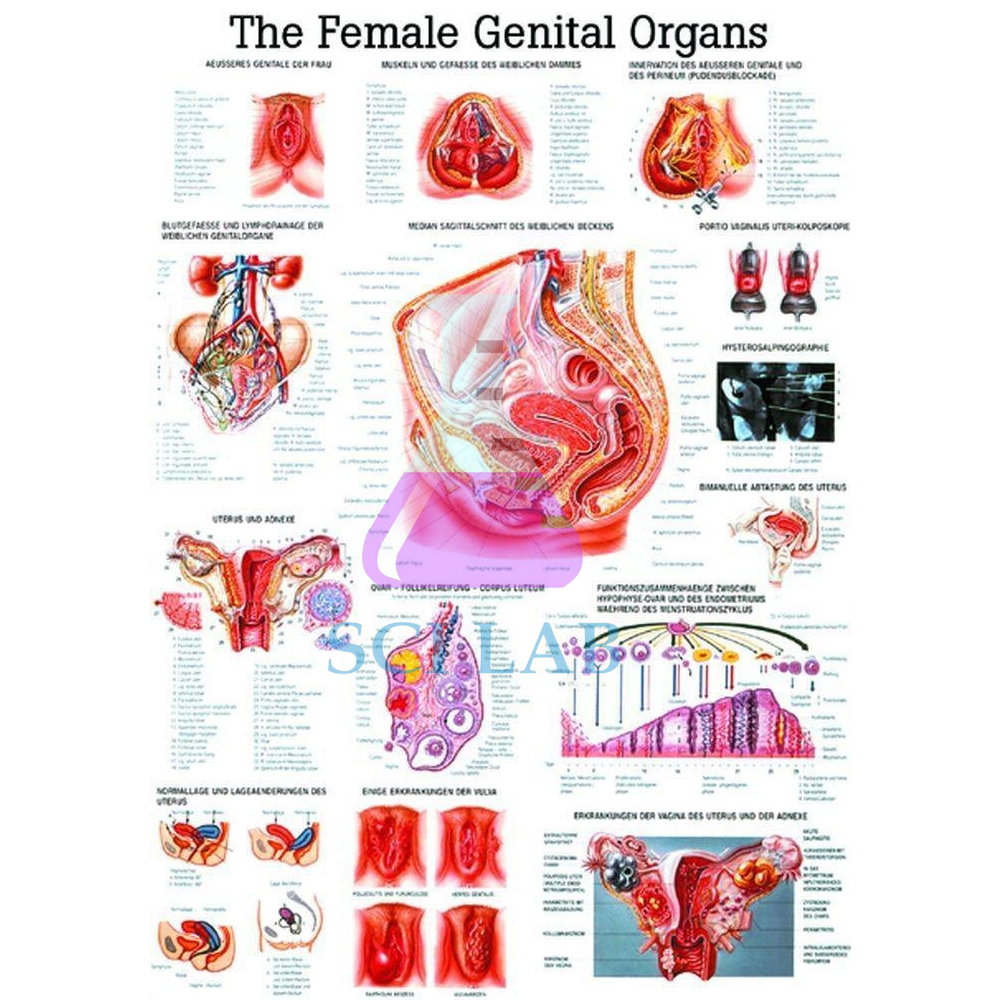
Product Code : SCL-BLE-11755
The Female Reproductive Organs Chart is a laminated wall chart for teaching the female reproductive system. At 70 x 100 cm it is sized for laboratory and classroom walls. It supports lessons on the ovaries, oviducts, uterus and vagina, and on the menstrual cycle.
Specifications of the Female Reproductive Organs Chart
| Specification | Value |
|---|---|
| Subject | Female reproductive (genital) organs |
| Finish | Laminated |
| Size | 70 x 100 cm |
| Mounting | Wall mounted |
| Use | Laboratory and classroom |
| Supplied by | Science Lab Supplies, Ambala, India |
Reproduction Lessons with the Chart
The chart gives a calm, clear reference for a topic that students often find awkward. Teachers name each organ, then follow an egg from the ovary to the uterus.
- Organs and functions (Class 8 to 12): match each organ on the chart with its part on the Human Female Genital Organs Model, which shows internal and external organs at 40 positions.
- Organs in the pelvis: use the Human Pelvis Female Model to show how the uterus sits between the bladder and the rectum.
- Menstrual cycle: draw a 28-day timeline beside the chart and mark when the lining thickens, when ovulation usually happens and when the lining is shed.
Common errors: writing that fertilisation happens in the uterus (it usually happens in the oviduct), and confusing the cervix with the vagina.
Frequently Asked Questions
Do female genital organ charts also show the ovary in detail or contraception?
Some do. Charts on this subject may add a magnified ovary with developing follicles, or a panel on contraception methods, for senior biology and nursing courses. The listing names the organs as the subject only, so distributors whose syllabus includes contraception should check the panels before a bulk order.
Will the chart fade if it hangs near a sunny window?
Strong sunlight slowly fades printed colours, even under a laminate. Hang the chart on a wall out of direct sun, and keep it away from heaters, which can make the film lift at the edges.
Does a woman make new eggs every month?
No. A girl is born with all her immature eggs already in the ovaries. From puberty, one usually matures and is released each cycle, and the store falls with age.
Where does a fertilised egg settle and grow?
Fertilisation usually takes place in the oviduct. The zygote divides as it moves down and, after about a week, implants in the thickened lining of the uterus, where the embryo develops.
Is menstruation a sign of illness?
No. Menstruation is the normal shedding of the thickened uterine lining when no fertilised egg has implanted. It is a regular part of the cycle from puberty onward, not an illness or something impure.
Related Reproductive System Models and Charts
- Human Female Urogenital Model: PVC model, 20 x 20 x 50 cm, showing the kidney, ureters, bladder, uterus and ovary.
- Human Female Half Pelvis Model: life-size median section showing internal and external organs.
- Human Birth Demonstration Model: life-size PVC female pelvis with a miniature skull.
- Male Reproductive Organs Chart: laminated wall chart in the same 70 x 100 cm format.
- Sex Cell Formation (Meiosis) Chart: laminated, wall-mounted chart, 70 x 100 cm.
Reproductive models are found in the Human System Model section; this chart belongs to Charts & Portraits.
For schools and colleges in Saudi Arabia, Oman, the Philippines, Nepal, Bangladesh and Zambia, Science Lab Supplies can arrange export of this chart under its Importer-Exporter Code. Quotations are requested through the contact page, or the chart can be added to the enquiry cart first.
Last updated: 15 November 2026



.jpg)