Chromatographic Paper
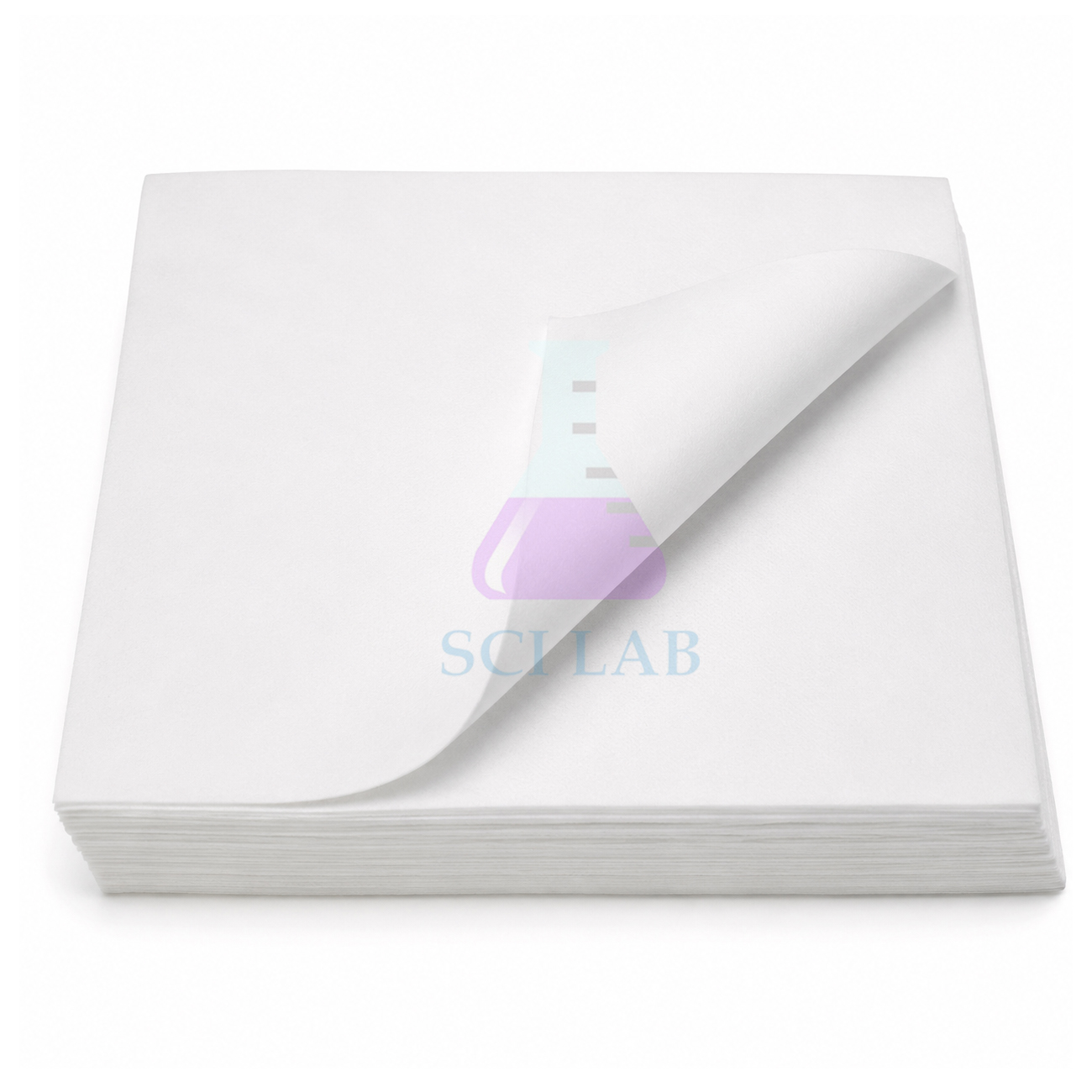
Product Code : SCL-CL-11609
Chromatographic Paper is white, rectangular paper cut to 110 x 140 mm for paper chromatography. Students spot a mixture near one edge, stand the sheet in a little solvent and watch the components separate as the solvent climbs.
Specifications of the Chromatographic Paper
| Specification | Value |
|---|---|
| Size | 110 x 140 mm (11 x 14 cm) |
| Colour | White |
| Shape | Rectangular sheet |
| Supplied by | Science Lab Supplies, Ambala, India |
Paper Chromatography Practicals
Draw a pencil line about 1.5 cm from the short edge and put small spots of each sample on it. Stand the sheet in solvent in a 250 ml Glass Beaker so the solvent is below the line, then cover the beaker. Remove the paper when the solvent front nears the top and mark it.
- Ink and food dyes: compare spots of water-soluble felt-pen inks and see which colours they contain.
- Leaf pigments: grind leaves with a little solvent, apply the extract with a fine Calibrated Plastic Dropper and develop the paper.
- Rf values: measure the distance moved by each spot and by the solvent, then calculate Rf for each component.
Common errors: large spots that run into each other, and a solvent level above the start line.
Frequently Asked Questions
Why is the start line drawn in pencil and not in pen?
Pencil graphite does not dissolve in the solvent, so the line stays put. Ink from a pen would itself separate and mix with the sample spots.
Why must the solvent be below the start line?
If the spots dip into the solvent, they dissolve into the liquid in the beaker instead of being carried up the paper, and no separation is seen.
How is the Rf value worked out?
Divide the distance moved by the spot by the distance moved by the solvent front, both measured from the start line, not from the top of the paper. Rf has no unit and lies between 0 and 1.
What does a single spot tell me?
One spot in a solvent suggests a pure substance. Two or more spots show a mixture. Two samples with spots at the same Rf in the same solvent are probably the same compound.
How can colourless spots be seen?
Spray or dip the dried paper in a locating agent that reacts to give coloured spots, or look at it under ultraviolet light if the compounds fluoresce.
Related Chromatography and Separation Items
- Chromatography Set: clear beaker, paper sheets, wooden dowels and clips, coloured pens and a pencil.
- Filter Paper: 120 mm diameter circles for clarifying liquids.
- Methods of Separation of Substances Chart, 500 x 350 mm: laminated wall chart for classroom and lab.
- Glass Petri Dish with Cover, 100 mm: clear glass dish, 100 mm diameter, 20 mm high, with cap.
- Glass Stirring Rod, 200 x 4 mm: clear glass, 20 cm long, 4 mm diameter.
See the full Chemistry Lab range, or the wider School Lab Equipments catalogue.
With an Importer-Exporter Code, Science Lab Supplies is able to ship to Qatar, Sri Lanka, Vietnam, Malaysia, Peru and Egypt. A quotation can be requested on the contact page or by using the enquiry cart.
Last updated: 14 November 2026

.jpg)