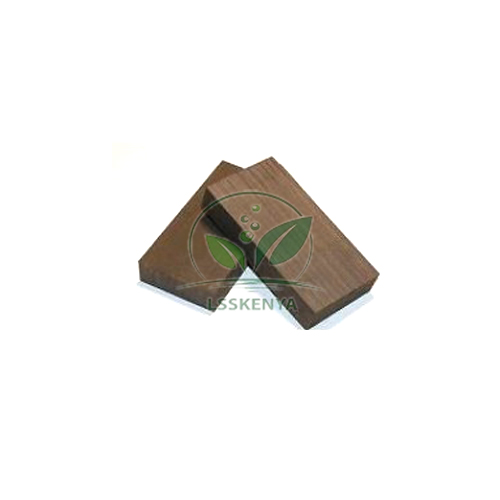
Blowpipe Carbon Blocks
Product Code : LSK-CL-10045
Blowpipe Carbon Blocks are compressed rectangular blocks of carbon used as the support in blowpipe work. A small sample is placed in a shallow hollow on the block and heated with a blowpipe flame, so students can watch it melt, change colour or leave a metal bead.
Specifications of the Blowpipe Carbon Block
| Specification | Value |
|---|---|
| Material | Compressed carbon |
| Shape | Rectangular block |
| Use | Support for samples in blowpipe work |
| Supplied by | Science Lab Supplies, Ambala, India |
Charcoal Cavity Tests with a Blowpipe
The technician scrapes a shallow cavity near one end of the block. A pinch of the salt goes into the cavity and a small flame from a burner is blown across it with a blowpipe, so the hot tip of the flame plays on the sample.
- Charcoal cavity test (Class 11 to 12 salt analysis): mix the salt with sodium carbonate, heat it in the reducing part of a flame directed with a Blow Pipe, and note any bead or coloured crust.
- Cobalt nitrate test: moisten the white residue left on the block with a drop of cobalt nitrate solution and heat again. The colour of the mass points to certain cations.
- Flame source: a Laboratory Spirit Burner gives a small, steady flame that is easy to blow sideways.
- Handling: lift the hot block with Crucible Tongs and let it cool on a heat-proof mat.
Common errors: using too much salt, which hides the residue, and blowing so hard that the sample is scattered out of the cavity.
Frequently Asked Questions
What is the charcoal cavity test?
It is a dry test in salt analysis. The salt, mixed with sodium carbonate, is heated in a hollow on a carbon block with a blowpipe flame. The bead or crust left behind gives a first clue to the metal ion present.
Why is the salt mixed with sodium carbonate before heating?
Sodium carbonate converts the salt to a carbonate, which breaks down to the metal oxide on heating. The carbon and the reducing flame can then reduce some oxides to the metal, which shows as a bead.
Why is carbon used as the support and not a metal plate?
Carbon does not melt in the flame, it reflects heat back onto the small sample, and it helps keep the surroundings reducing. A metal plate would carry the heat away and could react with the sample.
Why do carbon blocks crack, and how can they last longer?
Repeated heating and cooling sets up stresses, so cracks appear over time. Heat the block gently at first, do not quench it in water, and scrape away old residue so each test starts on a clean surface.
Are carbon blocks a consumable that labs need to reorder?
Yes. Every cavity test burns and pits the surface, and repeated heating slowly wears or cracks the block. A lab that runs salt analysis for a full class usually keeps spare blocks in stock, so each student group has a fresh block to work on.
What else should a lab have before starting blowpipe tests on carbon blocks?
A mouth blowpipe, a small steady flame from a spirit lamp or burner, a heat-proof mat under the block, crucible tongs, sodium carbonate and cobalt nitrate solution. Together these cover the charcoal cavity test and the cobalt nitrate test described above.
Related Flame and Heating Items
- Blowpipe Nickel Plated Brass: brass pipe with a bent end that directs a stream of gas through a flame.
- Cobalt Blue Glass (Flame Testing): filters out the yellow sodium colour so violet potassium hues can be seen.
- Bunsen Burner (Pack of Two): a pair of gas burners giving an adjustable open flame.
- Spatula: metal tool, 12 cm long, with a scooping spoon and a flat blade.
- Test Tube Holder with Handle: spring-loaded metal clamp with an insulated handle for heating test tubes.
Browse the Chemistry Lab range or the wider School Lab Equipments range.
Science Lab Supplies holds an Importer-Exporter Code and can ship to buyers in Rwanda, South Africa, Qatar, Sri Lanka, Vietnam and Malaysia. For a quotation on carbon blocks, send the quantity needed through the contact page or add them to the enquiry cart.
Last updated: 15 November 2026