Immersion Heater
Product Code : LSK-PL-10285
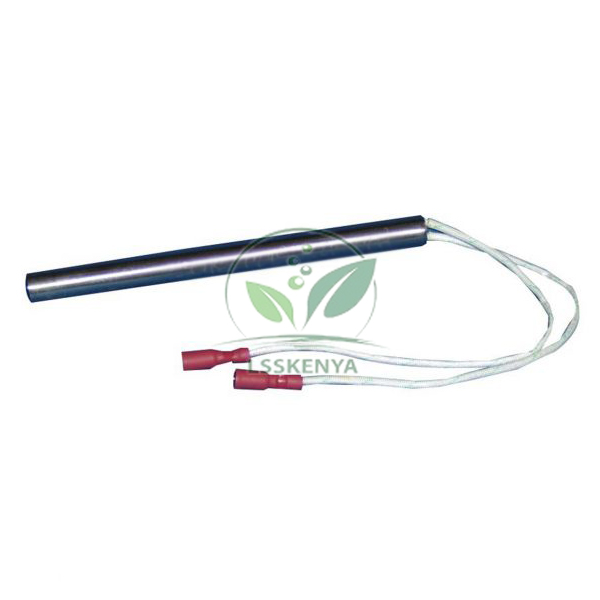
Immersion Heater (SKU LSK-PL-10285) is a 50 W, fully sheathed low-voltage heater that runs on 12 V AC or DC and fits into calorimeter blocks. It supplies a measured amount of electrical energy in specific heat capacity and other heat experiments in school and college physics. Science Lab Supplies produces it as a manufacturer at its Saha, Ambala factory (Plot 448, HSIIDC Industrial Area, India) and sells directly to schools, colleges, contractors and distributors.
Specifications
The heater is fully sheathed and measures 12.5 mm in diameter by 100 mm long, a size intended for the heater hole of a calorimeter block. It is rated at 50 W on a 12 V supply, drawing 5 A, and connects through 4 mm sockets to AC or DC.
| Parameter | Value |
|---|---|
| SKU | LSK-PL-10285 |
| Power | 50 W |
| Supply | 12 V, 5 A, AC or DC |
| Construction | Fully sheathed |
| Connections | 4 mm sockets |
| Dimensions (dia. x L) | 12.5 x 100 mm |
| Manufacturer | Science Lab Supplies, Saha, Ambala, Haryana |
| Country of origin | India |
Applications and Experiments for the Immersion Heater
The heater turns a known electrical input into heat inside a metal block or liquid, so students can relate the energy supplied to the temperature rise. It is the usual heat source for electrical specific heat capacity experiments in secondary, senior secondary and first-year college physics.
- Specific heat capacity of different metal blocks.
- Specific heat capacity of water in a calorimeter.
- Specific latent heat of vaporisation of water.
- Class 10 electricity: heating effect of electric current.
The sheath becomes hot in use. Switch off and let it cool before removing it from the block, and run it only on a 12 V supply.
Standard Scope of Supply
The Immersion Heater is supplied as a single fully sheathed 50 W element with 4 mm connection sockets, as described above. The calorimeter block, a 12 V AC or DC supply, a joulemeter and connecting leads are separate items that can be listed on the same quotation.
Packing, MOQ and Lead Time
Request a price for one heater or for a class set to match your calorimeter blocks; every quotation spells out the packing, delivery time and price for that number. Heating blocks and low-voltage supplies can be quoted at the same time.
Registered as an exporter under an Importer-Exporter Code, Science Lab Supplies can ship to buyers in Bangladesh, Zambia, Rwanda, South Africa, Qatar and Sri Lanka. The contact page takes direct questions, the enquiry cart gathers several products into one request, and the lab tender page explains tender supply.
Frequently Asked Questions
What supply does the Immersion Heater need?
A 12 V supply, AC or DC; it draws 5 A to give 50 W. Connect it through the 4 mm sockets to a low-voltage transformer or power supply rated for that current.
Will it fit my calorimeter blocks?
The heater is 12.5 mm in diameter and 100 mm long and is made for calorimeter blocks. Check that your blocks have a heater hole of at least that diameter and depth.
Is Science Lab Supplies the manufacturer or a trader?
The company makes the heater itself. Science Lab Supplies is a science apparatus manufacturer in India with its own factory in Saha, Ambala, and your quotation is prepared there rather than by a reseller.
Can the heater be quoted for a tender?
Yes. List the quantity and delivery location with the tender specification, and the heater will be quoted item by item with any related items the tender lists.
Related Heat Experiment Equipment
Electrical heating experiments need more than the heater: something to heat, a way to measure energy, a low-voltage supply and a vessel for liquids. The items below complete that set and can be listed with the heater on a single quotation for a heat laboratory.
- Calorimeter Heating Block — 1 kg block with a 12.5 mm heater hole.
- Joulemeter, Low Voltage — reads energy from 1 mJ to 9999 J.
- Multitap Transformer — 12 V AC tapping, 6 A continuous.
- Copper Calorimeter Set — calorimeter in an outer vessel, with stirrer.
Browse the full Physics Lab range or all physics lab equipment.
Last updated: 25 September 2026
.png)