Scalpel
Product Code : SCL-CL-11923
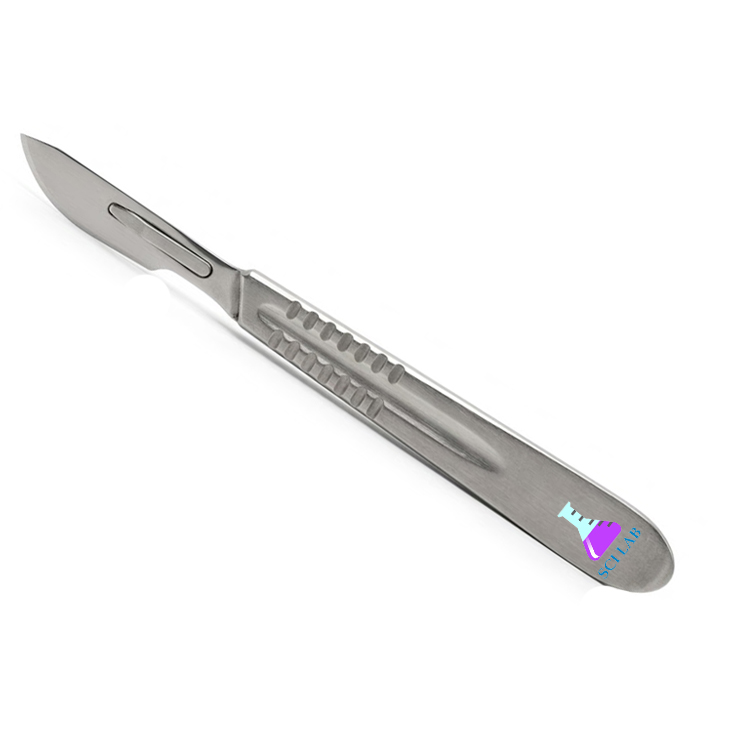
The Scalpel is a 14 cm metal-handled instrument for small, controlled cuts in dissection and specimen preparation. Its reusable handle holds detachable single-use blades, so a fresh, sharp edge can be fitted when needed. It is made for precise incisions, not force.
Specifications of the Scalpel
| Specification | Value |
|---|---|
| Length | 14 cm |
| Handle | Metal, reusable |
| Blades | Detachable, single-use |
| Cutting | Thin, light instrument for precise, controlled incisions |
| Supplied by | Science Lab Supplies, Ambala, India |
Dissection Work with the Scalpel
Fit the blade with forceps, never with the fingers, sliding it along the handle slot until it seats firmly. Cut with light, repeated strokes, always away from the body and the other hand.
- Fish or chicken-wing dissection: cut through skin and muscle layers with the specimen pinned in a Dissecting Tray with Wax.
- Plant sections: cut thin slices of a stem or root and mount them under Cover Glasses for the microscope.
- Flower and seed study: open a flower or a soaked bean and lift the parts apart with the Forceps.
Precautions: count scalpels out and back in, never leave one under paper on the bench, and put used blades straight into a sharps container.
Frequently Asked Questions
Which blades fit this handle?
Blades and handles come in matching size groups. Check which blade group fits the handle slot; a blade from the wrong group sits loose or will not fit at all.
How do I change a blade safely?
Grip the back edge of the blade with forceps, not fingers, and slide it off the handle away from you. A blade remover or sharps-box slot makes this safer.
Which way should I cut?
Always cut away from yourself and from the hand holding the specimen. If the blade slips, it then moves into empty space and not into your fingers.
How should a scalpel be passed to a partner?
Do not hand it over directly. Lay it down on the tray or bench with the blade pointing away, and let your partner pick it up from there.
Why does a loose blade matter?
A blade that wobbles on the handle can twist or come off during a cut and cause an injury. If it does not sit firmly, remove it and fit one of the correct size.
Related Cutting and Dissecting Tools
- Scalpel Fixed: stainless-steel scalpel, 150 mm overall, with 35 mm or 45 mm blade.
- Scalpel Handles Stainless Steel: stainless-steel handles: No. 4 takes blades 20 to 25, No. 3 takes blades 10 to 15.
- Student Dissecting Set: ten stainless-steel dissecting instruments in a PVC case.
- Dissecting Pins: chrome-plated pins in mild steel or brass, 25 mm and 50 mm.
- Preparatory Needle: 14 cm straight metal dissecting needle with a sharp point.
Find it with the other dissecting instruments in the Dissecting and Surgical range, part of Biology Lab.
Under its Importer-Exporter Code, Science Lab Supplies can deliver to buyers in Iraq, Nigeria, Kenya, Ghana, Ethiopia and Tanzania. For a quotation, send details through the contact page or the enquiry cart.
Last updated: 14 November 2026