Sex Cell Formation (Meiosis) Chart
Product Code : SCL-BLE-11763
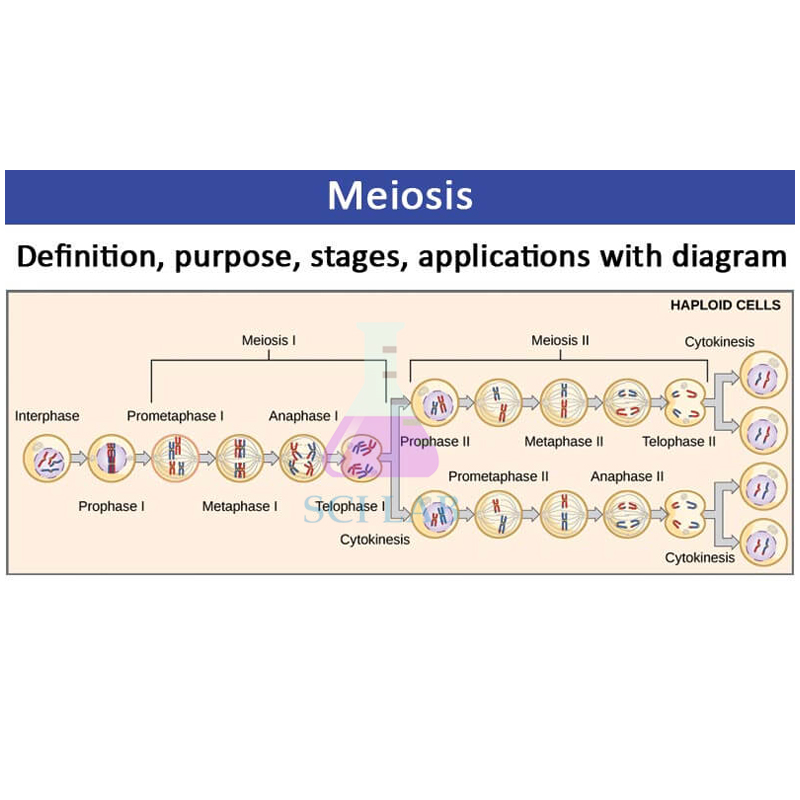
The Sex Cell Formation (Meiosis) Chart is a laminated 70 x 100 cm wall chart on meiosis, the two-step division that makes sex cells with half the chromosome number. It is wall mounted for lessons on gametes, crossing over and genetic variation.
Specifications of the Meiosis Chart
| Specification | Value |
|---|---|
| Subject | Meiosis (formation of sex cells) |
| Finish | Laminated |
| Size | 70 x 100 cm |
| Mounting | Wall mounted |
| Use | Laboratory and classroom |
| Supplied by | Science Lab Supplies, Ambala, India |
Meiosis Lessons and Slide Work
The chart takes students through meiosis I and meiosis II in order. Teachers can pause at prophase I to explain how chromosome pairs swap pieces.
- Model work (Class 12): move through each stage on the Meiosis Model 3D Cell while students name the same stage on the chart.
- Prepared slides: look for meiosis on the locust testis squash and lily ovary slides of the Cell Division slide set of 9.
- Bead models: build two pairs of homologous chromosomes from coloured beads and show how crossing over mixes them.
Common errors: pairing sister chromatids instead of homologous chromosomes, and counting chromatids as chromosomes.
Frequently Asked Questions
How does this chart differ from a combined mitosis and meiosis poster?
This chart covers meiosis alone, so each stage of both divisions gets more room. A combined poster compares the two processes on one sheet. Schools that teach them as separate units can pair it with the mitosis chart in the same size.
Is the chart detailed enough for college classes as well as high school?
Meiosis is taught at both levels with the same stage names. High school classes need the two divisions and the halving of chromosome number; college classes add crossing over at chiasmata. Check that both appear in the artwork.
What is the difference between sister chromatids and homologous chromosomes?
Sister chromatids are two identical copies of one chromosome, joined at the centromere after DNA copying. Homologous chromosomes are a matching pair, one from each parent, with the same genes but possibly different alleles.
Is a cell haploid after meiosis I, even though its chromosomes still have two chromatids?
Yes. Meiosis I separates the homologous pairs, so each new cell holds one chromosome from each pair and is haploid. Each chromosome still has two chromatids, and meiosis II separates them.
Why does crossing over matter?
In prophase I, chromatids of a homologous pair swap matching sections at points called chiasmata. This makes new combinations of alleles, so the gametes from one parent differ genetically from each other.
Related Genetics Teaching Aids
- Plant Meiosis Process Wall Chart: classroom chart on chromosome reduction, gamete formation and genetic variation in plants.
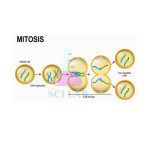
- Cell Reproduction (Mitosis) Chart: laminated, wall-mounted chart, 70 x 100 cm.
- Mendelian Inheritance Chart (Mendel's First Law), 70 x 100 cm: laminated 70 x 100 cm chart on Mendel's pea plant experiments with 7 contrasting traits.
- DNA Structure Chart, 70 x 100 cm: laminated wall chart, 70 x 100 cm.
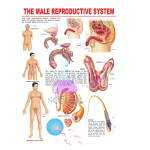
- Male Reproductive Organs Chart: laminated, wall-mounted chart in the same size.
For genetics teaching, look through the full chart series under Charts & Portraits; cell-division slide sets are in Microscope Slides and Cameras.
Qatar, Sri Lanka, Vietnam, Malaysia, Peru and Egypt are export destinations open to this meiosis chart, because Science Lab Supplies holds an Importer-Exporter Code. To get a quotation, send a note from the contact page or add the chart to the enquiry cart.
Last updated: 15 November 2026
.jpg)

.jpg)