
Bone Structure Chart
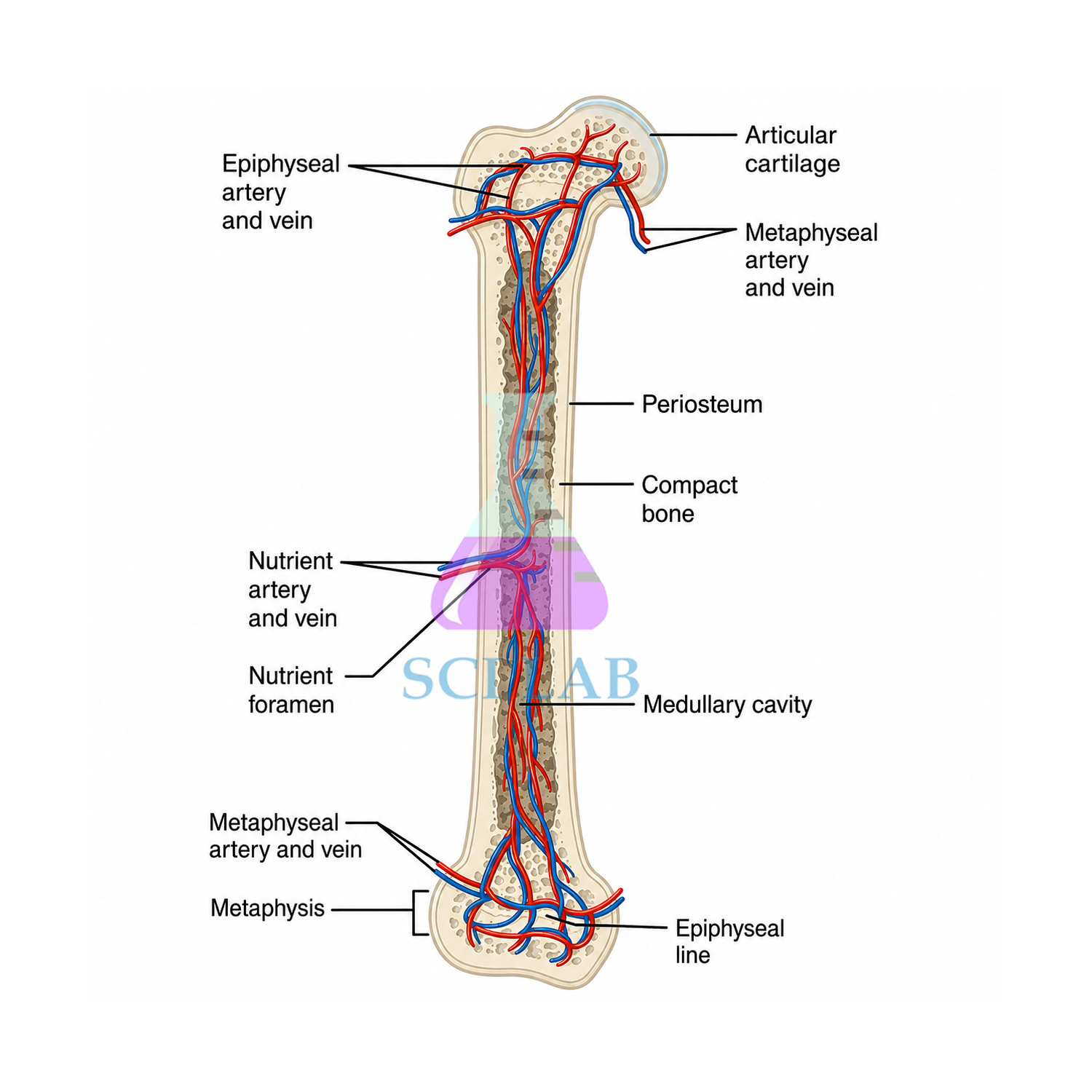
Product Code : SCL-BLE-11797
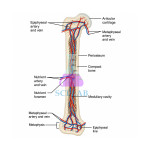
The Bone Structure Chart is a laminated 70 x 100 cm wall chart on how a bone is built. Its English-labelled artwork shows the periosteum, compact bone, spongy bone and marrow. Hung by its top cord, with rods along the top and bottom edges, it stays on a laboratory or classroom wall, where students can check each layer while they handle bone models.
Specifications of the Bone Structure Chart
| Specification | Value |
|---|---|
| Subject | Anatomical construction of bone |
| Parts shown | Periosteum, compact bone, spongy bone, marrow |
| Labels | English |
| Size | 70 x 100 cm (700 x 1000 mm) |
| Finish | Laminated |
| Mounting | Wall mounted on top and bottom rods, with a top hanging cord |
| Use | Laboratory and classroom |
| Supplied by | Science Lab Supplies, Ambala, India |
Bone Structure Practicals
Students first name the layers of a long bone on the chart. A model and a simple soaking test then show what each layer is made of and why bone is both hard and slightly flexible.
- Healthy and thinned bone (Class 9 to 12): compare the chart with the Human Femur Bone Model, which shows osteoporosis and blood vessels, and point out where bone has been lost.
- Mineral test: soak a clean cooked chicken bone in vinegar for several days in a Rectangular Laboratory Container, 26 x 19 x 10 cm, then bend it and explain why it has gone rubbery.
- Label race: in teams, mark the periosteum, compact bone, spongy bone and marrow on an outline copy of a long bone, then check them against the chart.
Precautions: use only cooked, cleaned bones, cover the container, and wash hands after handling. A frequent mistake is to think bone is dead, dry material rather than living tissue.
Frequently Asked Questions
Which levels of bone structure should a buyer check a bone chart covers?
Match the parts shown to the syllabus. This chart labels the periosteum, compact bone, spongy bone and marrow in English, the parts most school lessons on bone structure start with. Courses that also need the microscopic osteon, bone cells, or growth and remodelling add a histology chart or slides.
Can a bone structure chart also support lessons on osteoporosis?
Yes. It shows spongy and compact bone, the two layers that osteoporosis thins, so bones break more easily. Teachers then add the roles of calcium, vitamin D and weight-bearing exercise in keeping bones strong.
What is the difference between red and yellow bone marrow?
Red marrow makes blood cells and fills the spaces in spongy bone. Yellow marrow is mostly fat and fills the hollow shaft of long bones in adults. Children have much more red marrow than adults.
How does a growth plate differ from the epiphyseal line?
The growth plate is a layer of cartilage near each end of a long bone where the bone lengthens during childhood. When growth stops, the cartilage turns to bone and leaves a thin mark called the epiphyseal line.
Where is spongy bone found in a long bone?
Mainly in the rounded ends, under a thin shell of compact bone, and as a lining near the marrow cavity. The shaft is mostly thick compact bone, which resists bending, while spongy bone in the ends spreads the load at the joints.
Related Skeleton and Joint Teaching Aids
- Human Skeleton Chart: laminated, wall-mounted chart, 70 x 100 cm.
- Human Muscles Chart: 70 x 100 cm laminated chart for laboratories and classrooms.
- Human Hip Joint Model: life size on a stand, with flexible artificial ligaments.
- Human Joints Model lab (Set of 5): five life-size replicas for showing joint movement.
- Skeleton Model: life-size plastic skeleton, 1.7 m tall, on a stand with an English key card.
Anatomy wall charts are kept in Charts & Portraits, while bone and joint models sit in Biology Lab Equipment.
Uganda, the UAE, Saudi Arabia, Oman, the Philippines and Nepal can all receive the bone structure chart through the export trade of Science Lab Supplies, which holds an Importer-Exporter Code. Start a quotation request from the contact page, or gather this chart with others in the enquiry cart.
Last updated: 19 November 2026
.jpg)
.jpg)
.jpg)