Playing Cards

Product Code : LSK-ML-10131
Playing Cards (SKU LSK-ML-10131) are a pack of cards that serves as a maths lab resource for sequencing, matching, sorting, counting and recognising number patterns. A pack can turn number practice into quick games for primary pupils and gives older students concrete material for probability work. Science Lab Supplies manufactures the pack at Plot 448, HSIIDC Industrial Area, Saha, Ambala, India, and quotes it to schools, colleges, contractors and distributors without an intermediary.
Specifications
This maths lab pack is a single deck of playing cards, and the table sets out what it offers. In short, learners can order, match, group and count the cards and look for number patterns, while every student works with the same set of outcomes when probability is introduced.
| Specification | Value |
|---|---|
| SKU | LSK-ML-10131 |
| Format | One pack of playing cards |
| Learning uses | Sequencing, matching, sorting, counting |
| Number work | Recognition of number patterns |
| Manufacturer | Science Lab Supplies, Saha, Ambala, Haryana |
| Country of origin | India |
Applications and Experiments for the Playing Cards
A pack of cards can support counting and ordering games in the early years, pattern and sorting tasks in primary classes, and probability experiments in secondary school, where drawing a card from a well-shuffled pack gives a clear sample space. It is simple, familiar maths lab equipment for every level.
- Early primary: counting symbols on a card and matching cards of equal value.
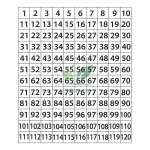
- Sequencing: arranging cards in order and spotting a missing card, then placing the same values on a 120 Number Board.
- Sorting: grouping cards by colour or number.
- Number patterns: laying out odd, even or skip-counting rows and checking them against Number Lines.
- Class 10 probability: recording outcomes of repeated draws and comparing them with theoretical probability.
Standard Scope of Supply
The Playing Cards item is supplied as one pack of cards. Order as many packs as your groups need, and add dice, dominoes or other number-game resources from the Maths Lab range to the same quotation, which also confirms the packing for each pack.
Packing, MOQ and Lead Time
Orders can start at a single pack for a teacher or run to one pack per pair across several classrooms. The quotation sets out packing, delivery time and price for the number of packs you give, and dice, dominoes or a probability kit can be added to it.
Holding an Importer-Exporter Code, Science Lab Supplies is able to ship to buyers in Bangladesh, Zambia, Rwanda, South Africa, Qatar and Sri Lanka. Send your card quantities by the contact page, keep a running list in the enquiry cart, or route a formal school tender to the lab tender page.
Frequently Asked Questions
How are playing cards used in a maths lab?
They can be used for sequencing, matching, sorting, counting and recognising number patterns in primary classes, and for card-drawing experiments when secondary students study probability.
What does one order line include?
One line is a single pack of playing cards. For group work, order one pack per pair or small group and state the total quantity when you ask for a quotation.
Is Science Lab Supplies the manufacturer or a trader?
The pack is produced at the company's own production unit in Saha, Ambala, India, so Science Lab Supplies manufactures it rather than reselling it, and the same team prepares your quote.
Can playing cards be quoted with a probability kit?
Yes. Extra packs can be ordered alongside the Probability Kit, which itself contains one set of playing cards, and with dice, so every group can run its own experiment from one quotation.
Related Probability and Number Games
Cards fit well into a small set of chance and number-game resources. The items below cover probability experiments, dice games, number facts, place value and matching, so a maths department can build a games-and-chance shelf from one quotation and share the materials between classes.
- Probability Kit — Binostat with 150 balls, six sampling bottles, 24 dice, six dice shakers, a set of playing cards and a manual.
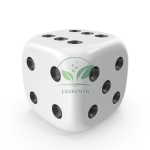
- Dice — standard conventional dice for probability activities and board games.
- Math Symbol Dice — four probability dice with colours, shapes and numbers on the faces.
- Game Numbers and Sums — card game in which the highest correct answer takes each trick.
- Dominoes Colour — 168 colour-coded dominoes with a storage bucket and activity guide.
- Number Cards — colourful plastic place-value cards for units, tens, hundreds and thousands.
- Plastic Counters Colour — 100 plastic counters in four colours for counting, sorting and probability.
Browse the full Maths Lab range or all school lab equipment.
Last updated: 22 October 2026
 (1).png)