Crank Angle Shaft Encoder
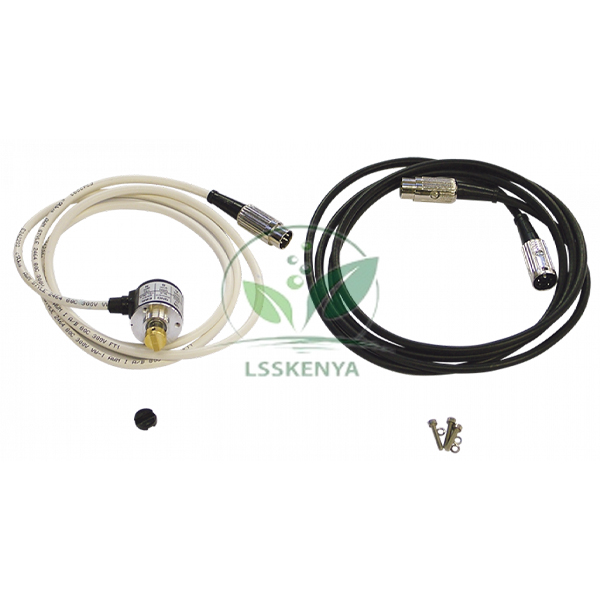
Product Code : LSK-E-10493
Crank Angle Shaft Encoder (SKU LSK-E-10493) is a sensor that measures the angular position of the crankshaft of a test engine running on an engine test set. It is used with an engine cycle analyser, which needs to know exactly where the crank is in each revolution in order to relate its readings to the engine cycle. Science Lab Supplies supplies it from Ambala, India to engineering colleges, polytechnics, tender contractors and distributors.
Specifications
The encoder is an add-on for engine test sets: it follows the rotation of the test engine’s crankshaft and reports crank angle to an engine cycle analyser. Detailed electrical and mounting data are not given here; the quotation confirms the configuration that suits your test set and analyser.
| Parameter | Value |
|---|---|
| SKU | LSK-E-10493 |
| Measures | Angular position of the test engine crankshaft |
| Used with | Engine cycle analyser on engine test sets |
| Category | Engine test ancillary |
| Supplied by | Science Lab Supplies, Ambala, India |
Applications and Experiments for the Crank Angle Shaft Encoder
In engine cycle analysis, each measurement taken during a revolution has to be tied to a crank position. The encoder provides that reference, so the analyser can show how conditions inside the engine change through intake, compression, power and exhaust, and students can compare the real cycle with the ideal one.
- B.Tech/B.E. mechanical: IC engine cycle analysis in thermal engineering labs.
- Diploma automobile engineering: relating crank position to the four strokes.
- Research and project work that needs crank-angle-based engine data.
Standard Scope of Supply
The Crank Angle Shaft Encoder is supplied as a single unit as described above; any optional accessories are listed on the quotation. The engine cycle analyser, the test set and the test engines are separate items and are not included with the encoder.
Packing, MOQ and Lead Time
Ask for a single encoder for an existing test bench or include it in a full engine laboratory order; the quotation you receive lists packing, delivery time and price for that scope. Engines and other test-set ancillaries can be quoted with it.
As a registered exporter with an Importer-Exporter Code, Science Lab Supplies can ship to buyers in Iraq, Nigeria, Kenya, Ghana, Ethiopia and Tanzania. Details can be requested on the contact page, items saved in the enquiry cart, and tender terms checked on the lab tender page.
Frequently Asked Questions
What does a crank angle shaft encoder do?
It measures the angular position of the engine crankshaft as it turns, giving an engine cycle analyser the crank-angle reference it needs to link its readings to each stage of the cycle.
Is the engine cycle analyser included?
No. The encoder is a separate ancillary designed for use with an engine cycle analyser. The analyser, test set and engines are separate items, each listed on its own quotation line.
Will it fit my existing engine test set?
Send the make and model of your test set and analyser through the contact page, and the quotation will confirm the encoder configuration and any mounting parts needed.
Who supplies the Crank Angle Shaft Encoder?
It is supplied by Science Lab Supplies from Ambala, India, to engineering institutions and distributors, either as a single item or within an engine laboratory package.
Related Engine Test Set Items
Crank-angle measurement only makes sense on a running engine. These four items from the Engines range provide the loaded test bed, petrol and diesel test engines, and a further measuring ancillary, so a complete engine analysis bench can be priced on one quotation.
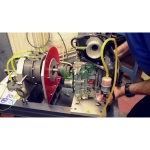
- Small Engine Test Set — portable bed with trunnion-mounted hydraulic dynamometer.
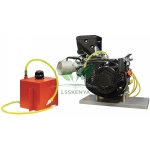
- 4 Stroke Petrol Engine — single-cylinder petrol engine adapted for education.
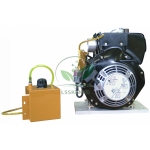
- 4 Stroke Diesel Engine — single-cylinder diesel engine with removable fuel tank.
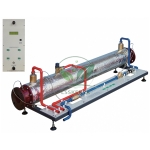
- Exhaust Gas Calorimeter — quantifies the heat leaving with the exhaust gases.
Browse the full Engines range or all engineering laboratory equipment.
Last updated: 25 September 2026