
Brass Wire (100gm) Physics Lab
.jpg)
Product Code : SCL-AM-12103
The Brass Wire (100gm) Physics Lab is a high-ductility copper-zinc alloy wire used for conducting acoustic resonance, wave mechanics, and material elasticity experiments. Engineered for physics students and laboratory technicians, this spool provides a uniform structural baseline to calculate precise structural tensile stress coefficients and analyze mechanical wave velocities.
Product Description
This premium-grade laboratory wire offers a highly reliable, cost-effective solution for secondary schools, engineering colleges, and university science training bays. Fabricated from an optimized 65/35 copper-zinc industrial alloy matrix, the wire delivers exceptional tensile strength alongside uniform electrical and thermal properties. The precision-drawing process ensures a perfectly constant cross-sectional area across the entire spool, preventing data anomalies caused by localized mass distribution shifts.
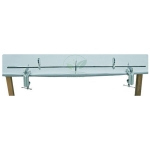
For academic institutions upgrading their essential repository of standard physics lab equipment, this consumable element provides outstanding pedagogical utility. It effortlessly fits onto acoustic sonometers, stress-strain measurement frames, and thermal expansion apparatuses. By maintaining stable structural properties under high tension, it guarantees that student groups achieve clean, repeatable harmonic node profiles and accurate elasticity metrics during quantitative laboratory sessions.
Key Features
- Precision-Drawn Uniformity: Extruded with rigid diameter tolerances to maintain an identical cross-sectional area across the spool.
- Optimized Industrial Alloy: Manufactured from 65/35 copper-zinc brass to balance structural elasticity with low acoustic dampening.
- Convenient 100g Spooling: Supplied on a compact, high-density polymer spool featuring integrated dual line-locking slots to prevent unspooling.
- Tarnish-Resistant Coating: Finished with a microscopic anti-oxidation layer to prevent corrosion during long-term storage in laboratory cabinets.
- High Tensile Elasticity: Excellent elongation capabilities without early snapping, making it perfect for destructive and non-destructive stress tests.
- Excellent Surface Finish: Smooth exterior reduces friction against bridge pins, knife-edges, and structural pulleys.
Technical Specifications
|
Specification |
Detail |
|
Net Wire Mass |
100 grams nominal |
|
Material Composition |
65/35 Grade Brass (Copper-Zinc Alloy Core) |
|
Wire Diameter / Gauge |
0.45 mm nominal diameter (26 SWG) |
|
Nominal Tensile Strength |
450 - 550 MPa |
|
Spool Body Material |
High-impact structural ABS plastic |
|
Certification Framework |
CE Certified, ISO 9001:2015 Manufacturing System |
What's Included in the Kit
- 1 x Brass Wire (100gm) Physics Lab spooled element
- 1 x Moisture-absorbing desiccant pack
- 1 x Protective re-sealable zip-lock storage bag
- 1 x Physical property data card containing precise linear mass parameters
Applications / Uses
- Verifying standing wave velocities and harmonic frequency patterns on dynamic sonometer tracks where linear mass density and tension force dictate the fundamental frequency:
- Assisting in electromagnetic and induction loop studies alongside multi-variable electrical circuit setups.
- Serving as a dependable, low-friction load line within specialized structural mechanics apparatus configurations.
- Enhancing core physical constants coursework when deployed as a component in modular science kits.
How to Use the Brass Wire (100gm) Physics Lab
- Unwind the required length of brass wire carefully from the polymer spool, using wire cutters to clip the segment cleanly.
- Clamp the wire securely into the anchoring jaws of your Young's modulus frame or sonometer tuning peg assembly.
- Pass the wire line over the structural knife-edge bridges, ensuring the path remains straight and free of localized twists.
- Suspend a weight carrier from the free end of the wire using an appropriate laboratory knot or termination clamp.
- Apply static mass loads progressively to clear any minor line slack before tracking initial baseline measurement metrics.
- Conduct your acoustic frequency tracking or mechanical deflection trials, recording values directly into your lab log.
Safety Handling Note: Always wear protective impact-resistant laboratory safety glasses when executing high-tension wire experiments to protect against sudden line recoil injuries if the snapping threshold is breached.
Care & Maintenance
- Cleaning: Wipe down the unwound wire with a clean, dry microfiber cloth before use to clear any environmental dust or fingerprints.
- Storage: Secure the loose tail end into the integrated spool locking slots, return it to the re-sealable zip bag with the desiccant pack, and store inside a low-humidity cabinet.
- Handling: Avoid creating tight kinks or loops while unwinding the line, as bends form localized structural weak points that lower the ultimate tensile strength.
Why Choose Science Lab Supplies
Science Lab Supplies is an established manufacturer and premier global exporter of robust laboratory instruments and classroom experiment setups. Drawing on decades of technical production experience, we configure specialized laboratory materials that safely withstand heavy institutional use. Our operational facilities enforce strict quality assurance protocols to guarantee precise cross-sectional uniformity across all product lines. With our advanced international logistics networks, we efficiently manage safe bulk deliveries to universities and school boards worldwide.
Frequently Asked Questions
What is the exact diameter of this brass wire model?
The standard 100g spool model features a precision-drawn nominal wire diameter of 0.45 mm, corresponding to 26 Standard Wire Gauge (SWG).
Why is brass preferred over copper for sonometer experiments?
Brass possesses a higher tensile strength and a greater elastic limit than copper, allowing it to withstand the high tension loads required to produce clear acoustic resonance without stretching permanently.
Is the wire coated with any electrical insulation material?
No, this brass wire features a bare, uninsulated metal surface treated with a micro-thin anti-tarnish layer, making it suitable for mechanical and open electrical contact testing.
How much length is roughly included on a 100g spool?
Given the physical properties and material density of the alloy, a 100g spool provides approximately 70 to 75 meters of continuous wire line.
Can this wire be used safely in liquid immersion tests?
Yes, the copper-zinc alloy provides natural corrosion defense, but the wire must be thoroughly dried after exposure to prevent green carbonation deposits from forming over time.
Browse our full digital store to locate matching components for your school's physics department selection, or contact our customer support desk today to purchase advanced physics lab equipment.


 (1).png)
.jpg)

.jpg)
