Base Ten Cubes

Product Code : LSK-ML-10106
Base Ten Cubes (SKU LSK-ML-10106) are precision unit cubes, each measuring one centimetre and having a volume of one cubic centimetre. They can be used to build place value and numeration from ones upwards and to measure length, area and volume in centimetre units, and they suit primary classes through the mensuration topics of middle school. Science Lab Supplies manufactures these cubes in its own factory at Plot 448, HSIIDC Industrial Area, Saha, Ambala, India, and quotes schools, colleges, tender contractors and distributors directly.
Specifications
The table breaks down the 1 cm precision cube into single facts, one per row. In short, every cube has the same one-centimetre size and one-cubic-centimetre volume, so a row of ten measures 10 cm, a square of cubes shows square centimetres and a solid block shows cubic centimetres directly.
| Specification | Value |
|---|---|
| SKU | LSK-ML-10106 |
| Cube type | Precision unit cube |
| Cube size | 1 cm |
| Volume per cube | 1 cm³ |
| Number concepts | Place value and numeration |
| Measurement topics | Volume, area and length |
| Pieces per pack | Stated on the quotation |
| Manufacturer | Science Lab Supplies, Saha, Ambala, Haryana |
| Country of origin | India |
Applications and Experiments for the Base Ten Cubes
Pupils can group cubes into tens and hundreds to see what each digit in a number stands for, then use the same cubes as a measuring unit. Building shapes and cuboids from 1 cm cubes gives a concrete meaning to square and cubic centimetres before any formula is introduced in class.
- Primary maths: grouping ones into tens and hundreds for place value and regrouping.
- Numeration: reading, writing and comparing numbers modelled with cubes.
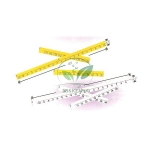
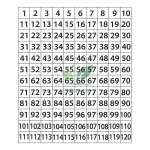
- Length and area: laying cubes in a row and checking the total against the centimetre side of the Measuring Rulers Set, or covering shapes to find area in cm² and comparing with the pin array of the Geo and Pin boards.
- NCERT Class 8 mensuration: building cuboids to show volume as a count of 1 cm³ cubes.
Standard Scope of Supply
Base Ten Cubes are supplied as 1 cm precision unit cubes, as described above. The number of cubes per pack is stated on the quotation; tell us how many pupils or groups will share them and the quantity will be quoted to suit your class and the activities planned.
Packing, MOQ and Lead Time
You are welcome to request one pack or cubes for an entire maths lab. The quotation lists packing, delivery time and price for the amount you specify, and related maths lab manipulatives such as rods, cards and volume shapes can sit on the same document.
Registered as an exporter with an Importer-Exporter Code, Science Lab Supplies can ship to buyers in Oman, the Philippines, Nepal, Bangladesh, Zambia and Rwanda. Tell us how many groups will share the cubes on the contact page, or build a place-value list in the enquiry cart; purchases made against a tender start from the lab tender page.
Frequently Asked Questions
What size are the Base Ten Cubes?
Each cube measures one centimetre and has a volume of one cubic centimetre, so the cubes double as a unit for length, area and volume as well as a counter for place value.
How do they help with place value?
Pupils bundle ten single cubes to make a ten and ten tens to make a hundred, seeing physically why the position of a digit changes its value in a written number.
Are the cubes made by Science Lab Supplies?
They are. Production of the 1 cm cubes takes place at the company's Saha, Ambala site in India, and each quotation is prepared there by the maker, without a trading house adding its margin.
What is the difference from the Interlocking Cubes?
Both are 1 cm precision cubes of one cubic centimetre used for the same topics. The Interlocking Cubes add versatile interlocking, so they can be joined into rods and shapes.
Related Place-Value, Volume and Density Aids
Place value and volume are easier to teach with more than one model. These Maths Lab and science items add linking cubes, coloured rods, place-value cards, larger volume shapes and same-size cubes of different materials, so a teacher can move between representations on one quotation.
- Interlocking Cubes — 1 cm precision cubes with versatile interlocking.
- Cuisenaire Rods — introductory set of rods whose lengths can be assigned numeric values or units of measure.
- Place Value Cards Model — demonstrates positional notation and zero as a placeholder.
- Number Cards — colourful plastic cards for units, tens, hundreds and thousands.
- Geometric Volumetric Set — plastic shapes that can be filled with water or flowing solids.
- Cubes — 1 cm cubes of rubber, wood, opaque plastic, iron and transparent plastic for comparing density.
- Metal Density Cubes — set of six 20 mm cubes in brass, lead, copper, zinc, aluminium and iron.
Browse the full Maths Lab range, the Physics Lab range for rulers and density cubes, or all school lab equipment.
Last updated: 22 October 2026